Metro
Nigeria’s Oil and Gas Reforms Reshape Market

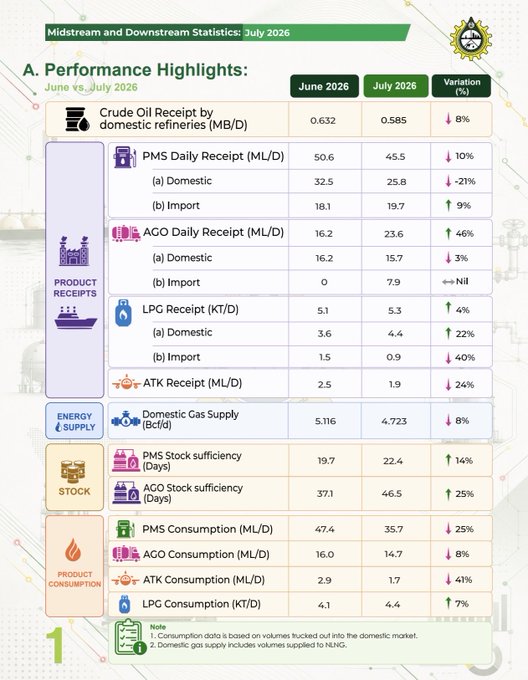
Nigeria’s oil and gas industry is changing under the Petroleum Industry Act….
Nigeria’s oil and gas industry is changing under the Petroleum Industry Act.
The reforms are affecting how petroleum products are refined, supplied, transported and sold.
The July 2026 NMDPRA factsheet shows an industry in transition. Domestic refining is growing, but imports remain important. Gas is also becoming more important to the economy.
The NMDPRA regulates refining, distribution, marketing, pricing, competition, consumer protection and infrastructure in the midstream and downstream sectors.
One major change is the relationship between local refining and imports.
Nigeria wants to increase local refining and reduce imports. However, July data showed that domestic petrol supply fell while the country still relied on imported products.
This shows that local refining cannot replace imports immediately.
For now, refiners, importers, storage operators, marketers and regulators must work together.
Industry operators have also called for imports to remain available as a backup. They say this is necessary while local refining capacity continues to grow.
Another major challenge is access to crude.
The government is considering ways to allow producers to supply nearby refineries directly. This could reduce transport and handling costs.
The reforms also cover the gas sector.
Nigeria wants to improve domestic gas supply through stronger supply obligations and proposed crude and gas swap arrangements. The NUPRC says these measures could reduce costs and improve availability.
The NMDPRA is also using digital platforms for licensing, permits, compliance monitoring and market regulation.
This is part of the move towards a more organised and transparent industry.
Local participation is another priority. In July, NCDMB, NUPRC, NMDPRA and industry stakeholders agreed to improve the assessment of local capacity.
The next phase will focus on industrial growth, manufacturing and global competitiveness.
These reforms show that Nigeria’s oil and gas policy is no longer focused only on crude production.
The bigger question is whether the country can build an integrated industry.
Crude must reach local refineries. Refined products must be distributed reliably. Gas must reach power plants and industries. Infrastructure must also be commercially viable.
The July NMDPRA figures show progress, but they also reveal major gaps.
Petrol and LPG stocks remain below the 30-day benchmark. Domestic refineries still face crude supply challenges. Gas infrastructure is also underused.
Nigeria’s oil and gas sector is being rebuilt around a new regulatory and commercial system.
The success of the reforms will depend on whether they deliver reliable supply, stronger local refining, greater gas use, more investment and a more stable energy market for Nigerians.


“The bullet struck exactly where she was sleeping” – Nigerian doctor recalls sister’s miraculous escape from death

How Obasanjo Considered Abandoning Second-Term Bid After South African President Got Wind Of Coup Plot – Donald Duke

“Tinubu Names Yari DG, Uzodimma Secretary Of 2027 APC Presidential Campaign Council” — Akpabio, Gbajabiamila, Oshiomhole Get Key Roles

“Stop Making False, Defamatory Statements About Me And My Family” — Sheggz Reportedly Serves Bella Okagbue Cease-And-Desist Notice Amid Messy Breakup

“I hope she won’t end up paying” – Phyna reacts to Sheggz’s legal action, asks fans to pray for Bella

Financial Mismanagement Rocks Federal College of Education, Yola, as SecretsReporters Uncovers ₦38.07m Worth of Financial Irregularities – Secrets Reporters Nigeria

“Is This What Lagos Housing Crisis Has Become?” — Viral Video Of People Living Under Flyover Sparks Outrage, Disbelief

“A governor once gave Wizkid a bag full of dollars” – Kizz Daniel’s bouncer reveals what singer allegedly did next

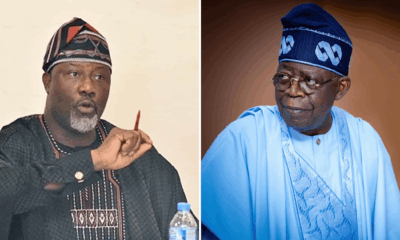
‘It Is A Disgrace Tinubu Doesn’t Trust Anyone’ – Melaye Slams President’s Self-Appointment As Campaign Chairman

“My brother Davido, I love you” — Gov. Okpebholo’s aide who banned Davido from entering Edo apologises

Nasarawa CP urges political parties to shun night gatherings, highway blockades

NDC Graduates Must Convert Knowledge Into Effective Leadership – Musa

N168.2bn Paid to Over 48,000 Retirees Since 2007 – Lagos Govt
Nasarawa CP urges political parties to shun night gatherings, highway blockades
Alia strengthens Benue security with three military units

Transfer: Sanusi set for Saudi switch to Al-Qadsiah

Zamfara CP Urges Peace, Security As Muslims Celebrate Eid-ul-Maulud

Police arrest four as suspected cultists kill Edo Security Corps operative
Transfer: Sanusi set for Saudi switch to Al-Qadsiah
Iranian media shows video targeting Barron Trump with $10 million bounty

 Entertainment17 hours ago
“A governor once gave Wizkid a bag full of dollars” – Kizz Daniel’s bouncer reveals what singer allegedly did next
- Politics18 hours ago
‘It Is A Disgrace Tinubu Doesn’t Trust Anyone’ – Melaye Slams President’s Self-Appointment As Campaign Chairman
- News23 hours ago
Morning recap: KWAM1 breaks down in tears over Ogogo’s death, govs face questions as FAAC payouts hit N47tn, other top stories
- News9 hours ago
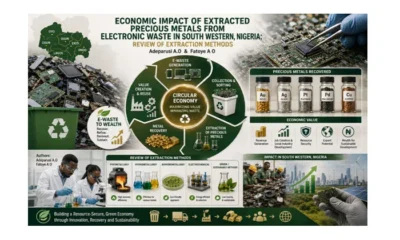
Economic Impact of Extracted Precious Metals from Electronic Waste in South Western, Nigeria; Review of Extraction Methods
- Viral21 hours ago
Hon Ereyitomi Congratulates Chief Ayiri Emami, Stella Okotete on APC Presidential Campaign Council Appointments
- Entertainment18 hours ago
“I spent months praying for God to take my husband’s money away” — Woman opens up on painful marriage
- Metro11 hours ago
“Okpebholo Signs Edo Judiciary, Assembly Financial Autonomy Bills Despite JUSUN Protest” — Capital Funds Return To Executive Control
- Metro11 hours ago
Presidential Campaign Council: Yishawu Urges APC Members to Rally Behind President Tinubu Ahead of 2027 Elections