Metro
Ramaphosa’s SADC Vision Raises The Stakes For African Energy Week 2026

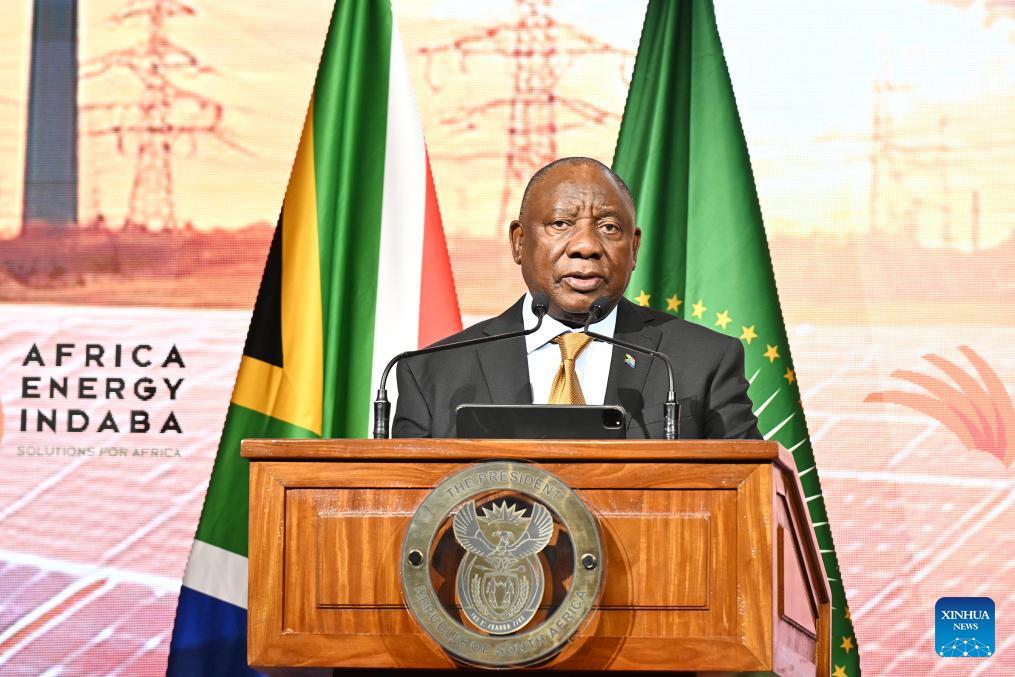
South African President Cyril Ramaphosa has challenged Southern African countries to move beyond treating energy, minerals, infrastructure and industrialisation as separate national priorities and instead build them into an integrated regional economy….
South African President Cyril Ramaphosa has challenged Southern African countries to move beyond treating energy, minerals, infrastructure and industrialisation as separate national priorities and instead build them into an integrated regional economy.
His call could provide a significant policy backdrop to African Energy Week (AEW) 2026, scheduled to take place in Cape Town from October 12 to 16.
Speaking in Durban ahead of the 46th Southern African Development Community (SADC) Summit, Ramaphosa argued that the region already possesses many of the resources needed to drive economic transformation but continues to lose value because resources are fragmented across borders, exported largely in raw form or disconnected from domestic industries.
“We export the ore and we import the battery,” he said.
The remark captures a wider concern about Africa’s position in the global energy transition.
The continent holds substantial reserves of critical minerals, oil and gas, alongside significant renewable energy potential and growing electricity markets.
Yet ownership of those resources has not necessarily translated into ownership of the industries and technologies built around them.
For AEW 2026, that presents a broader question than how much new investment can be attracted to Africa’s energy sector.
The more fundamental issue is whether energy and natural resources can become the foundation for industrialisation, stronger regional markets and greater African ownership of economic value.
Beyond energy supply
For years, Africa’s energy conversation has largely focused on increasing supply, expanding oil and gas production and adding generation capacity to national grids.
Ramaphosa’s argument points towards a broader definition of energy development.
Electricity, in that vision, is not simply a commodity but an essential platform for industrialisation.
Reliable power can support factories, mines and digital infrastructure, while gas can serve domestic industries alongside its role as an export commodity.
Critical minerals can feed local processing and manufacturing, while transport corridors can connect African producers to African consumers instead of serving primarily as routes for exporting raw materials.
That approach could force AEW 2026 to look beyond investment announcements and project pipelines and examine whether new developments are capable of changing the structure of African economies.
Regional power becomes an economic strategy
One of the key elements of Ramaphosa’s vision is regional electricity integration.
He highlighted plans to accelerate interconnectors linking Angola and Namibia, Malawi and Mozambique, and Tanzania and Zambia, while strengthening electricity trading through the Southern African Power Pool.
The implications extend beyond electricity supply.
A more integrated regional power market would allow countries with excess generation capacity to sell electricity across borders, while larger interconnected markets could strengthen the commercial case for new generation projects.
It could also improve system resilience, reduce duplication and create the scale required to attract investment.
In that sense, regional electricity integration is not simply about building transmission lines.
It is about creating an electricity market capable of supporting a wider regional industrial system.
The value-chain question
Ramaphosa’s intervention also puts the spotlight on how Africa manages its mineral wealth.
Southern Africa possesses deposits of minerals critical to batteries, renewable energy technologies and the wider global energy transition.
But significant quantities of these resources continue to leave the continent with limited processing taking place locally.
The result is a familiar economic paradox: Africa supplies raw materials to global industries while importing many of the finished products made from those resources.
The same challenge can be seen in the energy sector.
Oil-producing countries can remain dependent on imported petroleum products, while gas-rich economies can still struggle to provide adequate electricity.
For AEW 2026, the question is therefore shifting from simply who owns or controls the resource to who captures the value created after extraction.
Infrastructure must connect the economy
Ramaphosa also identified regional transport corridors as important components of Southern Africa’s economic future.
The Maputo, North-South, Trans-Kalahari, Beira and Lobito corridors have the potential to connect production centres, markets and people across borders.
Their importance to energy development is considerable.
Mines require reliable electricity and transport infrastructure. Gas projects need pipelines, ports and industrial customers. Manufacturing requires dependable power and logistics, while digital infrastructure depends on both electricity and connectivity.
The challenge is therefore to move away from planning energy projects in isolation and instead view them as part of a wider economic geography.
A gas project, for example, could be assessed not only on production and export volumes but also on whether it supplies power plants, fertiliser factories, petrochemical industries and regional markets.
Likewise, the success of a power project could be measured by the industrial activity created by the electricity it generates.
Who finances Africa’s transformation?
Financing remains another major challenge.
Ramaphosa has argued that Southern Africa cannot continue to depend overwhelmingly on external sources to finance the infrastructure required for its development.
Foreign investment will remain important, particularly for large and capital-intensive energy projects.
But the strategic question is whether African banks, pension funds, development institutions and other domestic investors can take larger positions in African infrastructure.
Without stronger African financial participation, the continent risks retaining control of its natural resources while much of the financial value generated around those resources remains outside Africa.
That makes the mobilisation of African capital an important issue for discussion at AEW 2026.
A tougher definition of local content
Ramaphosa’s industrialisation argument also raises questions about what constitutes meaningful local content.
Employment and local procurement remain important components of energy projects, but a more ambitious approach would involve African companies acquiring capabilities in engineering, fabrication, technology, project management, financing and ownership.
The distinction matters.
A major energy project can create thousands of jobs without fundamentally changing the structure of an economy.
Long-term industrial development requires domestic companies to acquire expertise and move into higher-value segments of the supply chain.
That is where greater economic value can remain after a project has been completed.
AEW 2026 faces a bigger test
Ramaphosa’s vision gives African Energy Week a more demanding agenda.
If Southern Africa possesses substantial energy resources, critical minerals, markets and financial institutions, then the central challenge is increasingly about connecting those assets.
The questions are therefore becoming more difficult.
Can regional electricity markets become genuinely functional?
Can African financial institutions take larger stakes in major infrastructure projects?
Can gas support domestic industries rather than primarily serve as an export commodity?
Can mineral production lead to local processing and manufacturing?
Can transport corridors connect African producers to African markets?
And, perhaps most importantly, can energy projects create industries rather than isolated revenue streams?
These questions go beyond conventional investment promotion.
They go to the heart of whether Africa can use its resource wealth to build lasting economic power.
From vision to execution
Ramaphosa has stressed that SADC’s Vision 2050 must move beyond a statement of intent and become a programme of action.
That may be the most important test facing African Energy Week 2026.
Africa already has strategies, declarations, resources and investment conferences.
What remains in short supply is execution at the scale required to transform those advantages into productive capacity.
When governments, energy companies, financiers and investors gather in Cape Town in October, the conversation will therefore need to extend beyond how much energy Africa can produce.
The bigger question is how much economic power the continent can build from the energy and resources it already possesses.
Ramaphosa has set out the ambition.
AEW 2026 now has an opportunity to turn that ambition into a sharper conversation about projects, capital, regional integration and execution.


Women leaders seek more govt support for farming, action on child trafficking, early marriage in Niger

“Now you can see my tears” – US soldier breaks down over sick daughter in Nigeria, cries out to Trump

Scammers Hijack Car Dealer’s Identity, Forge CAC Certificate Photo, and Open Fraudulent Moniepoint Account, Exposing Deep Flaws in Fintech KYC – Secrets Reporters Nigeria

Morning recap: INEC declares Adeleke winner of Osun poll, Islamic leaders caution against anti-Christian rhetoric, other top stories

“My flight was cancelled…” – Woman recounts painful betrayal after finding husband in bed with childhood friend

Federal Energy Research Centre at UNN Ran Up Nearly ₦686 Million in Unauthorised Spending, Doubtful Payments and Audit Bypasses – Secrets Reporters Nigeria

FAAN Spent N158.59bn against N98.39bn Limit, Audit Demands N60.2bn Refund – Secrets Reporters Nigeria

₦367.99m in Financial Irregularities Uncovered in FCT Social Development Secretariat Under the Leadership of Hajiya Safiya Umar – Secrets Reporters Nigeria

“Adeleke’s Victory Shows Our Votes Can End Economic Hardship” — Peter Obi Urges Nigerians To Defend Ballots In 2027

Investigation Reveals NOTAP Channelled ₦138.8 Million Public Revenue into Staff Welfare, Sponsored Non-Staff Weddings and Approved Unauthorised Foreign Trips in Questionable Transactions – Secrets Reporters Nigeria

NDLEA Denies Report Of Drug Bunker At Taraba Nursing College

Anosike launches Abia Champions League

Governor Nwifuru Commissions Projects In Ohaozara LG…

The ugly side of pressure on White House women to maintain Trump’s ‘Maga perfect’ image

Abia govt addresses rumoured tax hike
Abia govt addresses rumoured tax hike

VeryDarkMan fulfils $50,000 promise as talented boy he vowed to sponsor secures China visa
Abia govt addresses rumoured tax hike

Police nab two ‘one chance’ suspects in Abeokuta, foil robbery attempt
Police nab two ‘one chance’ suspects in Abeokuta, foil robbery attempt

 News18 hours ago
FAAN Spent N158.59bn against N98.39bn Limit, Audit Demands N60.2bn Refund – Secrets Reporters Nigeria
- News16 hours ago
₦367.99m in Financial Irregularities Uncovered in FCT Social Development Secretariat Under the Leadership of Hajiya Safiya Umar – Secrets Reporters Nigeria
- News17 hours ago
Investigation Reveals NOTAP Channelled ₦138.8 Million Public Revenue into Staff Welfare, Sponsored Non-Staff Weddings and Approved Unauthorised Foreign Trips in Questionable Transactions – Secrets Reporters Nigeria
- Politics17 hours ago
Osun 2026: INEC Under Scrutiny As Money Politics, Violence, Security Threats Test Nigeria’s Road To 2027
 News15 hours ago
₦35.46m Financial Irregularities Mars Dr. Aishatu Abubakar-Baju (AIG), Veterinary Council of Nigeria Leadership – Secrets Reporters Nigeria
- Entertainment20 hours ago
“I paid for his visa, flight, hotel, rent, but he broke up with me 4 months after arriving UK” — Woman reveals

 World9 hours ago
Iranian Army Chief Offers $30,000 Bounty for Killing or Capturing US Soldiers, Doubles Reward for Women
- Entertainment23 hours ago
Why dating a mature man can be so annoying — Nigerian lady reveals