News
UPDATED: Fubara signs N1.84tn Rivers 2026 budget into law

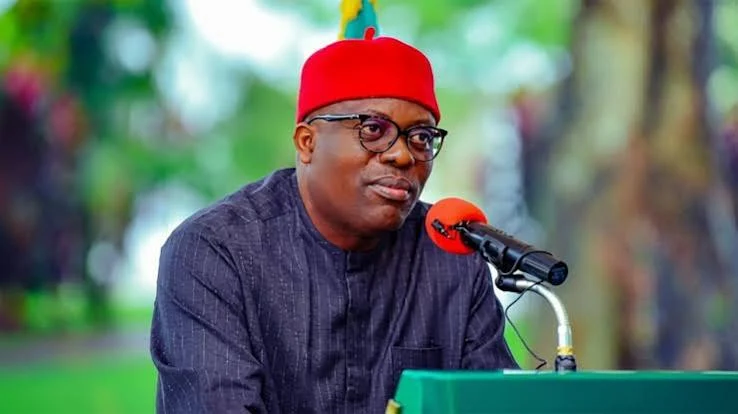
Nearly two months after Governor Siminalayi Fubara presented the Rivers State 2026 Appropriation Bill of N1.84tn to the State House of Assembly, the House finally passed the budget into law on Thursday.
Governor Fubara also assented to the budget, giving it full effect.
Recall that Fubara presented the appropriation bill to the Assembly for consideration and approval on July 10, 2026.
The passage of the budget during plenary followed deliberations by the Committee on Appropriations, which recommended key adjustments before the bill’s final passage.
According to the breakdown presented by the committee, the budget will be funded through Internally Generated Revenue of N487.6bn, Federation Account Allocation Committee receipts of N936.052bn, an opening and closing balance of N48bn, proposed internal loans of N50bn and proceeds from the sale of assets amounting to N25bn.
Sectoral allocations under the budget include N262bn for agriculture, N625.8bn for the economic sector, N65bn for law and justice, and N435.4bn for the social sector.
Presenting the committee’s recommendations, members, including Hon. Linda Stewart, Hon. Ofiks Kagbang, Hon. Enemi George and Hon. Igwe Aforji, proposed that N1.4bn be appropriated to the Primary Health Management Board to rebuild its facility on Accra Street.
Total capital expenditure of N1.4tn was recommended for approval as part of the 2026 Appropriation Bill.
The most contentious issue during the deliberations centred on the N6bn allocation earmarked for Pamo University of Medical Sciences, a privately owned institution founded by former governor of the state, Dr Peter Odili.
Members of the committee questioned whether the sum was excessive, particularly given the lack of clarity on how the funds would be utilised by the university.
The controversy deepened when, during the House’s deliberations, the Commissioner for Education wrote to the Assembly requesting that the allocation be increased from N6bn to N8bn, describing the initial sum as inadequate.
Lawmakers raised concerns over the absence of accountability from the university regarding previous allocations, noting that the Rivers State University was itself allocated a total budget of N6.1bn, making it difficult to justify granting a similar sum to a privately owned university.
Following the concerns raised, the committee resolved that no further funds should be released to the university until the House was satisfied with adequate accountability measures.
The resolution necessitated an amendment stepping down the proposed N6bn allocation to Pamo University, pending further investigation.
The House subsequently voted to pass the N1.84tn budget into law, with the recommended adjustments incorporated into the final Appropriation Bill.
Meanwhile, Governor Fubara has signed the 2026 State Appropriation Bill into law, describing it as “a breath of fresh air” and the beginning of a new chapter of unity and progress for the state.
At a brief ceremony held at the Government House, Port Harcourt, Governor Fubara expressed gratitude to God, stakeholders and the State House of Assembly for the successful passage of the budget.
“First of all, we want to thank the Almighty God for making this day a reality. I strongly believe that it is a breath of fresh air and a healthy relationship moving forward,” he said.
Governor Fubara particularly commended members of the Rivers State House of Assembly for their diligence and speed in handling the budget at a critical time in the state’s history.
“I thank members of the State House of Assembly for a wonderful job at this very critical time of our life,” he said.
Fubara reaffirmed his administration’s commitment to the “Rivers First” mantra and pledged that the 2026 budget would be implemented with the people’s welfare as the central focus.
“I want to assure you that our intention will still remain the progress and development of our dear state,” he said.
Governor Fubara specially acknowledged the role of the Minister of the Federal Capital Territory, Chief Nyesom Wike, in facilitating the process that led to the passage of the bill and its eventual signing into law.
“Let me also thank our leader, the Honourable Minister of the Federal Capital Territory, Chief Nyesom Wike for facilitating this meeting and this process that we are all signing into,” he stated.
The governor also appreciated his family for their support, noting that governance was a collective responsibility.
He further pledged to ensure a cordial working relationship with all arms of government and stakeholders going forward.
“Let me thank everyone for this moment and assure you of our most cordial and cooperative relationship going forward,” Governor Fubara said.
The Majority Leader of the Rivers State House of Assembly, Hon. Major Jack, who had earlier presented the bill to the governor for his assent, said the lawmakers passed the budget with the best of intentions, believing that it would be implemented accordingly for the benefit of the people of Rivers State.
“It is the expectation of the Honourable Members of the Rivers State House of Assembly that this budget will usher in the desired growth and development of the state.
“It is therefore with a sense of responsibility that I respectfully present the Rivers State Appropriation Bill No. 1 2026 to the Governor of Rivers State for his assent,” Jack said.
In a remark shortly after the bill had been signed, the Speaker of the Rivers State House of Assembly, Rt. Hon. Martin Amaewhule, commended Governor Fubara for the various provisions made in the budget, describing them as indications that the Fubara administration was prepared to deliver the dividends of democracy to the people of Rivers State.
“We took time to look at the budget and from what we saw, we want to tell you that it shows that you are willing to move forward and ensure that this democracy is actually what will get to Rivers people,” Amaewhule said.
The ceremony was attended by members of the State Executive Council, principal officers of the State House of Assembly and other government functionaries.





2027: Nigerians Would Have Known Him For Four Years – ADC Spokesperson Reveals How Atiku Will Defeat Tinubu

Private Business Claims Linked to Permanent Secretary John Chidiebere Ezeamama in Violation of Code of Conduct for Civil Servants – Secrets Reporters Nigeria

Evening recap: Tinubu targets $1tn economy, police rescue NYSC members, IPOB threatens 2027, other top stories

Backlash as Governor Oborevwori Allegedly Distributes Billions to Council Chairmen, Vice, Councilors Amid Economic Hardship
Atiku’s Absence At Coalition Talks For Single-candidate Should Not Be Interpreted As Boycott – Phrank Shaibu

You’ll get lawsuit – Abati, Rufai clash on live TV over comment against presidential candidate [VIDEO]

Tinubu’s Old Certificate and U.S. Forfeiture Controversies Resurface Ahead of Nigeria’s 2027 Election

“My baby come use English explain give this people” – Hilarious moment Peller calls Jarvis to defend him during tiktok live dispute

Transfer deadline: Enzo completes City move, Chelsea loan Sanchez, Mudryk, Fofana joins Sunderland, others

“For over 30 years” – Lady who received ₦1M from Peller reveals amount she gave her mother for business support in 2024

Volkswagen board approves cutting 50,000 more jobs and ending production at 4 plants

Only qualified candidates will be recruited as teachers — Ekiti SUBEB

Why Many Northern Govs Can’t Campaign for 2027 Polls – Kwankwaso Reveals

U.N. report details foreign networks fueling war in Sudan

UPDATED: Fubara signs N1.84tn Rivers 2026 budget into law

Keyamo Receives ‘Minister Of The Decade’ Award At Daily Times Centenary Celebration

Trump claims U.S. banks cannot operate in Canada. That's not true

Kaduna IGR rises to N85bn under gov Uba Sani — Official

UI Introduces Master’s Programme in Election Administration

Ireland must prepare for Northern Ireland reunification vote, foreign minister says

 Headlines11 hours ago
You’ll get lawsuit – Abati, Rufai clash on live TV over comment against presidential candidate [VIDEO]
- News7 hours ago
Exclusive: How NSIA MD Aminu Umar-Sadiq Started Assets Construction Project With N363 Million And Jumped To N44.8 Billion In One Year – Part 1 – Secrets Reporters Nigeria
- Headlines5 hours ago
Electricity: Nigerian university campuses will be taken off national grid — Education Minister Alausa
- News19 hours ago
A Satellite Agency Building Roads And Community Halls: Inside MD Jane Egerton-Idehen N2236 Million Mandate Violation At NIGCOMSAT – Secrets Reporters Nigeria
- News10 hours ago
Cash In Hand: The Multi Million Naira Olubunmi Tunji-Ojo Federal Ministry Of Interior Money Paid Directly To Individual Staff Accounts Without Vendors – Secrets Reporters Nigeria
- Metro10 hours ago
“Politics Is My Business” — Ebonyi LG Chairman Threatens Political Opponents After Nwifuru Warns Chairmen Against Losing Their Councils
- Entertainment12 hours ago
“Big man pikin dey cry say poor men children dey hail themselves” – Erigga fires back at Davido

 World23 hours ago
U.S. energy secretary approves ‘3 large corporate deals’ in Venezuela, feels hopeful about NABEP deal