News
Kaduna IGR rises to N85bn under gov Uba Sani — Official

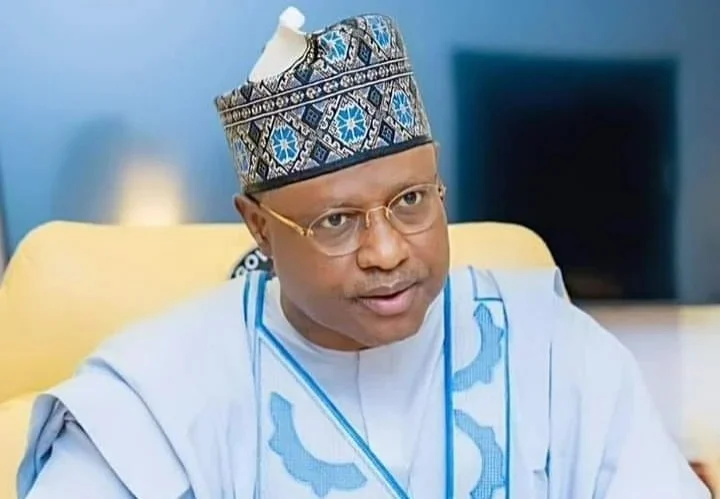
The outgoing Executive Chairman of the Kaduna State Internal Revenue Service, Jerry Adams, has attributed the sustained growth in the state’s Internally Generated Revenue to the political will and non-interference of Governor Uba Sani in the operations of the agency.
Adams, who spoke at the ongoing 160th meeting of the Joint Revenue Board in Kaduna on Thursday, said the state’s IGR had grown from N58bn before 2023 to N85bn in 2025.
He said the revenue had continued to rise, adding that the state was now trending towards an annual collection of N120bn, with an average monthly revenue of N10bn.
Adams said, “The IGR of Kaduna State stood at N58bn before 2023. By 2023, it had risen to N62bn and, in 2024, it reached N71bn.
“In 2025, we recorded an annual revenue of N85bn, with an average monthly collection of N7bn. Today, we are trending towards N120bn, at a monthly average of N10bn.”
According to him, the growth was not a temporary spike but a steady and sustainable trend that would be strengthened through deeper collaboration with aMinistries, Departments and Agencies, stakeholders and the state government.
The KADIRS boss recalled that between 2019 and 2023, the highest annual revenue collection recorded by the service was N59bn in 2022, representing an average monthly collection of about N4.8bn.
Adams, however, explained that a closer examination of the figures showed that a significant portion of the revenue came from back-duty recoveries, sale of government properties and other one-off recoveries rather than organic growth in the state’s tax base.
He said, “On paper, that looked like progress. But if you looked closer, as we eventually did, you’d find out that a significant portion of that revenue didn’t come from organic tax growth.
“It came from back-duty recoveries, sale of government properties and some other one-off recoveries, not a growing, breathing tax base.”
He said the model eventually stalled by early 2023, forcing the agency to rethink its revenue strategy.
Adams said KADIRS subsequently shifted its focus from merely increasing collections from existing taxpayers to expanding the tax net and bringing more businesses and individuals into the tax system.
“We could no longer keep squeezing the same familiar taxpayers a little harder each year and call it strategy.
“We needed to grow horizontally, not just vertically; to expand the tax net itself, rather than simply tighten it around those already caught in it, and to stop relying on windfalls to flatter our numbers,” he stated.
The outgoing chairman said the agency also embarked on full digitisation of its processes to block revenue leakages through the introduction of the PAYKADUNA portal and Project C.R.A.F.T., an initiative aimed at improving revenue administration and fiscal transparency.
“This gave us, for the first time, a centralised payment system for all state revenue, closing gaps that informal, cash-based collection had long allowed to thrive,” he said.
Adams said KADIRS also recruited additional personnel to expand its tax coverage, provided working tools for staff and facilitated the promotion of workers whose advancement had been delayed.
He added that the agency provided capacity-building opportunities for its personnel and established three additional area offices to complement the existing 34 offices across the state.
The former KADIRS boss said the service also strengthened collaboration with institutions including the Joint Revenue Board, the Nigeria Revenue Service and the Nigerian Financial Intelligence Unit, particularly in the area of data sharing.
According to him, the partnerships had helped the state identify taxable activities that previously went undetected.
Adams, who is the All Progressives Congress governorship running mate for the 2027 election, also attributed the improvement in tax compliance to increased trust between taxpayers and government.
He disclosed that tax compliance in the state had risen from about 30 per cent to approximately 65 per cent.
“Tax compliance is a function of trust. When we began, compliance across the state stood at a modest 30 per cent. Today, I am pleased to report that the compliance level has risen to approximately 65 per cent,” he said.
Adams stressed that the improved revenue performance should not be seen as the achievement of KADIRS alone, but as a broader governance success involving the state government, taxpayers, MDAs and other stakeholders.




2027: Nigerians Would Have Known Him For Four Years – ADC Spokesperson Reveals How Atiku Will Defeat Tinubu

Private Business Claims Linked to Permanent Secretary John Chidiebere Ezeamama in Violation of Code of Conduct for Civil Servants – Secrets Reporters Nigeria

Evening recap: Tinubu targets $1tn economy, police rescue NYSC members, IPOB threatens 2027, other top stories

Backlash as Governor Oborevwori Allegedly Distributes Billions to Council Chairmen, Vice, Councilors Amid Economic Hardship
Atiku’s Absence At Coalition Talks For Single-candidate Should Not Be Interpreted As Boycott – Phrank Shaibu

You’ll get lawsuit – Abati, Rufai clash on live TV over comment against presidential candidate [VIDEO]

Tinubu’s Old Certificate and U.S. Forfeiture Controversies Resurface Ahead of Nigeria’s 2027 Election

“My baby come use English explain give this people” – Hilarious moment Peller calls Jarvis to defend him during tiktok live dispute

“For over 30 years” – Lady who received ₦1M from Peller reveals amount she gave her mother for business support in 2024

Transfer deadline: Enzo completes City move, Chelsea loan Sanchez, Mudryk, Fofana joins Sunderland, others

Only qualified candidates will be recruited as teachers — Ekiti SUBEB

Why Many Northern Govs Can’t Campaign for 2027 Polls – Kwankwaso Reveals

U.N. report details foreign networks fueling war in Sudan

UPDATED: Fubara signs N1.84tn Rivers 2026 budget into law

Keyamo Receives ‘Minister Of The Decade’ Award At Daily Times Centenary Celebration

Trump claims U.S. banks cannot operate in Canada. That's not true

Kaduna IGR rises to N85bn under gov Uba Sani — Official

UI Introduces Master’s Programme in Election Administration

Ireland must prepare for Northern Ireland reunification vote, foreign minister says

Trump raises doubts over support for Britain in Falklands dispute with Argentina

 Headlines11 hours ago
You’ll get lawsuit – Abati, Rufai clash on live TV over comment against presidential candidate [VIDEO]
- News7 hours ago
Exclusive: How NSIA MD Aminu Umar-Sadiq Started Assets Construction Project With N363 Million And Jumped To N44.8 Billion In One Year – Part 1 – Secrets Reporters Nigeria
- News18 hours ago
A Satellite Agency Building Roads And Community Halls: Inside MD Jane Egerton-Idehen N2236 Million Mandate Violation At NIGCOMSAT – Secrets Reporters Nigeria
- Headlines5 hours ago
Electricity: Nigerian university campuses will be taken off national grid — Education Minister Alausa
- News10 hours ago
Cash In Hand: The Multi Million Naira Olubunmi Tunji-Ojo Federal Ministry Of Interior Money Paid Directly To Individual Staff Accounts Without Vendors – Secrets Reporters Nigeria
- Metro10 hours ago
“Politics Is My Business” — Ebonyi LG Chairman Threatens Political Opponents After Nwifuru Warns Chairmen Against Losing Their Councils

 World23 hours ago
U.S. energy secretary approves ‘3 large corporate deals’ in Venezuela, feels hopeful about NABEP deal
 Special Report7 hours ago
Travellers who arrive in Ghana with more than two mobile phones may have their additional devices treated as commercial import