News
Survivors recall civil war experiences, advocate teaching of history

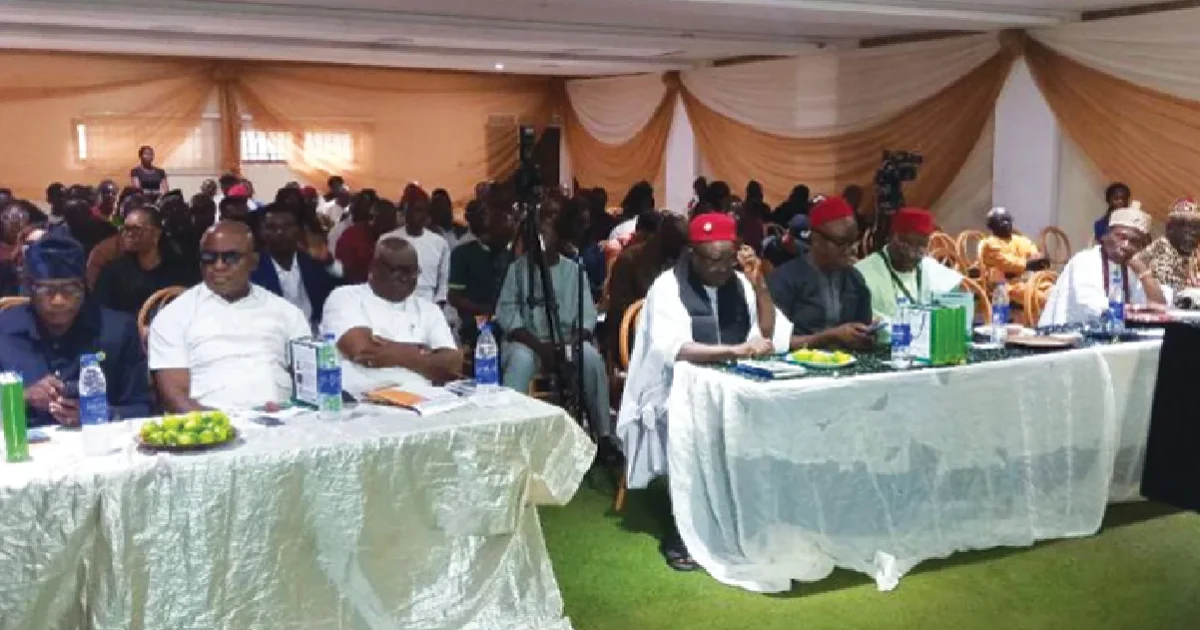
Fifty-six years after the Nigerian Civil War, survivors, scholars, and key stakeholders gathered in Enugu to recount harrowing ordeals from the 30-month conflict, warning younger generations against romanticising war or resorting to violence under any guise.
The stakeholders spoke about the war during the public presentation of a new book titled, ‘History and Lessons From The Nigerian Civil War (Chronologically Arranged),’ co-authored by Dr Uchenna Anioke, Chief Obioma Ikechi, and Chief James Egwuonwu.
The presentation, which brought together public officials, traditional rulers, academics, and youth groups, doubled as a call for the reinstatement of history as a mandatory subject in Nigerian primary and secondary schools.
Sharing his childhood ordeal during the 1967–1970 conflict, the Enugu State Commissioner for Environment, Prof. Sam Ugwu, recalled fleeing through bushes with his parents to evade advancing troops while in primary one.
Ugwu, who represented Governor Peter Mbah at the event on Saturday, recounted the painful story of his teenage elder brother, Cletus, who was taunted into enlisting in the Biafran Army after being mocked by his master’s wife for staying behind while his peers fought.
“My brother underwent two weeks of training and went to the frontline. On his very first day in battle, his friend Kenneth from Igboeze was killed right beside him. He survived until 1970 and threw away his gun the moment the war ended,” Ugwu recalled.
He added that his family had continued to mourn a cousin – the only son of his aunt – who earned a distinction in his primary school examination but enlisted and never returned from the battlefield.
Ugwu warned that the country appeared not to have learnt from the mistakes of the past, urging Nigerian youths to embrace dialogue instead of agitation.
“Why I am recalling all these stories is because of our young ones who are shouting war all the time. War is the worst thing that can happen to any society. The civil war was avoidable,” he said.
Delivering Mbah’s official message, Ugwu stated that the governor advocated the restoration of history in school curriculum, warning that removing the subject was dangerous to national development and institutional memory.
“History is essential for understanding our past and shaping our collective future,” the governor said, praising the authors for documenting the remote and immediate causes of the war in chronological order.
Also speaking, the Chairman on the occasion and Managing Director of COPEN Group, Pastor Ugochukwu Chime, recalled surviving a bombing raid as a child when he was thrown into a ravine, adding that several of his relatives perished in the conflict.
“It is not an experience anyone should have twice in a lifetime because it is terrifying,” Chime said.
In his contribution, the President of the Dr Michael Okpara Leadership Centre, Dr Chinedu Onu, noted that while the war truncated the rapid economic growth of the former Eastern Region, the memory of the conflict must be preserved to prevent future mistakes.
Explaining the motivation behind the publication, the lead author, Dr Uchenna Anioke, stated that the book was written to provide an objective, date-by-date account of the conflict to foster national healing rather than division.
He said, “By arranging these historic events strictly by date, from 1966 to 1970, we avoided political distortion. Our book is not a weapon to reopen old wounds, but a mirror to reflect our shared responsibility.”
Reviewing the publication, the Chairman of Public Affairs Analysts of Nigeria (Enugu chapter), Dr Ambrose Igboke, cautioned youths against viewing war through the distorted lens of movies and social media, stressing that the real-world consequences of conflict are devastating and irreversible.



EPL: ‘No longer sharp, quick’ – Carragher names who to blame for Arsenal’s first goal against Chelsea

Oyo 2027: Civil servants wait for seven to 10 years before receiving entitlements – ADC guber candidate

2027: If You Had The Guts To Challenge Sitting President, Why Didn’t You Come Out? – Sambo Fires Datti

Evening recap: FG to give Nigerian shipowners $25m, Drivers, cooks, traders can own refinery shares, other top stories

CBN Deputy Governor Emem Usoro Who Was Side Chic To A Married Man Accused Of Watching Him Take His Last Breath, Buried Him Alone And Took His Death Certificate From His Wife – Secrets Reporters Nigeria

Paper Promises vs. Real Pulses: Why Nigeria’s Hypertension Crisis Demands Cash-Backing, Not Just Budget Speech-Making – Professor Emmanuel Alhassan and LISDEL

‘After Working With Peter Obi, You Risk Suffering Post-political Identity Crisis’ – Kenneth Okonkwo Defends Datti

APC challenges Adeleke’s August win as Osun tribunal posts petitions

Exclusive: Niger Delta Suffers While MDGIF Director Oluwole Adama Hides N12.9 Billion Natural Gas Fund – Secrets Reporters Nigeria

Ibiyeomie Rejects Offerings From Internet Fraudsters, Tells Them To Leave » Apples Bite Int’l Magazine

Obi, Alia lock horns over blocked Benue visit

2027: Lagos APC kicks off campaign, backs Tinubu’s re-election

Immigration Arrests Two Kidnap Suspects, Recovers N34m In Adamawa

NOUN appoints acting bursar – TimesNG.com.ng

Crisis as Federal Girls College management, PTA clash

China’s factory-gate price growth picks up in August as Iran war fuels energy volatility

‘Reaching hospital no longer enough to save pregnant woman’

Survivors recall civil war experiences, advocate teaching of history

Iran says captured US underwater drone in Strait of Hormuz

2027: Atiku, Obi, Makinde resist step-down pressure

 Headlines20 hours ago
Oyo 2027: Civil servants wait for seven to 10 years before receiving entitlements – ADC guber candidate
- Politics19 hours ago
‘After Working With Peter Obi, You Risk Suffering Post-political Identity Crisis’ – Kenneth Okonkwo Defends Datti
- News23 hours ago
Ibiyeomie Rejects Offerings From Internet Fraudsters, Tells Them To Leave » Apples Bite Int’l Magazine
- Politics16 hours ago
‘Peter Obi Is A Content Creator’ – Presidency Attacks Him For Attending Makinde’s Campaign Office Launch
- News19 hours ago
Shettima Tasks Transporters on Peaceful Mobilisation for Tinubu’s 2027 Re-election Bid » Apples Bite Int’l Magazine
- News21 hours ago
Investigation: SEEPCO’s Anthony Chukwueke Was the FG Regulator Sacked in 2007 for Improperly Awarding Oil Licenses and Is Now Chairman of the Company That Walked Away With Nigeria’s Richest Well – Part One – Secrets Reporters Nigeria
- News10 hours ago
Surveyor-General Oladele Ewulo Faces Questions Over Alleged Fake Certificates of Occupancy and Survey Irregularities in Ogun Land Deals – Secrets Reporters Nigeria
- Politics8 hours ago
Where Is The Money You Saved From Subsidies That Never Existed? – Adebayo Dares Tinubu To Public Debate