News
Nwifuru’s 2027 threat exposes local democracy failure

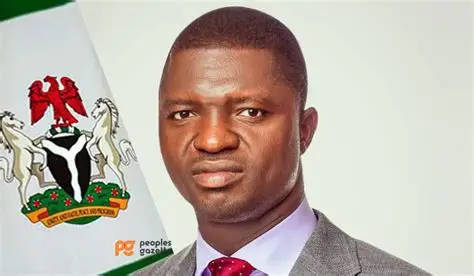
Beyond the outrage, condemnation and disappointment that have trailed the recent viral video of Francis Nwifuru, Governor of Ebonyi, in which he threatened to remove newly elected LGA chairmen who fail to deliver their respective LGAs to the APC in 2027, the incident exposes a deeper structural problem: a governance system that has rendered government at the grassroots ineffective.
This structural failure is not limited to Ebonyi State. We have also seen in this country some LGA chairmen in Ogun State, in a viral video, prostrating in deference and apology to Dapo Abiodun, the state governor.
The LGA chairmen in Ogun had gone to apologise to the governor over an allegation in which one of them, Wale Adedayo, Chairman, Ijebu East Local Government, petitioned the Economic and Financial Crimes Commission and the Independent Corrupt and Other Related Offences Commission over the withholding of local government funds by Abiodun.
According to the Ijebu East chairman, LGAs in the state have not gotten their allocation for over two years. Ordinarily, this is an allegation that should be probed and supported by other LGA chairmen.
Still, out of fear, elected chairmen went to lie in front of a governor to say, “We’re sorry for saying you’re holding our money. You’re our father, please, forgive us.” On paper, local council leaders are elected by the grassroots, but in reality, these leaders are merely a selection of politically loyal individuals who are loyal to the governor rather than to the people who elected them.
When an elected governor makes a categorical statement that he would remove another elected official and replace him without letting, lovers of democracy should be concerned, and policymakers, as well as civil society organisations, should rise to the occasion with workable solutions that would make our local governments truly a third tier of government.
According to the 1999 Constitution of the Federal Republic of Nigeria, local governments are designed to be the third tier of the federation, and their sole purpose is to bring governance closer to the people; they have their own mandate.
The Fourth Schedule of the Constitution gives local government councils responsibilities that directly affect the daily lives of citizens. These include the construction and maintenance of local roads and drains, provision and maintenance of health services, refuse disposal, public conveniences, markets and motor parks, as well as the registration of births, deaths and marriages.
These are not ordinary responsibilities. They are the things people encounter every day. They constitute the inner roads they use to get to work, the market where they buy food, the waste that is collected or left on the street, the health centre in their community, and the drainage system that determines whether their street floods. All these are connected to grassroots governance.
Yet, many of these responsibilities have effectively been taken over or heavily controlled by state governments. This has weakened local governments and, more importantly, taken accountability away from the people at the grassroots.
When a local government cannot make meaningful decisions without the approval of the state government, who should the people hold responsible when things go wrong?
The problem becomes even more troubling when we look at local government elections. In nearly all the states of the federation, the party controlling the state government also controls virtually all the local government councils. It is difficult to explain how opposition parties that are strong enough to win seats in the National Assembly, state assemblies, and sometimes even governorship elections suddenly become incapable of winning local government elections.
The State Independent Electoral Commissions seem culpable. These commissions conduct local government elections, but the system in which they operate has repeatedly raised questions about the credibility and competitiveness of those elections. In state after state, the ruling party sweeps the local government elections.
The consequence is a local government system where the chairman knows who can make or break his political career. And one is bound to ask, “If a governor can threaten an elected council chairman with removal for failing to deliver his LGA politically, what incentive does that chairman have to prioritise the voters over the governor?
Your guess is as good as mine. When the political survival of a local government chairman depends more on the governor than the electorate, accountability naturally moves upwards.
But governors are not the only ones responsible for the state of local democracy. Nigerians also have a share of the blame. Nigerians follow presidential and governorship elections closely. They debate candidates, analyse campaigns and sometimes argue about policies. But when it comes to the government closest to them, many simply do not care.
Participation in local government elections is often poor. To some extent, this is understandable. When citizens repeatedly see elections in which the ruling party wins virtually every position, they have little reason to believe that their votes will make a difference.
But this cannot become an excuse for permanent disengagement. If citizens can devote months to deciding who should govern Nigeria, they can devote some time to finding out who wants to govern their local government. They should know who is contesting for chairman and councillor, and what these candidates are promising and what they have done before.
Yes, State Independent Electoral Commissions have given citizens little reason to trust the process. But citizens cannot completely abandon the process and expect it to improve by itself. If Nigerians begin to take local elections more seriously and demand credible candidates and credible elections, the electoral commissions will have no choice but to sit up. Change only happens when the people demand it.
Also, the question of local government autonomy is critical to the effectiveness of its leadership in delivering. The Supreme Court’s judgment on local government autonomy was an important step in recognising the need for local councils to have greater financial independence. But a judgment alone cannot solve a problem that has been allowed to develop for decades.
Local governments cannot be autonomous only on paper. They must have the resources and authority to perform the functions assigned to them. Governors have made local governments an extension of their political will. What the governor wants often becomes what the local government wants, even when it is contrary to the interests of the people.
This is why think tanks, civil society organisations and lawmakers must begin to look beyond local government funding and examine the entire system.
State electoral commissions must be made more independent and credible.
Local government finances must be transparent, and citizens must be able to know what their councils receive and how those resources are spent. Civil society organisations and members of the fourth estate of the realm must also pay greater attention to local elections and monitor the performance of elected council officials after elections.
The truth of the matter is that Nigeria needs more media scrutiny at the grassroots and this calls for the establishment of community newspapers and radio stations that will have the wherewithal to hold local council officials accountable to the people.
All our media houses cannot focus solely on the federal government while the government closest to the people lacks scrutiny. Lawmakers must also examine the legal and constitutional arrangements that allow state governments to exercise excessive control over local councils.
No federal system with a governance mandate can deliver effectively when one level of government has been captured by another level, making accountability to the people practically impossible. If we allow this current structure to fester more than it already has, we will continue to have local governments without the authority to govern. The effect is obvious in the local roads that remain unfixed, the healthcare centres that are deplorable, the markets that lack basic infrastructure, the waste that remains uncleared and communities without access to potable drinking water.
The local government was created to bring government closer to the people. But if the people cannot determine who governs them, cannot hold their elected representatives accountable and cannot determine how resources meant for their communities are used, then grassroots democracy becomes little more than words on paper. The time to demand reform is now.






Morning recap: FG counters opposition on Tinubu’s 2027 chances, 37 die from toxic fumes in Rivers, other top stories

‘Akpabio’s wife visited Senate Chamber to inspect faulty equipment’ – Aide refutes ‘unholy access’ reports

“If women are called gold diggers, what do we call those men who benefit from their fellow men’s wealth?” – Mary Njoku asks

Fulani Militia Seize 6 from Kaduna Village, Leave 2 for Dead as Kidnapping Expands in Nigeria’s Middle Belt

Trump Appoints Atiku’s US Lobbyist Karl Von Batten to White House Commission » Apples Bite Int’l Magazine

“Make una keep deceiving una sef with brand deals” – Phyna reacts to Tochi’s advice to BBNaija ex-housemates

Nigeria Cannot Have Security Without A Strong Economy, Otunba Senator Gbenga Daniel Declares » Apples Bite Int’l Magazine

Pindaa Health Workers Share Video Of Huge River They Risk Their Lives To Cross Everyday Before Going To Work

School Boy Receives Dirty Slaps From Roommates, Forced to Carry Pumping Machine He Was Caught Stealing On His Head

“Patient Received ₦93,950 Support, No Treatment Was Delayed” — Lagos Govt Rejects Hospital Extortion Claim

Stem-cell breakthrough offers hope for spinal cord injury patients

Greek air force jet crashes at an annual aerial show, killing 2 pilots

US strikes 3 Iranian oil tankers after warships targeted, military says

Lagos APC Chieftain, Cardinal James Odunmbaku ‘Baba Eto’ Turns 80

Buhari Failed Because Of Corruption – Datti Baba-Ahmed

American humanitarian Alex Barbir blasts Pastor Adeboye, RCCG over alleged $265,000 donation to FG

Lady who made video warning UK-based Nigerian man about pregnancy scam speaks out

EPL: They’ll fall short in UCL – Paul Merson predicts title winners

Alausa Orders National Library Contractors To Meet Deadlines

Nwifuru’s 2027 threat exposes local democracy failure

 Headlines21 hours ago
‘Akpabio’s wife visited Senate Chamber to inspect faulty equipment’ – Aide refutes ‘unholy access’ reports
- Politics20 hours ago
Fulani Militia Seize 6 from Kaduna Village, Leave 2 for Dead as Kidnapping Expands in Nigeria’s Middle Belt
- Special Report19 hours ago
Pindaa Health Workers Share Video Of Huge River They Risk Their Lives To Cross Everyday Before Going To Work
- Special Report21 hours ago
School Boy Receives Dirty Slaps From Roommates, Forced to Carry Pumping Machine He Was Caught Stealing On His Head
- Politics17 hours ago
Politics 27 seconds ago Insecurity: APM Accuses Tinubu Govt Of Downplaying Killings, Kidnappings The Allied Peoples Movement (APM) has accused the Federal Government of living in denial over its claim that insecurity has improved across…
- Entertainment24 hours ago
“My dream is to start charging $100k to sew one dress” — Veekee James reveals why content creation isn’t enough
- Entertainment24 hours ago
“I would love to recreate it again, but I can’t” — Mr Eazi speaks on what made wedding with Temi Otedola special
- Special Report18 hours ago
CCTV Footage Captures Big Nyash Lady Stealing Wig From Shop In Broad Daylight And Hiding It In Her Pants