News
Scholars urge Nigeria to protect informal markets, settlements

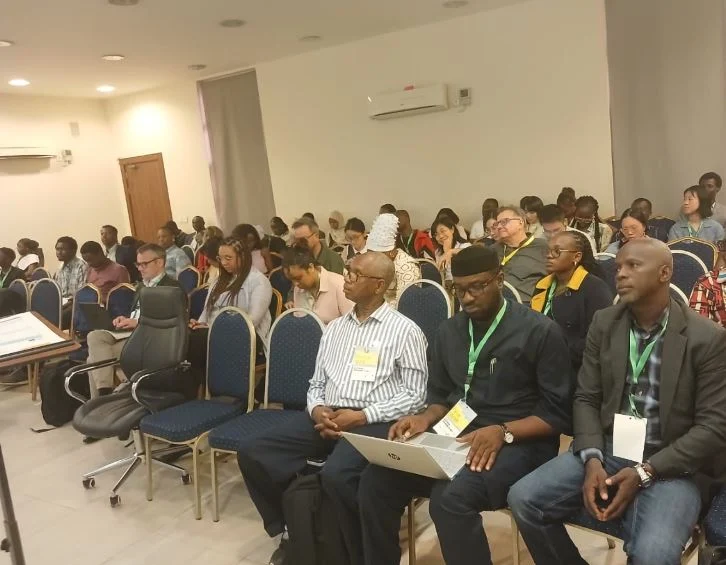
International scholars have urged Nigeria and other African countries to stop treating informal markets and settlements as urban failures, insisting that they should instead be harnessed as foundations for building resilient and sustainable cities.
The plea was made on Monday at the University of Lagos during the opening of the second edition of the Southern Urbanism Co-Net Conference.
The three-day conference, themed “Negotiating Rural-Urban Futures,” brought together architects, urban planners and researchers from Nigeria, Japan, Mali, France, China, Tanzania and Latin America.
Speakers at the conference called for the inclusive participation of traditional markets, informal settlements and indigenous architecture as valuable assets in urban planning, as they warned that excluding residents often creates decades of social and economic problems.
The conference’s organiser and UNILAG architecture lecturer, Dr Mokolade Johnson, described the gathering as a collaboration involving universities from Africa, Asia and Europe to promote indigenous knowledge in urban development.
He said, “The conference is about how culture, heritage and people-based knowledge can shape our cities instead of always looking for ideas from elsewhere.”
Executive Director, Tokyo Metropolitan Public University Corporation, Japan, Prof Oussouby Sacko, said African governments should stop seeing informal settlements only as areas to be destroyed and instead find ways to make them safer and more livable.
Sacko, a Malian-born architecture professor based in Japan, said, “When we dig deeply into African urban infrastructure and housing, we find a vocabulary that is proper to African architecture.
“The policy is not here to destroy people’s settlements. It is to see how those settlements can become livable environments.”
Drawing lessons from Japan, Sacko said African cities could adopt efficient use of limited space without abandoning local identity.
“Japan shows that minimal space can provide very high-quality services. We can learn from that while keeping our own identity. Japan shows that minimal space can provide very high-quality services. We can learn from that while keeping our own identity,” he stated.
An architect and urban designer, Dr Steven Ajadi, urged governments of African nations to judge local markets through their economic and social strengths, and not Western standards.
Ajadi argued that informality is the defining identity of African cities rather than a weakness that should be erased through demolitions.
“Informality is the identity of the African urban space. It is not necessarily a bad thing or a deficit. It is something to be proud of because it has immensely contributed to the development of African cities,” Ajadi said.
He praised traditional markets for their resilience, particularly during the COVID-19 pandemic when many formal retail outlets struggled while traditional markets continued supplying communities.
Ajadi also criticised the demolition and redevelopment of traditional markets into expensive commercial complexes, lamenting that such projects often exclude the traders who sustain local economies, saying, “We shouldn’t put Nigerian classism into how we look at ourselves. We need to study our own systems and bring the best out of them.”
Also speaking, French urban planner, Dr Christian Pedelahore de Loddis, urged African governments to prioritise affordable, locally driven innovations instead of costly mega-projects.
“We must achieve the same level of excellence as Europe with only a fraction of the resources,” he said.
Citing Latin America’s experience, he pointed to the invention of the Bus Rapid Transit system in Brazil’s Curitiba as proof that practical solutions could transform cities without enormous budgets.
“We never have to copy. We have to reinvent because every solution must be contextual,” he added.




How Obasanjo Considered Abandoning Second-Term Bid After South African President Got Wind Of Coup Plot – Donald Duke

“I hope she won’t end up paying” – Phyna reacts to Sheggz’s legal action, asks fans to pray for Bella

‘It Is A Disgrace Tinubu Doesn’t Trust Anyone’ – Melaye Slams President’s Self-Appointment As Campaign Chairman

Financial Mismanagement Rocks Federal College of Education, Yola, as SecretsReporters Uncovers ₦38.07m Worth of Financial Irregularities – Secrets Reporters Nigeria

“A governor once gave Wizkid a bag full of dollars” – Kizz Daniel’s bouncer reveals what singer allegedly did next

“My brother Davido, I love you” — Gov. Okpebholo’s aide who banned Davido from entering Edo apologises

“I spent months praying for God to take my husband’s money away” — Woman opens up on painful marriage

₦394.86m Financial Irregularities: Nigeria’s Bata Consulate Paid Unapproved Subsidy, Retained Public Funds – Secrets Reporters Nigeria

Economic Impact of Extracted Precious Metals from Electronic Waste in South Western, Nigeria; Review of Extraction Methods

Morning recap: KWAM1 breaks down in tears over Ogogo’s death, govs face questions as FAAC payouts hit N47tn, other top stories
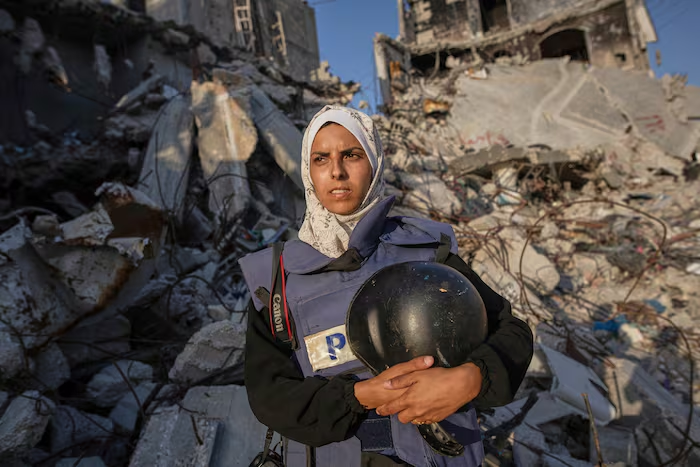
A year after Israeli strikes killed journalists at a hospital, no one has been held accountable
A year after Israeli strikes killed journalists at a hospital, no one has been held accountable

Harry Styles took break from music due to pressure: ‘I was a bit in my head’

Femi Falana Faults NBA Over Ex-Liberian President Invitation

Transfer: Scholes names Man United star angry over Santos, Tielemans, Baleba arrival
Harry Styles took break from music due to pressure: ‘I was a bit in my head’

Amnesty slams Kuje Chairman over alleged threat to non-APC voters
Transfer: Scholes names Man United star angry over Santos, Tielemans, Baleba arrival

2027: Defence Minister Christopher Musa Accepts Tinubu’s Appointment Into Campaign Council

Maulud: Peter Obi Urges Nigerians to Embrace Unity, Justice, Tolerance

 News12 hours ago
₦394.86m Financial Irregularities: Nigeria’s Bata Consulate Paid Unapproved Subsidy, Retained Public Funds – Secrets Reporters Nigeria
- News17 hours ago
Economic Impact of Extracted Precious Metals from Electronic Waste in South Western, Nigeria; Review of Extraction Methods
- Special Report9 hours ago
23 years of operation: Globacom as the architecture of value and the audacity to never settle for less
- Metro19 hours ago
“Okpebholo Signs Edo Judiciary, Assembly Financial Autonomy Bills Despite JUSUN Protest” — Capital Funds Return To Executive Control
- Metro19 hours ago
Presidential Campaign Council: Yishawu Urges APC Members to Rally Behind President Tinubu Ahead of 2027 Elections
- Metro22 hours ago
“Africa’s Borders Must Be Secure, Connected And Human-Centred” — NIS Seeks Technology, Intelligence, Community Partnerships
- Viral3 hours ago
“And this guy collected my 1k” — Man discovers ‘young boy’ he gave transport money was actually the groom
- Entertainment21 hours ago
Funke Akindele faces backlash for celebrating her birthday on the day Ogogo was buried