Metro
“Africa’s Borders Must Be Secure, Connected And Human-Centred” — NIS Seeks Technology, Intelligence, Community Partnerships

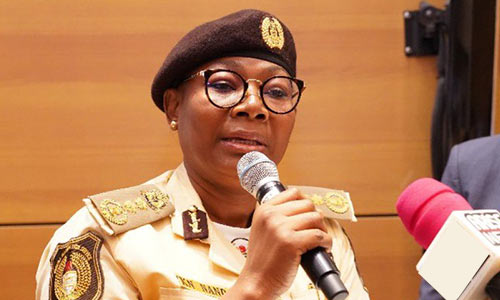
The Comptroller-General of the Nigeria Immigration Service, Mrs. Kemi Nandap, has called for stronger collaboration among African governments, security agencies, researchers, policymakers and border communities to build borderlands that are secure, connected, resilient and prosperous.
Nandap said Africa’s changing migration patterns, increasing regional integration, expanding cross-border economic activities and emerging security threats required countries to rethink traditional approaches to border management.
She spoke on Monday in Lagos at the opening of the 2026 Annual Meeting of the African Borderlands Research Network (ABORNE), jointly hosted by the Nigeria Immigration Service and Lagos State University.
The conference, themed “Connected Borderlands, Socio-Cultural Integration and the Centrality of Policy, Research and Security,” brings together researchers, policymakers, security practitioners and other stakeholders to examine contemporary challenges affecting African border communities.
Nandap said borders should no longer be regarded merely as geographical lines separating sovereign countries, noting that they are also spaces where families, communities, cultures, livelihoods, markets and economies interact.
“Borders must be understood not merely as geographical lines separating sovereign states but as dynamic spaces where families remain connected, communities interact, cultures converge, livelihoods are sustained and legitimate trade and movement take place,” she said.
According to the NIS chief, traditional border-control methods involving physical patrols and inspection of travel documents remain important but are no longer sufficient to confront increasingly sophisticated transnational crimes.
She identified human trafficking, migrant smuggling, identity fraud, organised crime, terrorism and cyber-enabled threats among the challenges requiring stronger intelligence gathering, technology and cooperation across national and institutional boundaries.
“For the Nigerian Immigration Service, this means combining the experience and judgement of our officers with technology, intelligence and stronger cooperation with other institutions,” Nandap said.
She highlighted steps already taken by Nigeria to modernise immigration and border-management systems, recalling that the country became the first African nation to introduce the electronic passport in 2007.
According to her, the NIS has since deployed enhanced electronic passports incorporating stronger biometric and security features, while automating significant aspects of passport application, payment, processing and identity verification.
She also pointed to the centralisation of passport personalisation, Nigeria’s participation in the Public Key Directory and deployment of automated border-control systems, including e-gates at international airports, as measures aimed at strengthening national security while improving the experience of legitimate travellers.
Nandap said investments in surveillance and alert systems, command-and-control capabilities, communications infrastructure and integrated data platforms were further improving situational awareness across Nigeria’s air, land and maritime borders.
She cautioned, however, that technology should remain an instrument for strengthening professional border management rather than becoming an end in itself.
According to her, sophisticated equipment cannot replace the professionalism, experience, judgement and integrity of immigration personnel responsible for applying border-management policies.
The Comptroller-General also placed particular emphasis on the role of border communities, arguing that people living along national boundaries possess valuable knowledge of their environments, movement patterns and longstanding cross-border relationships.
“They should therefore not be regarded merely as populations residing at the geographical margins of the state, but as essential stakeholders and strategic partners in promoting secure, peaceful, resilient and prosperous borderlands,” she said.
Nandap stressed the importance of balancing security requirements with regional integration, particularly within West Africa, where families, markets and communities historically developed relationships that extend across present-day national boundaries.
She said Nigeria remained committed to partnerships in border technology, biometric identity management, cybersecurity, surveillance, intelligence sharing, capacity building and research.
The NIS chief maintained that effective international and institutional partnerships should not be limited to the provision of equipment but should also develop human capacity, strengthen institutions and create solutions specifically adapted to African realities.
She said researchers, operational practitioners and border communities possess different forms of knowledge that can produce more effective policies when properly brought together.
“When research, policy, operational practice and community knowledge come together, we are better placed to develop solutions that are both effective and responsive to the people they are intended to serve,” she said.
Nandap predicted that the border of the future would become increasingly digital, biometric and intelligence-led, but insisted that border governance must remain centred on people.
“Our ambition is therefore broader than securing Nigeria’s borders. We seek secure, connected and resilient borderlands where communities can prosper, legitimate trade and mobility can flourish, and countries can cooperate in confronting shared threats,” she stated.
She consequently urged participants at ABORNE 2026 to move beyond merely identifying existing challenges and instead develop practical and sustainable partnerships capable of connecting research with policy, technology with people, and security with regional integration.


“The bullet struck exactly where she was sleeping” – Nigerian doctor recalls sister’s miraculous escape from death

Financial Mismanagement Rocks Federal College of Education, Yola, as SecretsReporters Uncovers ₦38.07m Worth of Financial Irregularities – Secrets Reporters Nigeria

“Stop Making False, Defamatory Statements About Me And My Family” — Sheggz Reportedly Serves Bella Okagbue Cease-And-Desist Notice Amid Messy Breakup

“Tinubu Names Yari DG, Uzodimma Secretary Of 2027 APC Presidential Campaign Council” — Akpabio, Gbajabiamila, Oshiomhole Get Key Roles

“Is This What Lagos Housing Crisis Has Become?” — Viral Video Of People Living Under Flyover Sparks Outrage, Disbelief

“I hope she won’t end up paying” – Phyna reacts to Sheggz’s legal action, asks fans to pray for Bella

How Obasanjo Considered Abandoning Second-Term Bid After South African President Got Wind Of Coup Plot – Donald Duke

“NDLEA Asks Court To Deny Bail To Three Mexicans, Seven Nigerians In ₦480bn Meth Lab Case” — Alleges Flight Risk

“About 40 Feared Dead As Boat Carrying Farmers Capsizes In Sokoto” — Six Rescued, Search Continues For Missing Passengers

“Protect Your Sources And Methods, But Do Not Protect The Truth From Nigerians” — Atiku Tells FBI Over Tinubu Records

Subsidy removal: Obi backs policy, faults FG’s mismanagement of proceeds

Fuel subsidy reversal can’t be reduced to election season promises — Yilwatda

Enugu Launches Website To Showcase Community, Grassroots Development Projects

How Cancer Symptoms Can Mimic Ulcer, Aproko Doctor Explains After Ogogo’s Death

2027: Atiku, Peter Obi Rejects Single-Candidate Plan

Transfer: Rafael Leao to join Chelsea, not Galatasaray

Ex-govs use Senate as retirement, protection from probe – Ex-Kwara lawmaker

When politicians are talking, close your mouth – Amaechi tackles Sowore [VIDEO]

US sanctions Chinese entities, issues global warning on ‘Economic D-Day’ against Iran

Kwara: Five injured in transport unions clash

 Politics17 hours ago
How Obasanjo Considered Abandoning Second-Term Bid After South African President Got Wind Of Coup Plot – Donald Duke
- News12 hours ago
NBET Exposed: ₦259m Unrecovered, $69.3m Power Debt, Missing Vehicles as Agency Operated Without Audited Accounts – Secrets Reporters Nigeria
- Entertainment13 hours ago
“My brother Davido, I love you” — Gov. Okpebholo’s aide who banned Davido from entering Edo apologises
- News10 hours ago
Morning recap: KWAM1 breaks down in tears over Ogogo’s death, govs face questions as FAAC payouts hit N47tn, other top stories
- Entertainment4 hours ago
“A governor once gave Wizkid a bag full of dollars” – Kizz Daniel’s bouncer reveals what singer allegedly did next
- Entertainment22 hours ago
“I spent 7 years on the sick bed, I used to vomit blood”
- Viral8 hours ago
Hon Ereyitomi Congratulates Chief Ayiri Emami, Stella Okotete on APC Presidential Campaign Council Appointments
- Politics5 hours ago
‘It Is A Disgrace Tinubu Doesn’t Trust Anyone’ – Melaye Slams President’s Self-Appointment As Campaign Chairman