World
New US sanctions aim to block all potential revenue sources for Iran – Bessent

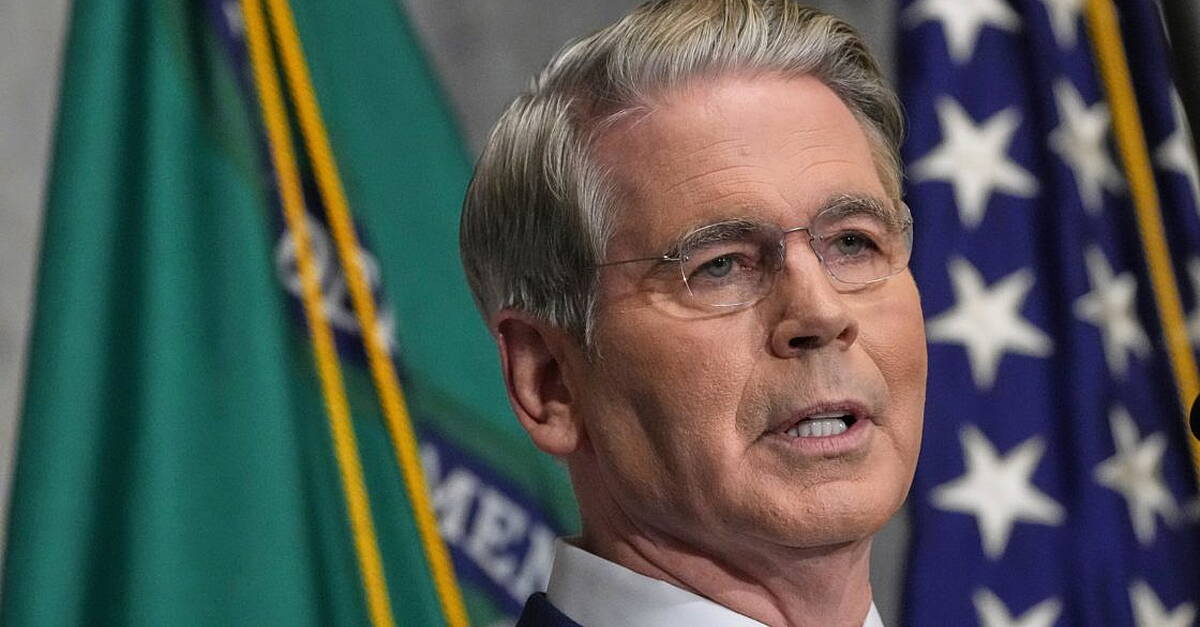
US treasury secretary Scott Bessent said that new American sanctions aim to block all potential sources of revenue for Iran and told nations to cut economic ties to Tehran or face retaliation.
Mr Bessent said it was “no longer acceptable to operate in the grey spaces” of the conflict.
He did not name what countries could face potential secondary sanctions from the US, but China, Turkey and the United Arab Emirates (UAE) are Iran’s largest trade partners.
“Let there be no ambiguity as to the position of the United States,” Mr Bessent told a news conference.
“An economic engagement of any kind with this murderous regime will expose those responsible to the full reach of American power.”
Washington has said the new sanctions aim to put more pressure on an economy already battered by previous sanctions and a US naval blockade.
Mr Bessent made the announcement as Iran’s currency hit a record low.
The rial dropped to 2.02 million to the US dollar as trading opened on currency markets.

Iran’s official central bank rate stood at around 1.5 million rial to the dollar, but the market rate is what most Iranians pay.
The currency had already been under pressure before the US and Israel attacked Iran on February 28, as Iran faced double-digit inflation and negative growth.
The rial has repeatedly hit new lows as nearly six months of war have taken an even greater toll.
Iranians find daily staples increasingly unaffordable. Since the war began, rice is up some 60% and beef prices are more than 150% higher. The International Monetary Fund forecasts that gross domestic product will contract more than 5%.
Still, economic pressure has not yet translated into political pressure. Iran retains a key strategic advantage: Its attacks and threats on ships in the Strait of Hormuz have brought traffic in the vital waterway to a near halt, damaging the world economy and heaping pressure on US President Donald Trump ahead of congressional elections.
The (Iranian) regime’s final refuge now lies in the self-deception of fearful nations that still believe accommodating aggression can secure a durable peace
The war, as a result, has devolved into a fight over who controls the strait, through which a fifth of the world’s traded oil transited before the conflict. Iran is now refusing to fully reopen it unless it can charge ships.
Iran and Oman, which is on the opposite side of the strait, are reportedly in the final stages of agreeing on a plan for joint management of the waterway. Oman’s foreign minister is set to visit Iran on Tuesday.
In an attempt to break the impasse, the administration promised even stronger sanctions, including secondary sanctions on countries that continue to do business with Iran.
Ahead of the announcement, Mr Trump posted on social media that “IRAN IS COMPLETELY COLLAPSING!!!”
“President Trump decimated Iran’s economy to a point where the rial has never been weaker and inflation has rarely been higher,” Mr Bessent wrote on Sunday in an opinion piece in the Financial Times.
“The regime’s final refuge now lies in the self-deception of fearful nations that still believe accommodating aggression can secure a durable peace.”
Already last week, the UAE announced that it was suspending all trade with Iran. The UAE has long been one of Iran’s largest trading partners and its biggest source of imports.
Iranian foreign ministry spokesperson Esmail Baghaei told reporters in Tehran on Monday that “any escalation of this situation will undoubtedly bring about consequences”.

“Our hands are not tied,” he added.
Pakistan, which played a key role in brokering a 60-day ceasefire in June, sent a high-level delegation to Iran on Monday to encourage the US and Iran to return to negotiations, two senior officials said.
The military confirmed only Field Marshal Asim Munir’s visit, saying it was aimed at de-escalating tensions in the region.
Mr Trump spoke with Field Marshal Munir ahead of the army chief’s visit to Iran, according to a person familiar with the discussion.
Field Marshal Munir met Iranian interior minister Eskandar Momeni in Tehran, according to the two senior officials.
He was accompanied by Pakistani interior minister Mohsin Naqvi and other officials.
Field Marshal Munir was expected to remain in Iran overnight and meet the Iranian president and other senior officials before returning to Pakistan.
His previous visit to Tehran in May helped pave the way for a memorandum of understanding signed by the US and Iran in June.


“The bullet struck exactly where she was sleeping” – Nigerian doctor recalls sister’s miraculous escape from death

Financial Mismanagement Rocks Federal College of Education, Yola, as SecretsReporters Uncovers ₦38.07m Worth of Financial Irregularities – Secrets Reporters Nigeria

“Stop Making False, Defamatory Statements About Me And My Family” — Sheggz Reportedly Serves Bella Okagbue Cease-And-Desist Notice Amid Messy Breakup

“Tinubu Names Yari DG, Uzodimma Secretary Of 2027 APC Presidential Campaign Council” — Akpabio, Gbajabiamila, Oshiomhole Get Key Roles

“Is This What Lagos Housing Crisis Has Become?” — Viral Video Of People Living Under Flyover Sparks Outrage, Disbelief

“I hope she won’t end up paying” – Phyna reacts to Sheggz’s legal action, asks fans to pray for Bella

How Obasanjo Considered Abandoning Second-Term Bid After South African President Got Wind Of Coup Plot – Donald Duke

“NDLEA Asks Court To Deny Bail To Three Mexicans, Seven Nigerians In ₦480bn Meth Lab Case” — Alleges Flight Risk

“Protect Your Sources And Methods, But Do Not Protect The Truth From Nigerians” — Atiku Tells FBI Over Tinubu Records

“About 40 Feared Dead As Boat Carrying Farmers Capsizes In Sokoto” — Six Rescued, Search Continues For Missing Passengers

Ogun SUBEB hails Abiodun over N12bn counterpart funding payment

US Supreme Court clears the way for Trump mail voting order in advance of midterms

Dutch broadcaster to boycott Eurovision for a second year, calling it a 'platform for division'

Adult, betting, AI websites dominate Nigerian web traffic in July – Report

Police nab 68, 70-year-old men over attempted assault of 12-year-old girl

APC Campaign Council: Edu, Olejeme Get Key Roles Despite Corruption Cases

NUPENG Faults Atiku’s Promise to Restore Petrol Subsidy

Atiku’s position on subsidy puts Tinubu under pressure – ADC chieftain

“Okpebholo Signs Edo Judiciary, Assembly Financial Autonomy Bills Despite JUSUN Protest” — Capital Funds Return To Executive Control

I even sacrificed my beard

 Politics20 hours ago
How Obasanjo Considered Abandoning Second-Term Bid After South African President Got Wind Of Coup Plot – Donald Duke
- News14 hours ago
NBET Exposed: ₦259m Unrecovered, $69.3m Power Debt, Missing Vehicles as Agency Operated Without Audited Accounts – Secrets Reporters Nigeria
- Entertainment16 hours ago
“My brother Davido, I love you” — Gov. Okpebholo’s aide who banned Davido from entering Edo apologises
- News12 hours ago
Morning recap: KWAM1 breaks down in tears over Ogogo’s death, govs face questions as FAAC payouts hit N47tn, other top stories
- Entertainment6 hours ago
“A governor once gave Wizkid a bag full of dollars” – Kizz Daniel’s bouncer reveals what singer allegedly did next
- Politics7 hours ago
‘It Is A Disgrace Tinubu Doesn’t Trust Anyone’ – Melaye Slams President’s Self-Appointment As Campaign Chairman
- Viral11 hours ago
Hon Ereyitomi Congratulates Chief Ayiri Emami, Stella Okotete on APC Presidential Campaign Council Appointments
- Viral15 hours ago
“I have been chilling with my girls since morning” — Woman shows off impressive eggs from her poultry farm