News
EU, UNIDO boost renewable energy drive in Gombe


The European Union and the United Nations Industrial Development Organisation have intensified efforts to boost Nigeria’s renewable energy capacity, with the 620kW Balanga Dam Small Hydropower Project in Gombe State emerging as a model for powering agro-industrial development.
UNIDO, with funding support from the EU, on Monday organised a capacity-building workshop in Gombe to strengthen the capacity of policymakers, project developers, financial institutions and other stakeholders to develop and implement Small Hydropower projects.
The workshop on Monday also featured the fourth meeting of the project steering committee, with participants examining the potential of small hydropower to expand electricity access, drive rural development and support agro-processing.
Speaking at the event, UNIDO Representative and Sub-Regional Director, Philbert Johnson, said Nigeria had an estimated 24,000 megawatts of hydropower potential, with about 3,500MW coming from small hydropower.
Johnson, however, said the country’s electricity access remained below 60 per cent, underscoring the need to harness its renewable energy resources to bridge the supply gap.
He said, “Among these renewable energy sources, SHP holds great potential towards increasing access to electricity and addressing climate change.”
According to him, the project is being implemented by UNIDO in collaboration with the Federal Ministry of Power, Federal Ministry of Water Resources and Sanitation, Rural Electrification Agency and relevant state governments, including Gombe.
He said the Balanga Dam project was selected as a practical case study to equip participants with the skills required for effective development and implementation of small hydropower projects.
“The Balanga Dam Small Hydropower Project is more than a mere energy infrastructure initiative. It provides us with a hands-on opportunity to examine how our water resources can be optimally harnessed to support economic transformation, improve livelihoods and strengthen energy security,” Johnson said.
The Deputy Governor of Gombe State, Dr Manassah Jatau, said the state would provide the necessary support to ensure the speedy completion of the project.
Jatau thanked the EU Delegation, UNIDO, the Global Environment Facility and the Rural Electrification Agency for their contributions towards the project.
He said the Balanga Dam project was strategically important to Gombe because it would generate clean electricity while supporting irrigation, water supply, flood control and livelihoods.
“It is a great honour for us to host this important Capacity Building Workshop on Small Hydropower Development. By choosing Balanga Dam SHP as a case study, you have put Gombe State on the national map for renewable energy and sustainable water management,” he said.
The deputy governor disclosed that the state government would facilitate the completion of the hydropower project and the agro-processing cluster expected to serve as the primary off-taker of the electricity generated.
“We will integrate SHP development into our rural electrification and irrigation master plan. We will ensure community ownership so that the project is protected, sustained, and delivers benefits to the host communities,” Jatau said.
The development is expected to strengthen Gombe’s push for renewable energy while linking clean power generation with agro-processing, irrigation and rural economic development.



“The bullet struck exactly where she was sleeping” – Nigerian doctor recalls sister’s miraculous escape from death

How Obasanjo Considered Abandoning Second-Term Bid After South African President Got Wind Of Coup Plot – Donald Duke

Financial Mismanagement Rocks Federal College of Education, Yola, as SecretsReporters Uncovers ₦38.07m Worth of Financial Irregularities – Secrets Reporters Nigeria

“Tinubu Names Yari DG, Uzodimma Secretary Of 2027 APC Presidential Campaign Council” — Akpabio, Gbajabiamila, Oshiomhole Get Key Roles

“Stop Making False, Defamatory Statements About Me And My Family” — Sheggz Reportedly Serves Bella Okagbue Cease-And-Desist Notice Amid Messy Breakup

“I hope she won’t end up paying” – Phyna reacts to Sheggz’s legal action, asks fans to pray for Bella

“Is This What Lagos Housing Crisis Has Become?” — Viral Video Of People Living Under Flyover Sparks Outrage, Disbelief

“NDLEA Asks Court To Deny Bail To Three Mexicans, Seven Nigerians In ₦480bn Meth Lab Case” — Alleges Flight Risk

“My brother Davido, I love you” — Gov. Okpebholo’s aide who banned Davido from entering Edo apologises

“A governor once gave Wizkid a bag full of dollars” – Kizz Daniel’s bouncer reveals what singer allegedly did next

₦394.86m Financial Irregularities: Nigeria’s Bata Consulate Paid Unapproved Subsidy, Retained Public Funds – Secrets Reporters Nigeria
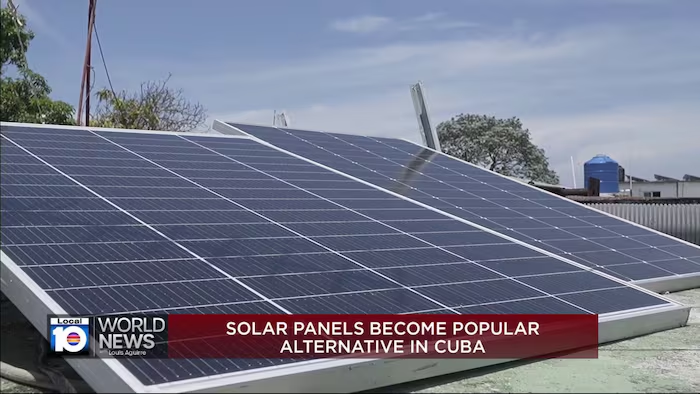
Cubans turn to solar to keep lights on during fuel blockade — if they can afford it

Declare national emergency on child abuse, psychiatrists beg FG

Rivers payroll audit: Fubara insists ghost workers must go
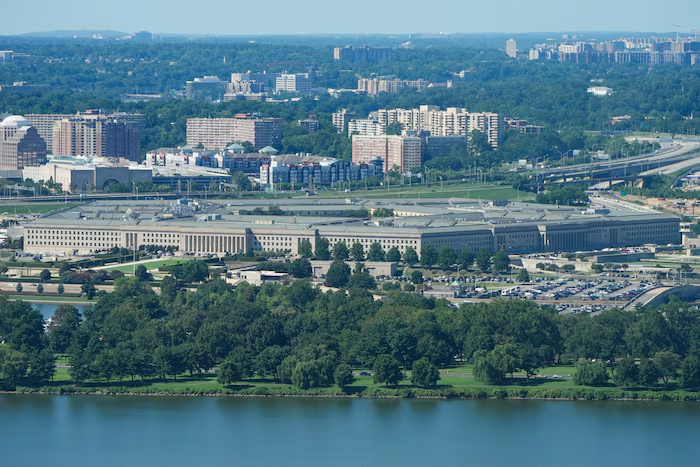
US strikes a vessel in the eastern Pacific, killing 2 people in first attack in months
US strikes a vessel in the eastern Pacific, killing 2 people in first attack in months

‘Close Your Mouth’ – Amaechi Shuts Down Sowore at NBA Event

Awujale: Ruling house sues Ogun, kingmakers

Ajayi escapes hamstring injury, set for Coventry

PenCom records 11.18 million pension registrations in Q1

 Entertainment21 hours ago
“My brother Davido, I love you” — Gov. Okpebholo’s aide who banned Davido from entering Edo apologises
- Entertainment12 hours ago
“A governor once gave Wizkid a bag full of dollars” – Kizz Daniel’s bouncer reveals what singer allegedly did next
- Politics13 hours ago
‘It Is A Disgrace Tinubu Doesn’t Trust Anyone’ – Melaye Slams President’s Self-Appointment As Campaign Chairman
- News20 hours ago
NBET Exposed: ₦259m Unrecovered, $69.3m Power Debt, Missing Vehicles as Agency Operated Without Audited Accounts – Secrets Reporters Nigeria
- News18 hours ago
Morning recap: KWAM1 breaks down in tears over Ogogo’s death, govs face questions as FAAC payouts hit N47tn, other top stories
- Viral16 hours ago
Hon Ereyitomi Congratulates Chief Ayiri Emami, Stella Okotete on APC Presidential Campaign Council Appointments
- Entertainment13 hours ago
“I spent months praying for God to take my husband’s money away” — Woman opens up on painful marriage
- Metro6 hours ago
“Okpebholo Signs Edo Judiciary, Assembly Financial Autonomy Bills Despite JUSUN Protest” — Capital Funds Return To Executive Control