Politics
Radicalized Terrorist Gets Second Swing at Justice, Christians Do Not

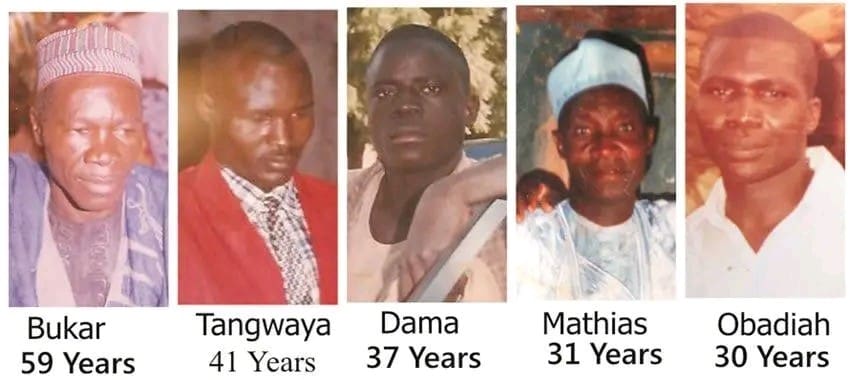
When convicted terrorists receive appellate lifelines while minority Christians rot in detention without trial, Nigeria’s judiciary reveals a faith-based double standard that shreds the constitutional promise of equal protection under the law.
Nigeria’s Big Two-hearted, Two-Tiered System of Justice
By Suleman Ayuba
(Maiduguri) In the fractured judicial system in Nigeria, equal protection for Christians under the law has dissolved into a stark, two-tier system of justice—contrary to the guarantees of fair hearing within a reasonable time and equality before the law under Section 36 of the 1999 Constitution (as amended), as repeatedly affirmed by Nigerian courts including the Supreme Court in cases emphasizing that proceedings conducted in breach of these rights are nullities.
The disparity is not subtle; it is a glaring divide defined by status, influence, and faith. On one side, convicted mass murderers and orchestrators of terror are offered procedural lifelines, second chances, and government-sponsored reintegration programs. On the other side, marginalized Christian communities face arbitrary detention, unconstitutional pre-trial incarceration, and total abandonment by the state.
This double standard was laid bare when the Court of Appeal in Abuja granted Kabiru Umar—famously known as Kabiru Sokoto—a fresh 21-day window to appeal his life sentence. Sokoto was convicted in 2013 for his role in the catastrophic 2011 Christmas Day bombing of St. Theresa’s Catholic Church in Madalla, Niger State, an attack that claimed at least 37 lives. Over a decade after his conviction, the appellate court cleared his procedural hurdles citing delays due to custodial transfers and deceased counsel. While Sokoto’s legal team actively utilizes the court system to challenge his conviction, thousands of innocent victims of terrorism across the country remain deprived of the basic right to a fair trial.
The recent development was reported in detail by TheNigeriaLawyer on September 3, 2026: the Court of Appeal in Abuja granted Kabiru Sokoto leave to challenge his 2013 life sentence, ordering that the appeal processes be filed within 21 days.
Twelve Years in the Shadows: The Gwoza Five
While high-profile terror figures navigate the appellate process with legal representation, five members of the Gwoza Christians Community Association have spent 12 years languishing in detention without trial. Arrested without formal proceedings, these individuals remain locked away in custody, their constitutional rights suspended in a perpetual state of legal limbo. Despite repeated petitions and appeals to government authorities from community leaders and human rights advocates, their plight has been met with systemic silence.
The contrast is undeniable. A notorious terror operative linked to one of the most horrific massacres in recent Nigerian history receives a platform to fight for his freedom, while five citizens whose only crime was belonging to a targeted minority community are denied even a day in court.
A Systemic Bias Driven by Faith
Speaking to TruthNigeria, Gavvs Katiya, Chairman of the Gwoza Refugees Resettlement Initiative, described the reality facing displaced believers in the region. According to Katiya, minority Christians are routinely treated as second-class citizens in their own homeland. He asserted that the primary reason the five Gwoza Christians remain indefinitely locked in prison without trial is their faith in Christ.
Contrasting their treatment with the leniency and rehabilitation afforded to repented insurgents. This sentiment of institutional bias is echoed across the region.
In a separate interview with TruthNigeria, Rev. Ayuba Adamu, a Christian clergyman from Gwoza, emphasized that religious affiliation directly dictates one’s access to safety and justice in Nigeria. Rev. Adamu pointed out that bearing a Christian name alone increases an individual’s risk of being targeted by extremist groups, while simultaneously diminishing their chances of receiving impartial justice within the legal system.
Rev. Adamu highlighted Gwoza as a microcosm of the broader Nigerian reality—a region where ethnic and Christians face relentless violence, forced displacement, and arbitrary detention without cause or legal recourse, while the instruments of state justice appear skewed in favor of their tormentors.
Reclaiming the Rule of Law
The Nigerian Constitution explicitly guarantees the right to a fair hearing within a reasonable time, the presumption of innocence, and equality before the law. However, the stark contrast between Kabiru Sokoto’s procedural reprieve and the 12-year untried detention of the Gwoza Christian leaders exposes a deeply flawed justice system.
When notorious actors of terror are granted every legal remedy while innocent, marginalized citizens are left to rot in detention cells without trial, the judiciary ceases to act as an impartial arbiter of justice, according to Nathan Ibrahim, Abuja-based human rights lawyer.
For Nigeria to restore confidence in its legal institutions, the government must dismantle this two-tier framework, uphold the constitutional rights of all citizens regardless of faith, and ensure that justice is neither delayed nor denied to the vulnerable, Ibrahim told TruthNigeria.
Suleman Ayuba is a conflict reporter for TruthNigeria.
Related


Oyo 2027: Civil servants wait for seven to 10 years before receiving entitlements – ADC guber candidate

Evening recap: FG to give Nigerian shipowners $25m, Drivers, cooks, traders can own refinery shares, other top stories

CBN Deputy Governor Emem Usoro Who Was Side Chic To A Married Man Accused Of Watching Him Take His Last Breath, Buried Him Alone And Took His Death Certificate From His Wife – Secrets Reporters Nigeria

‘After Working With Peter Obi, You Risk Suffering Post-political Identity Crisis’ – Kenneth Okonkwo Defends Datti

‘Peter Obi Is A Content Creator’ – Presidency Attacks Him For Attending Makinde’s Campaign Office Launch

Exclusive: Niger Delta Suffers While MDGIF Director Oluwole Adama Hides N12.9 Billion Natural Gas Fund – Secrets Reporters Nigeria

Where Is The Money You Saved From Subsidies That Never Existed? – Adebayo Dares Tinubu To Public Debate

Shettima Tasks Transporters on Peaceful Mobilisation for Tinubu’s 2027 Re-election Bid » Apples Bite Int’l Magazine

Ibiyeomie Rejects Offerings From Internet Fraudsters, Tells Them To Leave » Apples Bite Int’l Magazine

Tinubu Govt Bars Ministers, Service Chiefs, Agency Heads From Foreign Trips Without OSGF Approval » Apples Bite Int’l Magazine

Messi: Five things to know about Spanish club CD Eldense

Police, FIDA Partner To Protect Women, Children…
Messi: Five things to know about Spanish club CD Eldense

Shehu Sani Opposes Privatisation, Concession Of King’s College Lagos
Messi: Five things to know about Spanish club CD Eldense

Birds Of The Same Feather – Wike’s Aide Fires Makinde Over Daura

Iran, US trade blows as Hormuz impasse deepens

Kwara Agency Removes PDP Governorship Candidate’s Billboards Over Alleged Violations

EPL: Panel rules Arsenal wrongly denied penalty against Aston Villa

Suspected Thief Caught After Posing As Hospital Staff To Steal Nurse’s iPhone 16 In Berekum

 Politics18 hours ago
Where Is The Money You Saved From Subsidies That Never Existed? – Adebayo Dares Tinubu To Public Debate
- News14 hours ago
Tinubu Govt Bars Ministers, Service Chiefs, Agency Heads From Foreign Trips Without OSGF Approval » Apples Bite Int’l Magazine
- Viral22 hours ago
87-year-old man Allegedly Cūt Off Judge’s Hand in Fufore, Adamawa — Att&cked Him During Court Case Over Dispute
- News20 hours ago
Surveyor-General Oladele Ewulo Faces Questions Over Alleged Fake Certificates of Occupancy and Survey Irregularities in Ogun Land Deals – Secrets Reporters Nigeria
 News12 hours ago
2027: Accord’s Hashim Targets 4 Million Barrels of Oil Daily Within 24 Months » Apples Bite Int’l Magazine
- News16 hours ago
Special Report: How Charles Odii, Appointed SMEDAN DG At 35 Years on Seyi Tinubu’s Recommendation, Presided Over ₦9.75 Billion in Questionable Spending in His First Ten Weeks – Secrets Reporters Nigeria
- Entertainment23 hours ago
“After I sold my father’s property…” — Man breaks down in tears as lady he sponsored in school dumps him
- Entertainment17 hours ago
“I had already planned to appoint Ogogo” – Yayi reveals late actor’s cabinet role if elected governor