News
Business icons who bounced back after major setbacks

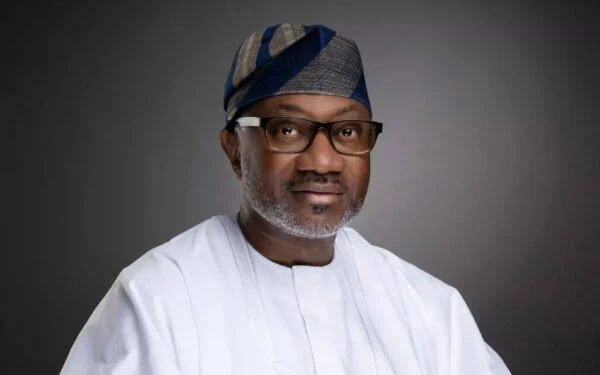
NAOMI CHIMA takes a look at some billionaires who faced major setbacks in their businesses and careers but were able to bounce back bigger and better
Femi Otedola
Femi Otedola is one of several wealthy Nigerian business figures whose dramatic financial setbacks have been extensively documented.
During the 2008 global financial crisis, Otedola faced a catastrophic market collapse after holding roughly 93 per cent of Nigeria’s diesel import market through Zenon Petroleum. A combination of falling crude oil prices, naira devaluation, declining asset values and mounting bank obligations placed his business empire under severe pressure.
In his 2025 memoir, Making It Big: Lessons From a Life in Business, Otedola recalled that crude oil had risen to about $147 per barrel before plunging to $34. Believing the boom would continue, he ordered about $500m worth of diesel for import into Nigeria.
The timing proved disastrous. While the diesel was still at sea, the price collapsed, leaving the cargo worth substantially less than what he had paid for it. Otedola said he realised he was in serious trouble.
The crisis was compounded by the devaluation of the naira. According to Otedola, loans that had been secured at about N117 to the dollar had to be repaid at approximately N165 to the dollar.
He said about N60bn “disappeared” as a result of the currency movement, while another N40bn went into interest payments. His total debt eventually reached about N220bn across eight banks.
Otedola also held substantial positions in Nigerian banks. He recalled owning about 2.3 billion shares in Zenith Bank and regretted not selling when the share price rose from N12 to N60. He estimated that the decision cost him a potential gain of about N191bn.
To survive the crisis, Otedola reached an agreement with the Asset Management Corporation of Nigeria and surrendered a substantial number of assets, including properties, filling stations, truck parks, tank farms, shares and a Bombardier jet.
Rather than attempting to preserve everything and risk losing the entire business, he accepted the painful restructuring.
Rebuilding from the ground up around his remaining asset, African Petroleum, later rebranded as Forte Oil, Otedola streamlined operations, instituted stricter corporate governance and diversified into power generation. He eventually sold Forte Oil and used the proceeds to pursue strategic investments, including shares in First Bank and Geregu Power Plc.
By 2012, according to his account, he had cleared his debts and begun rebuilding his business interests.
Otedola has also spoken publicly about the psychological toll of the crisis. His story therefore goes beyond that of a businessman who lost money and recovered. It is an account of an entrepreneur who had to accept enormous losses, restructure his obligations and start again.
The experience, he said, changed his approach to risk, corporate governance and business fundamentals. His career has since included investments in power, finance, shipping and real estate.
Otedola, who is chairman of First Bank Nigeria Holdings Plc, was born on November 4, 1962, in Ibadan, Oyo State, and is the son of the late Michael Otedola, a former governor of Lagos State.
Aigboje Aig-Imoukhuede
Aigboje Aig-Imoukhuede’s most significant adversity was not a documented personal financial wipeout but the challenge of taking control of a relatively small bank and transforming it into one of the country’s biggest financial institutions.
In 2002, Aig-Imoukhuede left Guaranty Trust Bank and, alongside his longtime business partner, Herbert Wigwe, took over the leadership of Access Bank. At the time, Access Bank was far from being one of Nigeria’s dominant financial institutions.
In an interview, Aig-Imoukhuede recalled that the bank was ranked around 70th among Nigeria’s banks.
The ambition, nevertheless, was enormous: to build a Nigerian bank capable of competing with major international financial institutions.
Details documented in his memoir, Leaving the Tarmac, show that Aig-Imoukhuede and Wigwe acquired Access Bank in 2002 when it was a small, low-ranked institution facing liquidity challenges and regulatory pressures.
He recalled that the early operation was far removed from the image of a major financial institution. He described the environment in which he and Wigwe began rebuilding the bank as extremely modest, even as they recruited talent and established a new corporate culture.
The Nigerian banking crisis of 2008 and 2009 presented another major test.
During the global financial crisis and the subsequent collapse in the Nigerian banking sector, Access Bank faced severe systemic shocks, credit defaults and high counterparty risks that threatened the survival of financial institutions across the sector.
Aig-Imoukhuede said eight Nigerian banks were found to be severely distressed. He argued that institutions that survived did so partly because they took a broader view of their responsibilities to depositors and other stakeholders.
The crisis eventually created opportunities as well as threats. Access Bank expanded through acquisitions, including its takeover of Intercontinental Bank, helping it become a much larger institution.
Aig-Imoukhuede’s tenure transformed Access Bank from a relatively minor player into one of Nigeria’s leading banks. The Aig-Imoukhuede Foundation says he led the acquisition of Access Bank and, as CEO from 2002 to 2013, transformed it from a minor player into a leading African bank.
His story later took another unexpected turn.
After leaving Access Bank’s executive leadership in 2013, Aig-Imoukhuede returned as chairman of Access Holdings in March 2024 following the death of his longtime friend and successor, Herbert Wigwe, in a helicopter crash.
In a 2026 interview, he reflected on institution-building and the importance of ensuring that organisations survive beyond their founders and individual leaders.
Hakeem Belo-Osagie

Hakeem Belo-Osagie’s business story is closely associated with one of Nigeria’s most dramatic telecommunications crises.
Belo-Osagie was chairman of Emerging Markets Telecommunications Services, the company behind Etisalat Nigeria.
Under his leadership, the telecoms company grew into one of Nigeria’s major mobile operators before becoming engulfed in a severe financial crisis.
In 2017, Etisalat Nigeria defaulted on a $1.2bn syndicated loan from a consortium of 13 Nigerian banks following currency devaluation and broader macroeconomic pressures.
Although the debt was held by Etisalat Nigeria rather than Belo-Osagie personally, the crisis posed a major challenge to the company and the wider financial system. Efforts to restructure the debt eventually involved the Central Bank of Nigeria and the Nigerian Communications Commission.
The company had already repaid about $500m of the loan before its difficulties escalated, according to a Reuters report at the time. However, the sharp depreciation of the naira increased the burden of servicing the remaining dollar-denominated debt.
Efforts to restructure the debt ultimately failed, and the banks took steps to protect their interests.
The crisis resulted in a major restructuring of the telecommunications company. Etisalat was later rebranded as 9mobile.
Belo-Osagie stepped down as chairman as the restructuring took shape, allowing the company to undergo a transition aimed at preserving the business and protecting the wider telecommunications ecosystem.
He later continued his work in investment and finance through Metis Capital Partners, which facilitates investments between African projects and global partners. He has also remained active as a board strategist and dealmaker, participating in high-level discussions on infrastructure and investment in Nigeria.
Benedict Peters

The founder of Aiteo Group faced severe regulatory scrutiny, political hostility and legal asset freezes rather than an operational financial collapse.
Peters’ most significant documented setback was a legal and reputational battle involving some of his assets. Following the 2015 change in government, he became embroiled in global asset-forfeiture attempts, money-laundering allegations and litigation linked to his acquisition of the OML 29 oil block.
In 2016, properties belonging to Peters became subject to interim forfeiture orders obtained by the Economic and Financial Crimes Commission during investigations connected to former Petroleum Minister Diezani Alison-Madueke.
The properties included assets in London and the United States.
Peters and companies associated with him challenged the orders, arguing that the properties belonged to him.
In 2017, the High Court cleared him of the charges, ruling that his asset acquisitions were legitimate, and prohibiting state agencies from interfering with them. The Federal High Court in Abuja also ordered the immediate release of two UK properties belonging to Peters. The proceedings concerned properties that had been included on a list of assets allegedly connected to Alison-Madueke.
After successfully challenging the allegations, Peters expanded his operations internationally, establishing mining and energy interests across Ghana, Zimbabwe and other markets through Bravura Holdings.
He also increasingly shifted Aiteo from oil trading towards upstream production.
The acquisition of OML 29 and the Nembe Creek Trunk Line became important elements of the company’s expansion.
Peters has continued to build Aiteo, maintaining his position as one of Nigeria’s major indigenous players in the oil and gas industry.
Tunde Folawiyo

Babatunde Folawiyo’s story is one of succession, diversification and transformation.
He inherited the stewardship of the Yinka Folawiyo Group following the death of his father, Wahab Folawiyo. His major operational challenge revolved around high-risk energy development, particularly the Aje offshore field on Oil Mining Lease 113 in the Benin Basin.
While Yinka Folawiyo Petroleum made history by exploring and developing the first producing field outside the Niger Delta, the venture was fraught with complex technical challenges, high capital expenditure and unpredictable production.
The financial burden intensified as major international partners, including PetroNor E&P, sought exits or strategic divestments amid broader corporate pressures. This left Folawiyo facing significant capital requirements and project delays on a field with substantial gas reserves.
Rather than allowing capital-intensive upstream oil liabilities to overwhelm the conglomerate, Folawiyo pursued a dual-track strategy.
He restructured asset ownership by negotiating strategic stake sales and joint operations with international partners, including the formation of Aje Production AS, to reduce exposure and monetise the field’s gas reserves.
He also redirected capital into sectors with stronger cash-generation potential, including telecommunications, wealth management and infrastructure. He maintained a strategic stake in MTN Nigeria and served on the boards of major institutions.
Folawiyo continues to serve as chairman and managing director of the Yinka Folawiyo Group. He has also held prominent chairmanships across financial and corporate institutions, including Coronation Merchant Bank, Temple Management Company and Global Citizen Nigeria.
The diversification has provided exposure to different parts of the Nigerian economy while also exposing the group to risks associated with oil prices, foreign exchange, logistics and regulation.
Deji Adeleke

Adedeji Adeleke founded Pacific Holdings in 1983. What began as a modest drilling and water-treatment operation developed into a diversified business with interests in energy, power generation, banking, logistics, agriculture, manufacturing and real estate.
Pacific Holdings has faced operational headwinds, market fluctuations and shipping delays typical of large African industrial conglomerates.
Rather than depending on a single business, Adeleke developed interests across multiple sectors, allowing the wider group to spread its exposure to individual market shocks.
He maintained strong capital reserves while funding major infrastructure ventures, power plants and Adeleke University.
Mo Abudu

Mo Abudu’s story offers a different but compelling example of entrepreneurial resilience.
Before becoming a major media entrepreneur, Abudu worked in human resources and later moved into television and entertainment.
Her transition from corporate employment into entrepreneurship required her to build an entirely new business around an idea that initially existed largely as a vision.
Abudu has spoken repeatedly about the challenges of establishing EbonyLife.
In an interview published by EbonyLife, she described developing the idea for the television network, approaching DSTV and MultiChoice, preparing business plans and continuing to pursue the project despite repeated setbacks.
The development of EbonyLife required Abudu to move from her corporate human resources career at ExxonMobil into media, where she became responsible for raising capital, developing programming, building partnerships and creating an African media brand with international ambitions.
Launching EbonyLife TV required significant upfront investment in original programming, studio equipment and satellite carriage. Traditional television advertising revenues across sub-Saharan Africa were volatile, while the high infrastructure costs associated with broadcast television increasingly became difficult to sustain.
Recognising the shift in media consumption, Abudu pivoted EbonyLife from an expensive linear television model towards film production and the development of intellectual property for global audiences.
She secured major co-production and distribution partnerships with international companies, including Netflix, Sony Pictures and the BBC, while producing commercially successful films such as The Wedding Party and Chief Daddy.
EbonyLife subsequently developed into a broader media group, with interests extending beyond the original television channel into film, television production and entertainment.
The company has also attracted international recognition, with Harvard Business School using EbonyLife as a case study.
Oba Otudeko

Oba Otudeko’s primary business challenges stemmed from complex, high-stakes debt disputes following the 2008/2009 banking crisis rather than a conventional corporate balance-sheet wipeout.
In 2021, the Central Bank of Nigeria directed First Bank of Nigeria to recover outstanding insider obligations linked to Honeywell Flour Mills. Media reports described the matter as involving a multi-billion-naira default, while Honeywell disputed the characterisation, maintaining that its facilities had been serviced under professional terms and reduced over time.
In parallel, Honeywell became embroiled in litigation with Ecobank.
Otudeko testified that Honeywell had reached an agreement to pay N3.5bn as a full and final settlement of its obligations. Although lower courts initially favoured Honeywell, the Supreme Court ruled in January 2023 that the informal agreement did not constitute a binding written contract, meaning the companies remained legally indebted to Ecobank.
Crucially, the episode involved disputed corporate loan obligations rather than a direct personal net-worth loss of N13.5bn.
Otudeko subsequently restructured his group’s portfolio. Honeywell Group sold its majority stake in Honeywell Flour Mills Plc to Flour Mills of Nigeria in a landmark transaction, helping to streamline its exposure.
In July 2025, Nigerian authorities and the Economic and Financial Crimes Commission formally withdrew legacy financial dispute charges against Otudeko following a court-approved settlement, ending years of legal scrutiny without a finding of personal wrongdoing.
That same month, Otudeko completed a major off-market exit from First Holdco Plc, selling 10.43 billion shares for N323.33bn ($211.4m).
Otudeko remains the founder and group chairman of Honeywell Group, which has diversified interests in real estate, hospitality, energy and infrastructure, alongside philanthropic initiatives through the Oba Otudeko Foundation.
He was formerly president of First Bank of Nigeria and has served on the boards of several major companies, including Airtel Nigeria, Fan Milk of Nigeria and Ecobank.






‘Akpabio’s wife visited Senate Chamber to inspect faulty equipment’ – Aide refutes ‘unholy access’ reports

Fulani Militia Seize 6 from Kaduna Village, Leave 2 for Dead as Kidnapping Expands in Nigeria’s Middle Belt

Nigeria Cannot Have Security Without A Strong Economy, Otunba Senator Gbenga Daniel Declares » Apples Bite Int’l Magazine

Trump Appoints Atiku’s US Lobbyist Karl Von Batten to White House Commission » Apples Bite Int’l Magazine

“Make una keep deceiving una sef with brand deals” – Phyna reacts to Tochi’s advice to BBNaija ex-housemates

Politics 27 seconds ago Insecurity: APM Accuses Tinubu Govt Of Downplaying Killings, Kidnappings The Allied Peoples Movement (APM) has accused the Federal Government of living in denial over its claim that insecurity has improved across…

Pindaa Health Workers Share Video Of Huge River They Risk Their Lives To Cross Everyday Before Going To Work
Friends, associates gather to celebrate MB Anugwa’ graduation from National Defence College Abuja – Secrets Reporters Nigeria

’15 Northern States Will Collapse Within Three Months’ – Ogunyemi Hits Atiku Over Subsidy Return Promise

“I used it to support the orphanage” — Lady reveals what unemployed friend did with ₦400k raised for her rent

Woman Waited 15 Years Before Making This Move Against Her Father’s Alleged Mistress

“I Am Not Mad”-Nigerian Man Explains How Losing His Business Changed His Life

Woman Allegedly Lived Inside 24-Hour Gym for Two Years to Avoid Rent

Business icons who bounced back after major setbacks

Popular Ghanaian Media Personality Says He Would Reject $100,000 Monthly Salary to To Live In US or UK

Pete Edochie Challenges Nollywood Actors: “If You’re My Equal, Come Out and Say It” » Apples Bite Int’l Magazine

Woman Loses Memories of Her Husband, Then Falls in Love With Him Again

Nervous During Meetings? These 8 Changes Can Make You Sound Confident

Messi achieves new goal and assist record for Inter Maimi

Explosion of fireworks in central Mexico kills at least 10 dead, injures 64 people

 Politics18 hours ago
’15 Northern States Will Collapse Within Three Months’ – Ogunyemi Hits Atiku Over Subsidy Return Promise
- News16 hours ago
Exclusive: No National Population Census Since 2006, Yet Agency Chairman Nasir Isa Kwarra Said He Spent ₦240 Billion To Count Nigerians – Secrets Reporters Nigeria
- Entertainment15 hours ago
“I feel like my life is under threat” – Sarah Martins calls out dispatch rider she once helped over alleged harassment
- Special Report15 hours ago
“My Grade Was Better Than My Friend’s, But He Got Opoku Ware” — JHS Graduate In Tears After Being Placed In 6th Choice School Despite Her Good Grades
- News10 hours ago
Fed Min Of Industry, Trade & Investment Records N3.07bn in Questioned Transactions as Funds Are Misapplied, Payments Bypass Controls – Secrets Reporters Nigeria
- Entertainment12 hours ago
“He married three wives so they wouldn’t conspire against him” – Pete Edochie shares uncle’s unusual strategy
- Viral13 hours ago
“Even if you have been with fifty, it’s two” – Lady advises women on ‘lies’ to tell men who want to marry them
- Special Report16 hours ago
Boyfriend Storms Restaurant, Seizes Girlfriend’s Bag, Other Items He Bought For Her After Catching Her On Date With Another Man