Metro
WPC-AEW Clash Tests Africa’s Energy Diplomacy

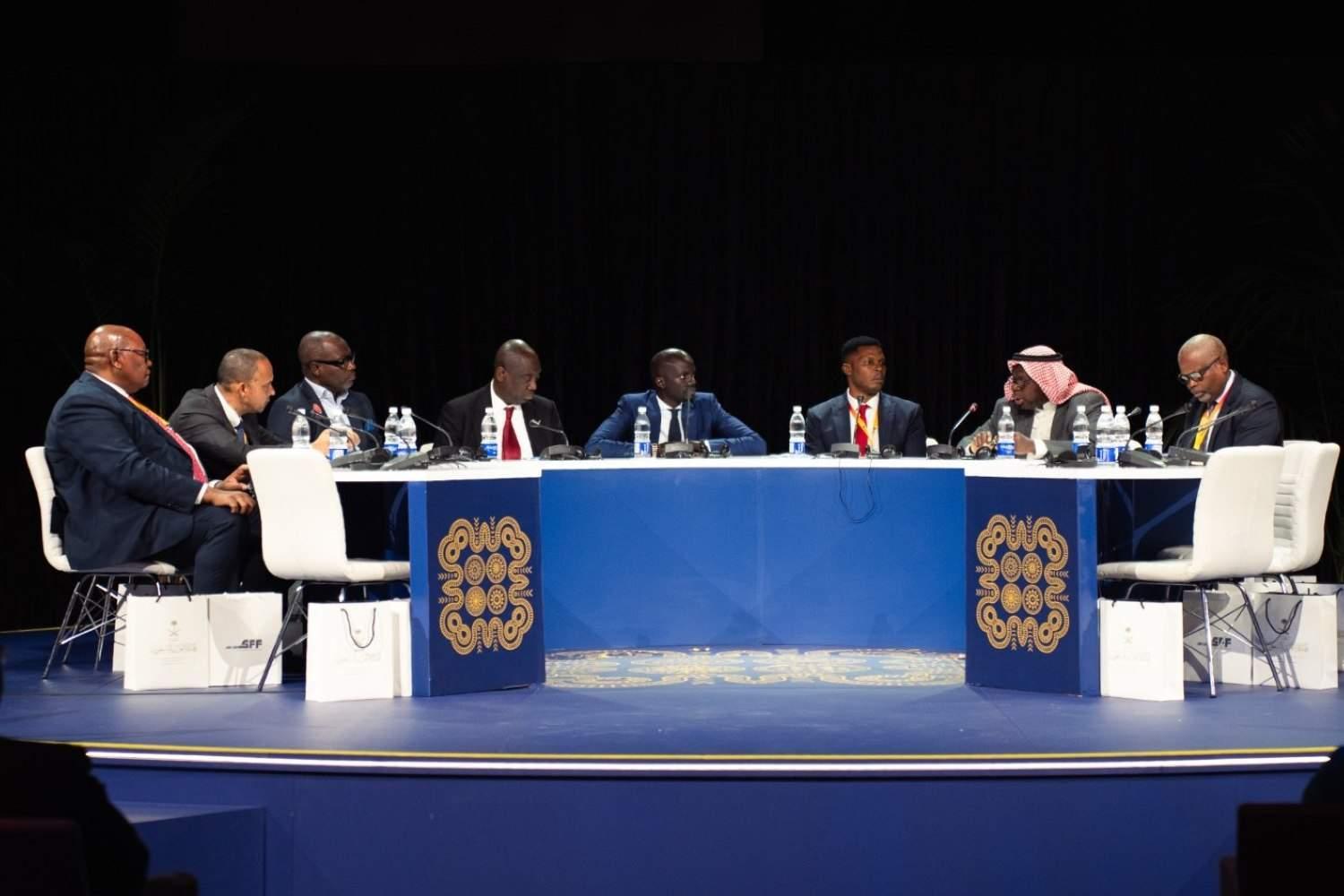
As major energy conferences in Riyadh and Cape Town overlap in October, African governments face a bigger question: can the continent build institutions powerful enough to protect its own strategic interests?…
As major energy conferences in Riyadh and Cape Town overlap in October, African governments face a bigger question: can the continent build institutions powerful enough to protect its own strategic interests?
The growing clash over the scheduling of the 25th WPC Energy Congress and African Energy Week (AEW) 2026 has become more than a dispute over dates.
It is increasingly a test of Africa’s ability to coordinate its energy diplomacy, protect its priorities and ensure that African-led platforms remain relevant in a global industry competing for the same ministers, investors, executives and capital.
The WPC Energy Congress is scheduled to hold in Riyadh, Saudi Arabia, from October 11 to 15, 2026, while African Energy Week is scheduled for October 12 to 16 in Cape Town, South Africa.
The near-total overlap means that ministers, chief executives, national oil company leaders, investors and policymakers who might ordinarily attend both events will be forced to make choices.
The question is no longer simply whether the WPC should reconsider its dates.
The more difficult question is what Africa does if it does not.
A clash beyond the calendar
African countries have spent years calling for greater influence over decisions affecting the continent’s hydrocarbons, electricity systems, energy transition and investment priorities.
But that influence cannot depend indefinitely on international organisations avoiding dates occupied by African conferences.
AEW has established itself as an important platform for discussions on hydrocarbons, electricity, clean energy, investment and emerging issues such as artificial intelligence and data-centre power demand.
WPC, meanwhile, describes its Riyadh Congress as a global gathering of energy leaders built around the theme, “Pathways to an Energy Future for All.”
There is therefore little doubt that the two meetings will compete for some of the same delegates, corporate travel budgets and institutional attention.
But competition between conferences is not unusual.
The real issue is whether African institutions are strong enough to withstand it.
“A continent seeking greater control over its energy narrative must eventually reach the point where the relevance of its forums is determined by the importance of the decisions taken there, rather than by whether rival conferences leave the calendar clear.”
That is the harder standard facing AEW and African governments.
The real contest is not attendance
It may be tempting to measure the strength of the two conferences by the number of delegates they attract.
That would miss the point.
The more important measure is decision-making density.
Which conference brings together the people capable of approving investments?
Where will African governments present bankable projects?
Where will national oil companies negotiate partnerships?
Where will financiers meet project developers?
Where will regulatory obstacles be discussed and transactions advanced?
A conference can attract thousands of participants and still have less strategic influence than a smaller gathering populated by the people who control projects, licences and capital.
That distinction could prove decisive in October.
If AEW responds to Riyadh simply by attempting to match the WPC in international visibility, it risks entering a contest largely determined by scale.
But if Cape Town becomes the place where African governments advance deals, investors find projects, national oil companies secure partners and policymakers coordinate positions, the equation changes.
The strongest response to Riyadh, therefore, may not be a larger Cape Town audience.
It may be a more consequential Cape Town agenda.
The dilemma facing African governments
The overlap also presents African governments with an uncomfortable choice.
For decades, African ministers have travelled to major international energy capitals to court investors, seek technology and participate in global petroleum discussions.
There is nothing inherently wrong with that.
Africa needs international capital, expertise and commercial partnerships.
But the growth of African-led platforms creates another responsibility.
Governments must decide whether building continental institutions is something they genuinely consider strategically important or merely something they endorse rhetorically.
That distinction will become visible in October.
If senior African officials automatically prioritise the larger international gathering and send junior representatives to their own continental platform, they risk reinforcing the very hierarchy African institutions have repeatedly criticised.
At the same time, refusing to engage with major international forums would make little commercial sense.
The answer, therefore, is not isolation.
It is coordination.
Countries with sufficiently large delegations could divide responsibilities among ministers, national oil company executives, regulators and investment officials.
They do not necessarily have to attend as one bloc.
Representation can instead be organised around specific objectives.
The bigger question is whether African governments have developed the diplomatic machinery required to manage competition between important international platforms.
Africa needs an energy-conference strategy
The WPC-AEW clash exposes a weakness extending far beyond these two events.
Africa lacks a sufficiently coordinated mechanism for managing the increasingly crowded calendar of energy, mining, infrastructure and investment conferences across the continent.
That matters because conferences have become instruments of economic diplomacy.
Hosting a major international gathering can bring investors, corporations, government delegations and global media into a country.
It can amplify national policies, generate commercial discussions and strengthen a country’s position within an industry.
Saudi Arabia clearly understands the value of convening power.
Riyadh is hosting the WPC Energy Congress for the first time, while WPC says its membership represents countries accounting for more than 96 per cent of global energy consumption and production.
Africa needs to view its own convening power with similar seriousness.
That could eventually require closer coordination between continental and regional institutions, governments, national oil companies and major industry platforms.
Strategically important African gatherings should not be treated simply as isolated commercial events.
An African energy calendar should become part of the continent’s wider economic diplomacy.
Without such coordination, similar clashes will recur.
The next competitor may not be WPC.
It could be a major investment summit in the Gulf, an Asian energy conference or a European policy gathering seeking the attention of the same investors and government officials.
The question will remain the same:
Who adjusts?
AEW also faces a test
The scheduling dispute should not exempt African Energy Week from scrutiny.
In fact, competition could provide the platform with an opportunity to prove its value.
The strongest African institutions are not those protected from competition.
They are those capable of surviving it.
AEW now has an opportunity to demonstrate that its proposition goes beyond being Africa’s alternative to conferences elsewhere.
Its strongest argument is not geographical.
It is functional.
If governments can advance licensing discussions in Cape Town, project developers can meet financiers, national oil companies can secure technical partners, gas and power projects can move closer to financial close, and African states can coordinate positions on major energy questions, attendance becomes commercially defensible regardless of what is happening elsewhere.
That is institution-building in practical terms.
WPC has a responsibility too
None of this removes legitimate questions surrounding the WPC’s decision to move its congress.
The organisation did not originally schedule the Riyadh congress for October.
Earlier WPC material advertised the event for April 26 to 30 before it was shifted to October 11 to 15.
The resulting collision with AEW was therefore not the result of two organisations independently selecting the same dates from the beginning.
That distinction matters.
WPC is a mature international institution and should understand the consequences when a major global congress moves into dates already occupied by an established industry gathering.
Greater transparency about the reasons for the rescheduling could help reduce speculation.
But Africa’s long-term response cannot end with demanding accommodation.
Institutional power ultimately comes from becoming difficult to bypass.
From protest to leverage
Perhaps the most important lesson from the dispute is that Africa is entering a different phase of its engagement with the global energy industry.
For decades, African countries have demanded a greater voice in institutions created elsewhere.
The next challenge is harder.
It is to build institutions of Africa’s own that others must take seriously.
The first requires advocacy.
The second requires leverage.
And leverage comes when investors need access to African opportunities, corporations need relationships with African decision-makers, governments coordinate their positions and commercially significant discussions take place on African platforms.
When that happens, calendar conflicts cease to be Africa’s problem alone.
They become everybody’s problem.
The October clash between Riyadh and Cape Town may still be resolved through dialogue.
WPC could reconsider its dates. Some form of accommodation could emerge. Or both conferences could proceed simultaneously.
Whatever happens, however, the episode has already exposed an important reality.
Africa’s position in global energy will not ultimately be secured by persuading powerful institutions to give it room.
It will be secured when African institutions become sufficiently important that the rest of the industry automatically considers where Africa is sitting before arranging the table.
And that may be the real significance of the WPC-AEW clash—not which conference wins the October calendar, but whether Africa finally learns to turn its enormous energy potential into institutional power.


‘Dapper, your cup don finally full’ – Singer T.I Blaze questions music executive over N1.2bn royalties

Izeze Remains High-Spirited, Pays Fines for Inmates at Warri Custodial Centre – Secrets Reporters Nigeria

Kidnapped Christian Worshipers in Southern Nigeria Describe Weeklong Torture by Fulani Terrorist Gang

Akwa Ibom Governor Commits To Operation Of Maintenance Facility At Victor Attah Airport, Expansion Of Ibom Air

Adekunle Adebiyi: Abuja Move ‘One of Our Best Decisions’ As Squash In Diaspora Tournament Hits Semifinals

EXCLUSIVE: SecretsReporters Uncover Unaccounted ₦75m Cash Advance in Hannatu Musa Musawa’s Ministry – Secrets Reporters Nigeria

NNPC Spends ₦393.45m on Three-Years Office Rent for NNPC Board Accommodation Under the Leadership of Bala Wunti in NAPIMS – Secrets Reporters Nigeria

“If they ask for money, call IGP” – Police officer warns Nigerians against paying for bail, shares complaint numbers

“I returned your ₦5m birthday money” – Diadem calls out Dabota Lawson, alleges she uses bloggers to attack people

“If you don’t like it, change it” – Uche Ogbodo flaunts new look after cosmetic procedure amid marital crisis

Israeli air strikes on Lebanon kill 11 people in another test to truce

Lagos Urges Use Of AI To Improve Government Communication

#OsunDecides2026: Large turnout in Oyebamiji’s hometown as voters await accreditation

Bayelsa PDP Reaffirms Readiness For 2027 Elections As Turnah Confirms Candidate’s Upload On INEC’s Portal

EDSG Working Tirelessly To Fight Child Defilement Says Abdalla

Iran claims Qatar holding pilots as UAE says ship attacked in Strait of Hormuz

Osun Election Results 2026 LIVE: Polling unit-by-unit, LGA updates
Osun Election Results 2026 LIVE: Polling unit-by-unit, LGA updates

Palestinians in Qusra say they have faced militant settler attacks for months
Palestinians in Qusra say they have faced militant settler attacks for months

 Politics23 hours ago
Adekunle Adebiyi: Abuja Move ‘One of Our Best Decisions’ As Squash In Diaspora Tournament Hits Semifinals
- Headlines10 hours ago
Osun election: Men dressed as police officers allegedly disrupt material distribution with teargas [Video]
- Entertainment22 hours ago
“You broke up with girl because she farted” – Matchmaker blasts 47-year-old man over failed relationship
- News20 hours ago
₦34.7m Unaccounted, Unrecovered, Unremitted Under Tonye David-West’s NDBDA Tenure – Secrets Reporters Nigeria
- Entertainment22 hours ago
“If you would have been patient”- Moment Peller screams during visit to man’s residence after pleading for G-Wagon
- Entertainment13 hours ago
“His side chick saved his life” – Charles Inojie shares how a man escaped plane crash after changing his flight plans
- Politics8 hours ago
Osun Decides: Governor Adeleke’s Running Mate Predicts Victory, Raises Alarm Over Late Arrival Of INEC Officials
- News12 hours ago
Corrupt Nigerian Politicians Get Lucky As US Ends Beneficial Ownership Reporting for Domestic Companies, Raising Fresh Concerns Over Hidden African Wealth – Secrets Reporters Nigeria