World
Iran claims Qatar holding pilots as UAE says ship attacked in Strait of Hormuz

Iran has claimed Qatar is holding three of its pilots who have been missing since March.
According to the Missing Persons Committee of Iran’s Armed Forces General Staff, Qatar’s armed forces had captured and were holding three pilots who went missing in March when their jets were downed.
Until now, Tehran had said it had no information about their fate.
Saturday’s statement alleged that Qatar had violated the men’s rights by not allowing the prisoners to meet or communicate with their families or with Iranian officials handling their cases, despite diplomatic efforts and repeated follow-ups.
There was no immediate response from Qatar.
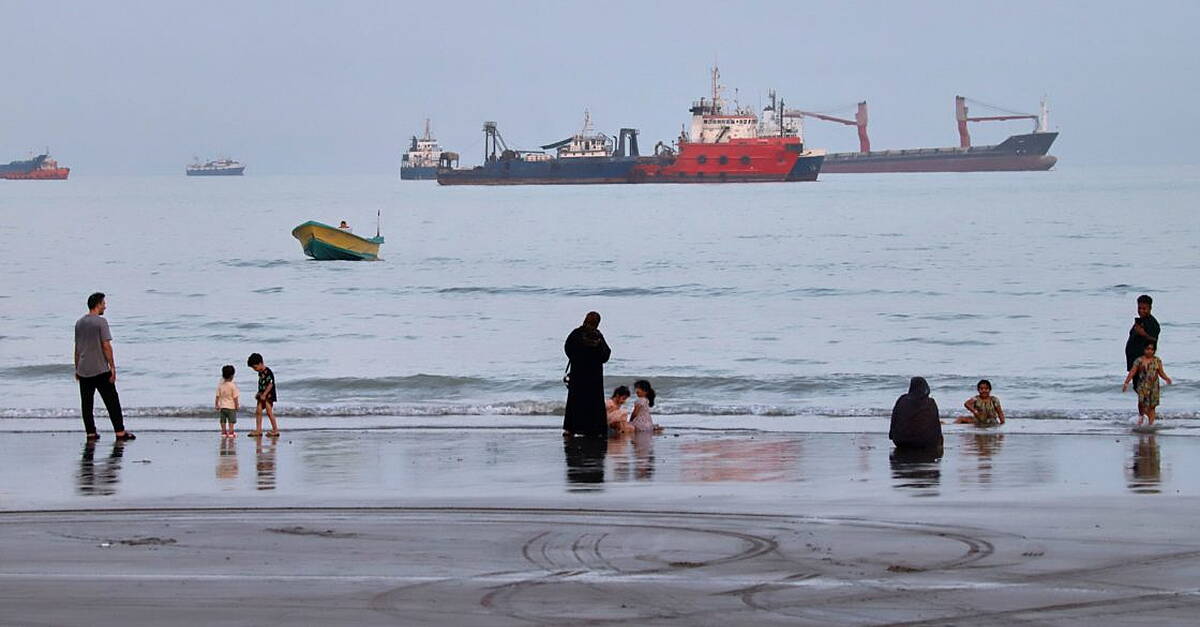
Meanwhile, the tanker owned by Abu Dhabi’s state-owned oil and gas company Adnoc was attacked while transiting the Strait of Hormuz, the Emirati state-run Wam news agency said on Saturday.
There were no injuries in the Friday evening attack, the agency reported.
It was the third such attack on a vessel operated by Adnoc in the critical waterway in the last week.
The United Arab Emirates in a statement called on Iran to stop the unprovoked strikes.

The United Kingdom Maritime Trade Operations Centre said a bulk carrier was struck in the hull by an unknown projectile on Friday.
It was not immediately clear if it was the same vessel.
Iran asserted control over the strait after the war started on February 28 with US and Israeli strikes.
About one-fifth of the world’s traded oil and natural gas passed through the waterway at the mouth of the Persian Gulf before then.
Talks between the US and Iran have stalled while Iran is in discussions with Oman about how to manage the strait that runs between them and had been considered an international waterway.
In Lebanon, Israeli airstrikes in the south of the country killed at least 11 people on Saturday.

Lebanon’s Health Ministry and state news agency said one strike targeted a home on the edge of the village of Ansar and killed seven people, including three children, and wounded two.
The second, on the village of Deir al-Zahrani, killed two and wounded nine.
Israel’s military said it killed a Hezbollah battalion commander and several other militants at a headquarters in southern Lebanon in response to the group’s actions against Israeli soldiers operating there.
Prime Minister Benjamin Netanyahu’s office in a separate statement said three soldiers were seriously injured.
The military said the commander’s family was with him, and that “it should be emphasised that the family members were not the target of the strike”.
Both the military and Mr Netanyahu’s office alleged the commander used the family members as human shields.
It was one of the deadliest days since the Lebanese government and Israel announced a “framework agreement” laying out a plan for Israeli forces to withdraw from southern Lebanon in exchange for Hezbollah’s disarmament.
The militant group refused direct talks and was not part of the agreement.
Also on Saturday, Yemen’s military said the Houthis attacked the Red Sea port of Mokha under the control of the internationally recognised government.
Port director Abdul-Malik al-Sharabi told journalists that Friday evening’s attack killed three people including two marines.
Military spokesperson Colonel Majed al-Nazili said in a statement that the Houthis fired six ballistic missiles.
The Houthis’ attack was the latest on government-held areas and on neighbouring Saudi Arabia, part of an escalation threatening to plunge Yemen back into civil war.
Analysts say the escalation reflects how Iran is scaling up pressure on the US and its regional allies.


‘Dapper, your cup don finally full’ – Singer T.I Blaze questions music executive over N1.2bn royalties

Kidnapped Christian Worshipers in Southern Nigeria Describe Weeklong Torture by Fulani Terrorist Gang

Izeze Remains High-Spirited, Pays Fines for Inmates at Warri Custodial Centre – Secrets Reporters Nigeria

Akwa Ibom Governor Commits To Operation Of Maintenance Facility At Victor Attah Airport, Expansion Of Ibom Air

Adekunle Adebiyi: Abuja Move ‘One of Our Best Decisions’ As Squash In Diaspora Tournament Hits Semifinals

EXCLUSIVE: SecretsReporters Uncover Unaccounted ₦75m Cash Advance in Hannatu Musa Musawa’s Ministry – Secrets Reporters Nigeria

NNPC Spends ₦393.45m on Three-Years Office Rent for NNPC Board Accommodation Under the Leadership of Bala Wunti in NAPIMS – Secrets Reporters Nigeria

“I returned your ₦5m birthday money” – Diadem calls out Dabota Lawson, alleges she uses bloggers to attack people

“If you don’t like it, change it” – Uche Ogbodo flaunts new look after cosmetic procedure amid marital crisis

Osun election: Men dressed as police officers allegedly disrupt material distribution with teargas [Video]

Osun 2026: Adeleke urges voters to protect their votes

Church leaders must stay non-partisan, avoid political endorsements — Cleric

#OsunDecides2026: Large turnout of voters at APC candidate’s ward

Iran urges Qatar to release pilots shot down in Middle East war

Lagos Trains Council Planning Officers On Data-Driven Development

Osun 2026: Jubilation As Adeleke Wins Polling Unit With 421 Votes

Osun poll: Accord Party lawmaker, 146 suspects arrested — Police

Osun Poll: Adeleke Secures Landslide Victory at Polling Unit

Osun Governorship Election Begins Peacefully Amid Early Turnout, Heavy Security
#OsunDecides2026: Adeleke confident of victory, urges voters to protect ballots

 Politics24 hours ago
Adekunle Adebiyi: Abuja Move ‘One of Our Best Decisions’ As Squash In Diaspora Tournament Hits Semifinals
- Headlines10 hours ago
Osun election: Men dressed as police officers allegedly disrupt material distribution with teargas [Video]
- Entertainment23 hours ago
“You broke up with girl because she farted” – Matchmaker blasts 47-year-old man over failed relationship
- News21 hours ago
₦34.7m Unaccounted, Unrecovered, Unremitted Under Tonye David-West’s NDBDA Tenure – Secrets Reporters Nigeria
- Entertainment23 hours ago
“If you would have been patient”- Moment Peller screams during visit to man’s residence after pleading for G-Wagon
- Entertainment13 hours ago
“His side chick saved his life” – Charles Inojie shares how a man escaped plane crash after changing his flight plans
- News12 hours ago
Corrupt Nigerian Politicians Get Lucky As US Ends Beneficial Ownership Reporting for Domestic Companies, Raising Fresh Concerns Over Hidden African Wealth – Secrets Reporters Nigeria
- Metro7 hours ago
“No Fresh Criminal Charge Has Been Instituted Against Our Client” — Deji Adeyanju & Partners Clarify Position In Dr John Abebe’s Trial