World
Record-low Danube levels push some countries in Eastern Europe to the brink of energy emergency

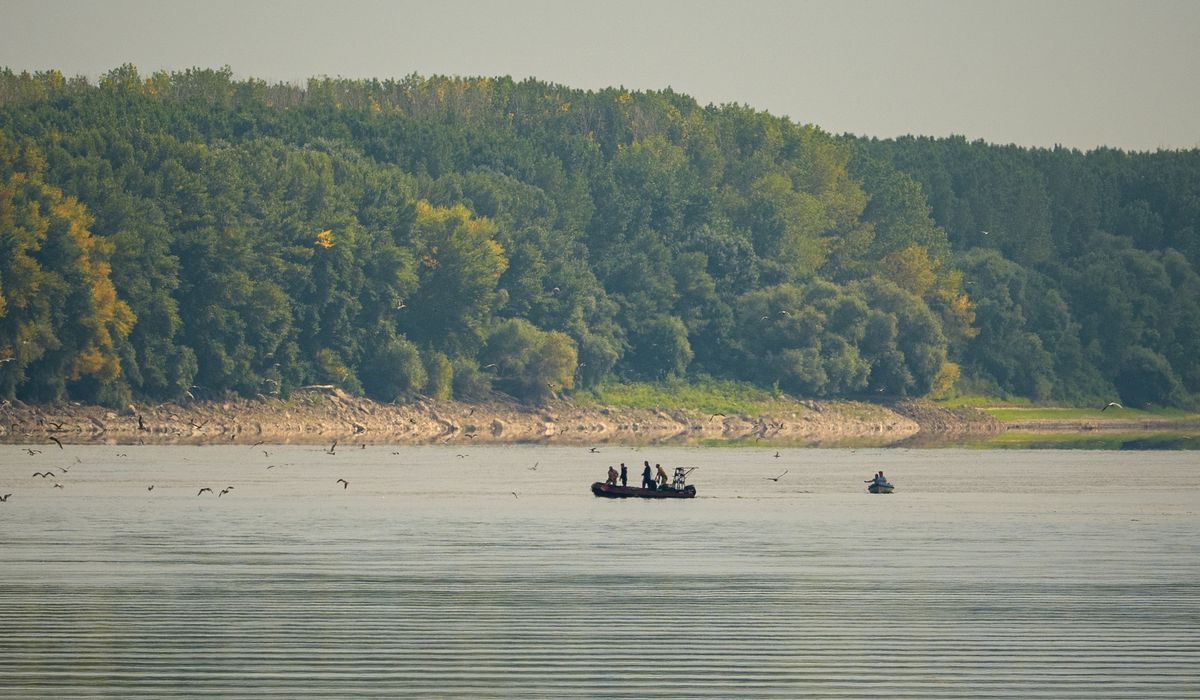
BUDAPEST, Hungary — Numerous governments across Central and Eastern Europe are taking steps to conserve electricity and avert an energy crisis as record-low water levels on the Danube River have forced power plants to the brink of shutting down.
Persistent drought and successive extreme heat waves have deprived one of Europe’s largest rivers of water, pushing the Danube’s levels in Hungary’s capital Budapest to around 10 centimeters (4 inches) on Monday, well below the previous all-time low of 33 centimeters (13 inches) set in 2018.
Water levels are not expected to rise on the Danube in the coming days or even weeks as no significant rainfall is forecast, and as a renewed extreme heat wave bears down on the region with daytime highs topping 38 Celsius (100 Fahrenheit), electricity and water use are on the rise.
Hungary’s Paks nuclear plant on brink of shutdown
The Danube’s record low levels have pushed Hungary’s only nuclear power plant, the Soviet-built, four-reactor plant at Paks, to the brink of powering down entirely for the first time in its 44 years in service.
The Paks plant, which uses water from the Danube to cool its reactors, on Monday was producing only 240 megawatts of power rather than the usual 2,000 due to successive power-downs of its four reactors.
In video posted to Facebook on Monday, Hungarian Prime Minister Péter Magyar said engineers had managed to keep the plan’s final operating turbine temporarily running, averting an expected shutdown on the weekend. A full power-down will likely only happen on Tuesday or Wednesday, Magyar said.
“This is very good news, because the complete shutdown of the Paks power plant can still be avoided, at least temporarily, on one of the biggest consumption days,” he said.
The Paks plant, located around 90 kilometers (55 miles) south of Budapest, accounts for nearly half of Hungary’s electricity production and around a third of its consumption. Hungary has relied on regional electricity imports as well as renewable sources to try to make up for the deficit from the Paks plant.
Hungary’s government last week asked major industrial users to curb their electricity consumption and sought voluntary savings from households in order to conserve supply, particularly in peak demand hours between 5 p.m. and 10 p.m.
It also announced that electric-powered freight trains would not be permitted to run during peak hours beginning on Monday in order to conserve an estimated 70 to 90 megawatt-hours of electricity per day.
While conservation measures were initially voluntary, Magyar’s government on Saturday issued a decree allowing for them to be made mandatory for large industrial or commercial consumers.
He said Monday that the conservation push had resulted in 700 fewer megawatts of electricity being used the previous day, and thanked Hungarians for their efforts.
Serbia and Romania grapple with low Danube levels
Meanwhile, plants in neighboring countries have also seen dramatic drops in power generation, as well as disruptions to shipping and agriculture.
Serbia’s record-low Danube levels have pushed the country’s key hydroelectric plant to operate with only 20% of its capacity, prompting Prime Minister Djuro Macut to preside over an emergency meeting on Monday focusing on energy problems.
Macut appealed to residents to “minimize the use of big consumers of electricity in their homes, such as air conditioners.” He described the situation in a statement late on Sunday as “serious and demanding.”
Serbian President Aleksandar Vucic has predicted that the Danube could become too low for river transport in just a few days, and while cargo ships are still able to run for the time being, they must carry 50% less weight than usual.
In Romania, where Danube water flow has fallen to 1,500 cubic meters per second, less than a third of its July average, authorities have shut down a reactor unit at the Cernavoda power plant for safety reasons, and further power downs are planned. The plant is operating at about half its normal capacity.
___
Associated Press writer Jovana Gec in Belgrade, Serbia, contributed to this report.


Ballon d’Or: ‘Disgrace’ – AC Milan’s former midfielder Dejan Savicevic names player that should’ve won award

Transfer: ‘They pay highest wages’ – ex-Chelsea star, Cascarino on impossibility of Vinicius Jr’s move to Arsenal

“Peller sell this cloth for ₦1 million, chop my money” – Kolu speaks after arriving at Peller and Jarvis’ wedding venue

Alaba President Set To Officially Unveil New Face Of Alaba, Speaks On Economic Impact, Calls For Road Infrastructure Upgrade

Tinubu, Atiku And Obi Head 19 Presidential Nominees As INEC Publishes Particulars For Public Scrutiny, Jonathan And Olawepo-Hashim Left Out

“I thought he was hiding another woman” – Shawn Faqua’s wife recalls doubting the actor during courtship

United States weddings are boring – Peller’s American friends remark after his traditional wedding with Jarvis

'Kind of Madness': Iran Vows to Target US, Israeli Energy Assets if Attacked as Trump Weighs Fresh Strikes

“I flew him to Ilorin”- Cute Abiola opens up on why he arrived Peller’s wedding early

WAFCON: ‘Win or nothing’ – Nigeria coach Madugu vows World Cup redemption after mistake

Iran deja vu: Trump once again threatens massive escalation against Tehran only to walk back

Transfer Rumours Roundup: Biggest Deals Football Fans Are Talking About Today

Old Woman Heavily Humiliated At Market Square After Being Caught Stealing

Uganda's military unveils statue of Netanyahu's brother who died in 1976 Entebbe hostage rescue

Cubans struggle to bounce back after 6th nationwide blackout this year
Cubans struggle to bounce back after 6th nationwide blackout this year

FG Advances State Police Establishment With Fresh Move

1996 Olympic Team Remains Nigeria’s Greatest Football Side – Shehu Sani

Court Jails Fake Army Officer Two Years for N500,000 Car Auction Fraud

Arrest Atiku For Calling You A Forger – Sowore Dares Tinubu

 Headlines22 hours ago
Ballon d’Or: ‘Disgrace’ – AC Milan’s former midfielder Dejan Savicevic names player that should’ve won award
- Headlines24 hours ago
Transfer: ‘They pay highest wages’ – ex-Chelsea star, Cascarino on impossibility of Vinicius Jr’s move to Arsenal
- Entertainment13 hours ago
“Wherever I go, I’ll look for a brothel and sleep with prostitutes until I contract HIV” — Man reveals
- News10 hours ago
Northern Christian Group, Atiku, Shehu Sani Rally Behind Onaiyekan, Condemn Presidency’s Criticism of Catholic Bishops

 World17 hours ago
At Least 14 Dead as Suicide Bomber Targets Police Gate Near Swat Peace Rally Gathering in Khyber Pakhtunkhwa
- Entertainment11 hours ago
“I want to get married but, I don’t want to marry…” — Man lists 14 qualities he refuses to accept in a wife
- Special Report10 hours ago
Lady Left Shocked After Ex-Boyfriend Kicks Her Off Netflix and Amazon Prime Accounts Because Of What She Said (Video)
- News8 hours ago
Peller Laments Wave of Phone Thefts at Traditional Wedding, Announces Strict Guest List for White Wedding