News
Nursing mothers on dumpsites: A timely rescue

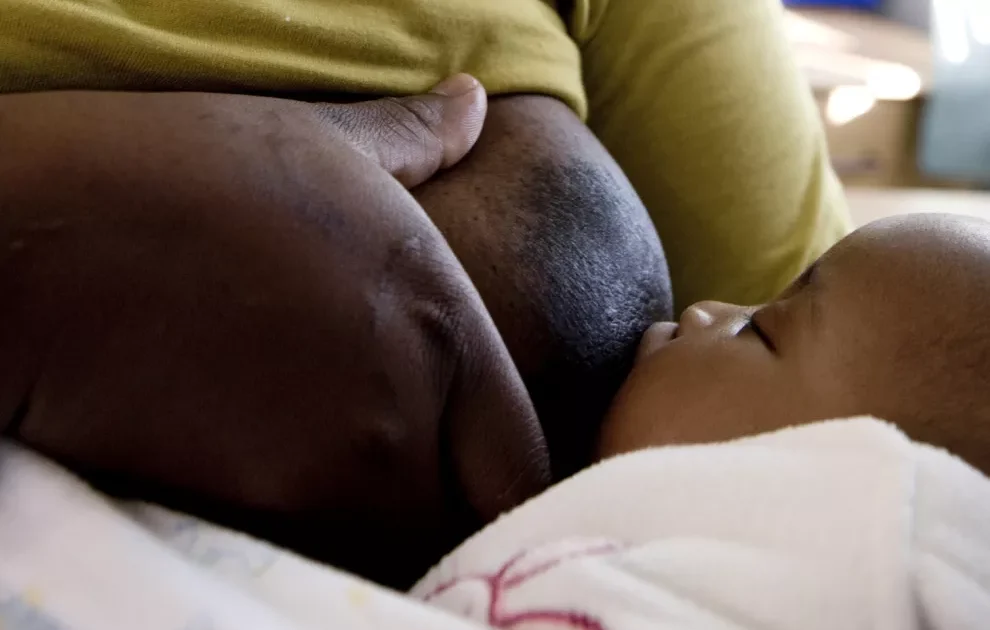
FOR the downtrodden and hopeless, help can sometimes arrive from the most unexpected quarters. Such a heartening intervention occurred recently when government agents rescued four nursing mothers and their babies from an illegal dumpsite in Agboju, on the Lagos-Badagry Expressway in Lagos State.
Yet, the heartwarming rescue also exposes the disturbing depth of poverty and social vulnerability in Nigeria.
The World Bank says more than 140 million Nigerians live in extreme poverty, aggravated by the removal of petrol subsidies in May 2023.
This is a wake-up call that environmental sanitation cannot be divorced from the human suffering taking place in the very spaces authorities routinely seek to clear.
The Lagos Environmental Sanitation Corps, popularly known as KAI, said the women were rescued on Monday during an ongoing inter-agency cleanup of the Lagos-Badagry Expressway corridor.
According to the Corps Marshal of the agency, Olaniyi Cole, the women were found living in shanties within illegal dumpsites in what he described as inhumane conditions. They were subsequently taken for medical assistance.
The women were identified as Fareedat Muyideen, 23, from Kwara State, who had her two-year-old baby with her; Ayomide Ayomoke, 25, from Ondo State, with her 10-month-old baby; Oziema Abalihi, 20, from Anambra State, with her nine-day-old baby; and Chisom Ugo, 24, from Imo State, with her 11-month-old baby.
Their ages tell a story of their own. They are young mothers, apparently drawn to Lagos by the often-illusory promise of a better life in Nigeria’s commercial capital.
Yet, the fact that a new mother could be living with a nine-day-old infant in an illegal dumpsite should shock the conscience of a country that claims to be committed to protecting its most vulnerable citizens.
It is not enough to see these women simply as violators of environmental regulations or illegal occupants of a dumpsite. Their presence there is symptomatic of a much deeper crisis involving poverty, unemployment, homelessness, family breakdown, migration and the failure of social protection systems.
Cole said the women were living amid filth, poor air quality and hunger. He explained that the rescue became necessary to prevent loss of life, particularly after the condition of one of the newborns was discovered.
The agency has said it is working with relevant authorities to rehabilitate and reintegrate the women into society. That intervention is commendable. But it must not end with rescue.
Rescuing mothers from dumpsites is necessary. Preventing mothers from ending up there in the first place is the real test of governance.
The government must ask what circumstances drove these young women to such an environment in the first place, and what will happen to them after they leave the custody of the authorities.
If they are returned to the same conditions that initially pushed them to scavenging, the cycle will continue. Tomorrow, another group of desperate mothers and children could be found in another dumpsite.
Scavenging in Nigeria is largely an informal survival economy driven by extreme poverty, unemployment and the absence of decent alternatives.
Although available studies differ considerably by location and methodology, they provide a disturbing picture of the people who depend on waste picking.
Research at the Gosa dumpsite in Abuja and multiple sites in Osun and Ekiti states, for instance, has found that between 77 per cent and 100 per cent of scavengers are male.
The studies also show that the activity is predominantly youth-driven, with the average age of waste pickers across various studies put at 27 years. The vast majority are between 12 and 45 years old.
Migration is another important factor. A recent study published in PubMed found that 96 per cent of scavengers in specific urban dumpsites migrated from northern Nigeria due to regional economic pressures.
These figures demonstrate that scavenging is not merely an environmental issue. It is also a poverty, employment, migration and social welfare issue.
Women, children and displaced persons are particularly vulnerable within this informal economy.
Studies across different urban centres have documented women’s participation in waste picking, describing it in some cases as a survival strategy amid urban poverty, unemployment, gender inequality, informal-sector insecurity and environmental injustice.
Thus, while some studies find male dominance in particular dumpsites, the broader evidence shows that women also depend heavily on waste picking in several Nigerian cities.
Mothers and infants living beside decomposing waste can be exposed to toxic smoke, methane, contaminated materials, infectious agents and dangerous air pollution.
Pregnant women and nursing mothers should not be forced to raise children in environments where survival itself becomes a daily battle against hazardous waste.
A 2023 investigation by Premium Times documented the plight of dozens of women scavenging at a dumpsite in Odonla, in the Ikorodu area of Lagos State.
The women reportedly used tablespoons to dig through piles of waste in search of metal scraps. Some rested on tattered rice sacks while toddlers slept beside them.
From dawn to dusk, they searched for scraps to exchange for money. Some bought smaller metal scraps from people who had purchased truckloads of waste containing larger pieces of iron.
The women sometimes paid as little as N8,000 for the smaller metals and employed others to help sort through the waste. In some cases, workers were paid only N1,000 for two to three days of work, with lunch provided.
Some scavengers also pooled resources to buy truckloads of scrap and share whatever profit they made. Sometimes, they made no profit at all.
This is the economics of desperation. No sane person would choose to spend hours digging through foul-smelling waste with a tablespoon if decent employment, affordable housing and social protection were readily available.
Many of these women reportedly regard scavenging as dirty and demeaning, but economic hardship leaves them with few choices.
The government must therefore stop treating the symptoms while ignoring the disease. Periodic demolition of shanties and clearance of illegal dumpsites may improve the physical environment, but without corresponding social intervention, such operations merely displace vulnerable people from one location to another.
Environmental sanitation must be accompanied by rehabilitation, skills acquisition, temporary shelter, healthcare, childcare and pathways into decent employment.
The Lagos State Government deserves commendation for rescuing the four women and providing medical attention. But the state should go further by establishing a structured mechanism to identify vulnerable women and children found during sanitation operations and link them with social welfare services.
The Federal Government, too, has a responsibility. Nigeria cannot continue to preach economic prosperity while millions of citizens remain trapped in informal and hazardous occupations to survive. The expansion of social safety nets, affordable housing, vocational training and employment opportunities must become more than policy rhetoric.
Families must examine the conditions that force young people into the streets. The law should take its course in cases of abuse, neglect or exploitation.
The four nursing mothers rescued in Agboju must not become another fleeting news story. Their rescue should be the beginning of a sustained intervention that addresses not only where they were found, but why they ended up there in the first place.





Osun election: Men dressed as police officers allegedly disrupt material distribution with teargas [Video]

‘Dapper, your cup don finally full’ – Singer T.I Blaze questions music executive over N1.2bn royalties

Kidnapped Christian Worshipers in Southern Nigeria Describe Weeklong Torture by Fulani Terrorist Gang

Akwa Ibom Governor Commits To Operation Of Maintenance Facility At Victor Attah Airport, Expansion Of Ibom Air

Adekunle Adebiyi: Abuja Move ‘One of Our Best Decisions’ As Squash In Diaspora Tournament Hits Semifinals

EXCLUSIVE: SecretsReporters Uncover Unaccounted ₦75m Cash Advance in Hannatu Musa Musawa’s Ministry – Secrets Reporters Nigeria

“I don’t want their money”- Peller shares why he intends to collaborate with Dangote, Femi Otedola and Bill Gates

“Peter Obi was already ahead of us in Class Three” – Former classmate opens up on his early school hustle

“You broke up with girl because she farted” – Matchmaker blasts 47-year-old man over failed relationship

“If you would have been patient”- Moment Peller screams during visit to man’s residence after pleading for G-Wagon

We won’t end strike until suspended Abia varsity professor is recalled – ASUU chair, Mbah

Iran Defiant on Strait as Trump Tells Americans to Accept High Gas Prices

INEC Commences Collation of 2026 Osun Guber Poll Results

Nursing mothers on dumpsites: A timely rescue

INEC Begins Collation Of Osun Governorship Election Results

Shootings in Michigan Leave 5 People Plus Suspect Dead Following Large-Scale Search

“Your Audio Money Caused This” – Jowizaza’s Sister Slams Him Over Father’s Abduction

Iran claims Qatar is holding pilots, Israeli strikes kill 11 in Lebanon, and other Middle East news

U.K.'s leader calls for reflection after death of former Cambridge professor accused of plagiarism

I lost my sight, but not my dreams — Theatre Arts graduate

 Headlines18 hours ago
Osun election: Men dressed as police officers allegedly disrupt material distribution with teargas [Video]
- Politics17 hours ago
Osun Decides: Governor Adeleke’s Running Mate Predicts Victory, Raises Alarm Over Late Arrival Of INEC Officials
- Politics17 hours ago
Osun 2026: Early Voter Turnout In Adeleke’s Hometown Ede As Residents Await AccreditationOsun Election: Voters Await Officials, Materials At Osogbo Polling Unit
- Entertainment21 hours ago
“His side chick saved his life” – Charles Inojie shares how a man escaped plane crash after changing his flight plans
- Entertainment16 hours ago
“If I was a woman and I got my period…” — Man sparks reactions with unusual idea to end menstruation in one go
- Metro15 hours ago
“No Fresh Criminal Charge Has Been Instituted Against Our Client” — Deji Adeyanju & Partners Clarify Position In Dr John Abebe’s Trial
- Politics9 hours ago
Bayelsa PDP Reaffirms Readiness For 2027 Elections As Turnah Confirms Candidate’s Upload On INEC’s Portal
- News10 hours ago
Morning recap: Osun gov poll holds amid vote-buying allegations, Atiku sues Tinubu, other top stories