News
Calling South Africa xenophobic is unfair – Envoy, Moroe

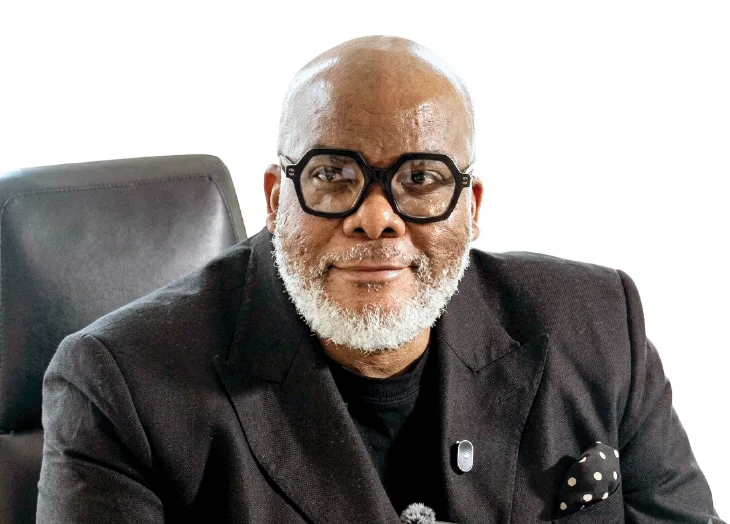
In this interview with DANIEL AYANTOYE, the South African Consul-General to Nigeria, Prof. Bobby Moroe, addresses allegations of xenophobia and recurring violence against migrants in his country.
Your recent visit to President Bola Tinubu generated public reactions after reports suggested that the President snubbed your delegation. Many Nigerians believe that the South African President, Cyril Ramaphosa, should have personally met Tinubu instead of sending a delegation. How do you see this?
We need to educate the public about the craft of diplomacy. The President does not necessarily have to meet his counterpart. This is pure diplomacy at work. It is diplomatic practice for a Head of State to appoint a special envoy to deliver a message on his behalf to the Head of State of the receiving state.
In this case, President Ramaphosa, following the anti-migrant sentiment in South Africa, saw the need to appoint the Minister of International Relations and Cooperation, Mr Ronald Lamola, to visit two key countries – Ghana and Nigeria. In Ghana, he met with the Ghanaian President, while he met the representative of the Nigerian President, which is not unusual.
What are some of the issues raised?
Both sides raised genuine concerns, which have been taken into consideration. One of the issues raised was alleged extrajudicial killings. I can give you a classic example of what happened a few weeks ago involving a Nigerian national who was to be arrested in Cape Town. He was accused of selling certain substances. Upon hearing that he was going to be arrested, he swallowed some of the substances. Unfortunately, that caused severe complications, and he died before the arrival of the police. That was attributed to an extrajudicial killing. That is based on the report we received, but we do not know how accurate it is. Sometimes, you find that individuals resist arrest to the point of attacking law enforcement officers, who also have to protect themselves. As a country, we take responsibility where necessary, but I think it would be very unfair for us to take responsibility for acts that have nothing to do with what we are supposed to be responsible for.
Is there any plan for Presidents Tinubu and Ramaphosa to meet soon?
It is still early for me to be conversant with that information, but I know that the outcome of the engagement has been presented to the relevant authorities. I have no doubt that, in the next few weeks, there will be action. For now, I do not think there is any need for the two heads of state to engage because the message has been conveyed. Diplomatic work is also done from the bottom up.
Nigerians in South Africa have continued to witness recurring xenophobic attacks. What is your government doing to address the situation?
The majority of South Africans do not share the anti-migrant sentiment because our sisters and brothers are married to foreign nationals, not only from Nigeria but also from across the world. We are truly a rainbow nation. Having foreigners in South Africa is not something new.
There are claims that one of the major reasons South Africans are chasing out foreigners, particularly Nigerians, is that Nigerian men are taking their women away from the Rainbow Nation’s men. How true is this?
It cannot be. We live in a constitutional democracy where everybody is allowed to exercise their freedoms, and nobody, no matter how they feel, is permitted to interfere with people’s preferences. Love knows no borders. I am quite aware of the popular narrative, but I do not think it is really true because South African men also fall in love with women from other countries. Our sisters may have very good reasons why they prefer Nigerian men, but it is a good thing because we are expanding. This is a cultural issue that cannot be avoided. If you choose to marry someone, I do not think you make that choice because of nationality. It is also not true that South African men do not like Nigerian men. I am a classic example because of my association with Igbos. I have friends from the South-East, including Anambra and Abia states. I have an interest in Nigerian culture. Foreign nationals have been in South Africa for many years, but you also have South Africans who are foreigners in other countries, including myself. What most South Africans are complaining about is that some, not all, foreign nationals, including Nigerians, Ghanaians and others, do not respect the laws of the country. They stay in South Africa illegally, and concerns have also been raised about the risks associated with undocumented foreign nationals.
I do not think any country in the world would allow anybody to live within its borders illegally. But when South Africa raises concerns about that, we are called xenophobic, and I think it is unfair to use that label without justification. When we raise issues that are of genuine concern to South Africans, and people go on peaceful marches, which the Constitution allows, they are labelled xenophobic. When similar things happen elsewhere in the world, for example, in Ghana, where such issues are happening now, it is not called xenophobia. We have realised that the term “xenophobia” has become synonymous with South Africa alone, creating the notion that African unity must happen only in South Africa. I think many African countries have been very unfair to South Africa. By far, we are one of the biggest hosts of foreign nationals in Africa, even before 1994.
Is it true that foreigners are taking jobs away from South Africans, leading to the unrest?
I am not quite sure what they mean when they say foreigners are taking their jobs. Everybody competes for job opportunities in South Africa. What we know is that some employers pay less than the minimum wage, and South Africans do not accept such jobs, while foreigners accept the lower pay. There are employers who are exploitative and take advantage of desperate migrants. What the Ministry of Labour does when it visits companies is, first, check whether the migrants working there have the proper documentation.
Secondly, they check the position a person holds against the minimum wage being paid. If it is not in line with the law, they engage with the employer to ensure compliance.
So, if they say foreigners are taking their jobs, I do not know what they mean because we have many foreigners who employ South Africans. There are restaurants where you will find that more than 50 per cent of the workers are foreigners. They say many of those positions have been vacant for a long time because South Africans do not apply for them, as the establishments do not comply with the minimum wage.
Critics argue that the South African government’s response has often appeared slow and reactive, creating the impression that it is not doing much to tackle the problem. How would you respond to that criticism?
The government is doing everything within its power. We may not do it in the way most Nigerians expect, and that is okay because of the perceptions that have been created. I suspect the perception is that “doing much” means arresting people. We live in a constitutional democracy in South Africa where the law takes its course, and people cannot simply be arrested because they are protesting. Protest is a constitutional right.
However, our minister reported to Nigeria’s Minister of State that about 80 arrests had been made across five or six provinces. Those arrested were found to have been involved in acts of vigilantism, including intimidating foreign nationals and taking over their shops. I can tell you that doing enough is not only about making arrests; the government is doing much more than arresting people.
Individuals such as Jacinta Ngobese-Zuma and Nkosikhona Ndabandaba have publicly led anti-migrant campaigns and have been accused of making inflammatory statements against foreign nationals. Why have they not been prosecuted for alleged incitement if this is indeed an offence under your Constitution?
I have seen many interviews conducted with Jacinta, and I think she is always the first person to condemn violence. So, I am somewhat skeptical that she has contributed in that regard.
Her main focus has always been the sentiments of the majority of South Africans, particularly regarding undocumented migrants and the implications of having undocumented migrants, especially the security implications.
You recently stated that about 80 members of vigilante groups have been arrested. However, this is not the first time South African authorities have arrested suspects in connection with attacks on foreigners, yet many Nigerians believe such cases rarely result in convictions. What makes this latest effort different?
Part of the content of our discussion with Nigeria’s Minister of State was that he submitted to us a list of persons who died in South Africa and also raised concerns that they had not received information regarding those cases.
The unfortunate part is that we had never received that list. It is a list that should have been transmitted to the law enforcement agencies in South Africa. However, the South African minister has now received it, and it is going to be presented to the law enforcement agencies for further investigation. I think both sides must give each other an opportunity to conduct thorough investigations, bring the perpetrators to book, and ensure that justice prevails.
Some observers argue that the violence is better described as Afrophobia rather than xenophobia because it appears to target mainly black African foreigners. How do you respond to that characterisation?
We cannot control people’s perceptions, nor can we determine how they report these issues. But we, as South Africans, know very well that we are neither xenophobic nor Afrophobic.
South Africa gained its democracy in 1994. We are now in our 32nd year, and this is the journey we have travelled with Nigeria and many other African countries that supported us during the struggle for our liberation.
Foreign nationals had already been integrated into South African communities long before 1994 because we also played host to many Africans during our liberation struggle, many of whom came to work in our mining industry. In fact, South Africa’s mining industry has historically employed many foreign nationals.
So, I do not understand why, after achieving democracy, we would then turn our backs on those who helped and contributed to our liberation. That is purely a perception.
We also understand the push factors that brought many foreign nationals to South Africa.
They married South Africans, became fully integrated into communities, and many of them speak indigenous languages.
Even in sports, there are many foreign nationals, particularly Nigerians, playing football in South Africa. There are also many doctors, lawyers, and Nigerians in various professions.
So, the view held by a small section of people that South Africans are xenophobic is, I think, the result of a perception. We have lived side by side for many years. Even now, if you look at our visa application records, they have not been affected by what is happening in South Africa. People continue to travel to South Africa with ease, and we encourage them to do so.
Currently, there are five Nigerian DJs who will be collecting their visas as they prepare to travel to South Africa. They will be performing in Cape Town and Johannesburg without fear. It is still safe to travel to, host events in, and do business in South Africa.
There are reports that South Africa has introduced stricter financial requirements for foreigners seeking to own businesses in the country. How true are these reports?
There are rules and regulations governing the conduct of business in South Africa. For example, there is a financial requirement of five million rand. There are many foreigners who have established businesses in South Africa without fulfilling those requirements, and they have been allowed to operate for many years. However, what the government is against is the violation of immigration laws and the presence of undocumented persons.
As I have said, the fact that someone is undocumented does not give anybody the right to harass them or demand to see their documents because we have competent men and women in our law enforcement agencies who are responsible for carrying out those duties, and they continue to do so with distinction.
There are reports of immigrants in your country who were properly documented but were harassed and have now returned to Nigeria. What would you say about that?
What we often forget is that the focus becomes directed almost entirely at foreign nationals, whether documented or undocumented. During these protests and acts of vigilantism, many South Africans have also been victims, but nobody talks about them. Nobody has the right to attack anyone, whether documented or undocumented. We condemn all acts of criminality because they are criminal acts. The government has not authorised any individual to carry out the responsibilities that belong to law enforcement agencies.
Many foreigners have left your country because of the xenophobia issues. Is the South African government not concerned about this development?
We are concerned because we believe that South Africa’s economy, from its earliest days, was built not only by South Africans but also by foreign nationals.
However, we cannot allow a situation where we continue to grow the economy while some of those contributing to that growth are in the country illegally.
Of course, there are many foreign nationals who own businesses and employ South Africans. They contribute to reducing poverty, growing the economy, and ensuring that inequality becomes a thing of the past. But we cannot allow people to remain undocumented simply because they create employment.
I do not think anyone could come to Nigeria, overstay their visa, open a mama put beside another mama put in Lekki, and expect that to be accepted by the Nigerian government.
There are many Nigerians who have established successful businesses in South Africa. They are properly documented, they pay their taxes, and their businesses continue to operate. Unfortunately, nobody talks about them.
Are they not among the people these protesters have been attacking, as the Minister of State also referenced during the meeting?
We have requested evidence of that.
The Minister also raised concerns about Nigerians who lost their property and those who left property behind. They are compiling a list of such cases.
We have competent agencies in South Africa to handle those matters. If you have lost your property or left property behind, you will have documentation, and the law will take it up from there.



EPL: They’ll even win Champions League this season’ – Gary Neville names one player Arsenal should sign

Nigerian Government Paid $1.7 Million To Renovate São Tomé Ambassador’s House And Abandoned It – Secrets Reporters Nigeria

Money Waster: Without Clear Journey , Ex Aviation Minister Hadi Sirika Paid N219m As Touring Allowances While in Office – Secrets Reporters Nigeria

EPL: ‘It showed today’ – Owen Hargreaves pinpoints major issue with Man United after Hull City defeat

2026 JAR: Bayelsa Health Ministry Holds Joint Annual Review, Assures More Commitments On Healthcare Dev’t

JUST IN: Bello, They Should Ask Him What Was He Trying To Achieve Burning Cap With Symbol Of President _ Jibrin

Verydarkman challenges Davido to speak up against APC in 2027

“What I experienced”- Man shares why he reached out to Aproko Doctor, X influencers in 2020

MOWAA: Oshiomhole-Led Panel Completes Probe Into Museum Ownership, Funding Status

“The bullet struck exactly where she was sleeping” – Nigerian doctor recalls sister’s miraculous escape from death

2027: Political contests shouldn’t divide Nigerians, APC chairman warns

“About 40 Feared Dead As Boat Carrying Farmers Capsizes In Sokoto” — Six Rescued, Search Continues For Missing Passengers

Road safety: Dangote launches control room to monitor truck drivers in real time

ISWAP leader orders Shura council member’s execution over defiance
ISWAP leader orders Shura council member’s execution over defiance
ISWAP leader orders Shura council member’s execution over defiance

ALERT: Christian Villages Under Attack South of Jos; Security Officer Killed in Ongoing Assaults
2027: Niger Delta youths hail Tinubu, Shettima over ex-lawmaker’s appointment

JUST IN: Veteran Nollywood actor, Taiwo Hassan ‘Ogogo’ dies at 66

“Anambra CP Summons Area Commander, Onitsha DPOs Over Head Bridge Shooting” — Five Hospitalised, Four With Gunshot Injuries

 Viral23 hours ago
JUST IN: Bello, They Should Ask Him What Was He Trying To Achieve Burning Cap With Symbol Of President _ Jibrin
- Entertainment9 hours ago
“The bullet struck exactly where she was sleeping” – Nigerian doctor recalls sister’s miraculous escape from death
- Metro3 hours ago
“Tinubu Names Yari DG, Uzodimma Secretary Of 2027 APC Presidential Campaign Council” — Akpabio, Gbajabiamila, Oshiomhole Get Key Roles
- Metro3 hours ago
“Is This What Lagos Housing Crisis Has Become?” — Viral Video Of People Living Under Flyover Sparks Outrage, Disbelief
- Metro3 hours ago
“Stop Making False, Defamatory Statements About Me And My Family” — Sheggz Reportedly Serves Bella Okagbue Cease-And-Desist Notice Amid Messy Breakup
- Metro3 hours ago
20-Year-Old Khalifa Aminu Builds AI Smart Glasses To Help Visually Impaired People Navigate Without Cane Or Guide
- Metro3 hours ago
“Protect Your Sources And Methods, But Do Not Protect The Truth From Nigerians” — Atiku Tells FBI Over Tinubu Records
- Metro4 hours ago
“We Were Misled Into Believing The Office Was Legitimate” — Anambra SSG Says Soludo Approved Her Nomination, State Was Preparing December Fair