World
China’s exports feed the Global South’s industrial engines

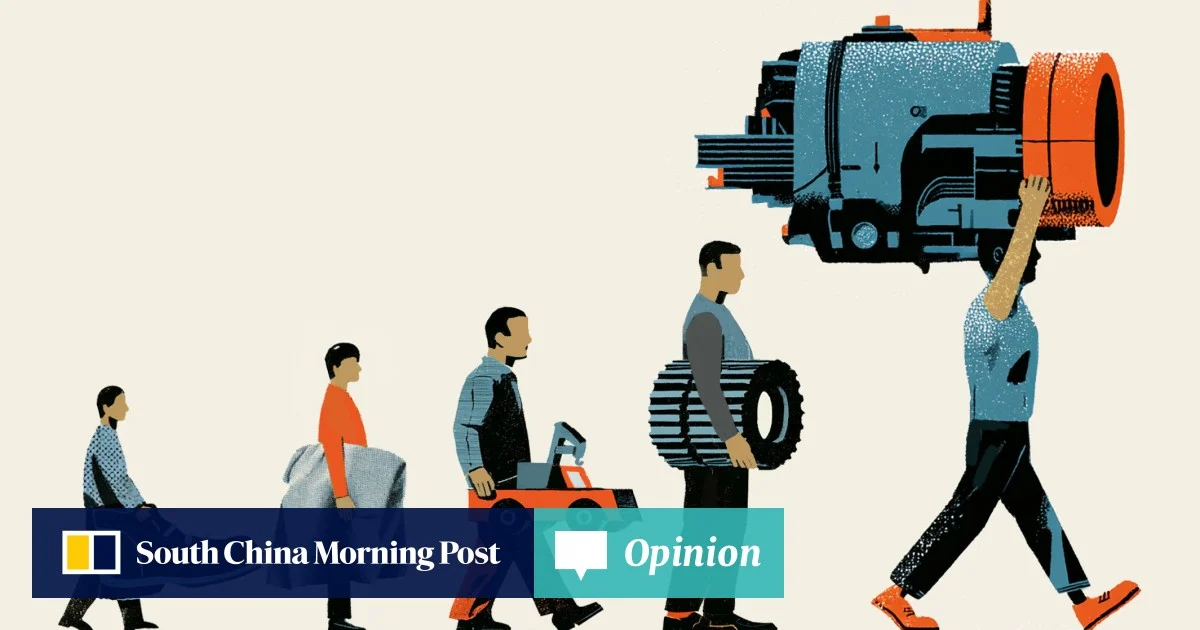
A scaremongering narrative has taken root in Western corridors and financial press columns: China, having saturated developed markets, is now aiming to crush fragile industries in developing nations, effectively slamming the door on their industrial dreams. It is a convenient little tale. However, it does not hold up against empirical evidence.
Over the same period, the share of consumer goods fell from about 36 per cent to roughly 33 per cent while the share of capital goods held steady at around 20 per cent. This is not the cargo manifest of a predator hunting for sneaker shelf-space. It is the supply list of a systemic partner that is feeding other nations’ industrial engines.
Now look at the sector where you would expect the fiercest head-to-head competition – labour-intensive consumer goods. If China were truly monopolising the export space of others, its share would be stable or climbing. In reality, it is falling. China’s share of global garment exports fell to just under 30 per cent in 2024, a significant drop from its peak of over 40 per cent about a decade ago.
Footwear tells a similar story. China’s share has dropped while Indonesia and India have gained ground. Instead of elbowing others aside, China is moving up the value chain and creating space for lower-income nations in other sectors.
China is not shipping goods to outcompete Global South producers; it is shipping the building blocks that make factories viable. According to an Oxford Economics report, nearly half of China’s total exports are intermediate goods – components and raw materials that feed into other countries’ production lines rather than finished products for consumers.


Dollar to Naira Exchange Rate Today, July 29, 2026: Nigerian Naira records third consecutive depreciation

“That Man Slapped Me Twice and Called Me Bad Names And Gave Me Naira 45M,” Sad as Abuja Woman Reveals How a Top Politician Allegedly Lured Her to a Lodging With an iPhone and Left Her Pregnant

Is Tinubu Going For Boxing Or 100 Metres? – APC Chairman, Yilwatda Slams Peter Obi Over ‘Tired’ Remark

Taraba Lawmaker Calls On State Government To Accord Priority, Funding To Hepatitis Treatment As HIV/AIDS

“I opened an account”- Nigerian lady who relocated to Canada displays account balance, amount sparks buzz

EXCLUSIVE: Police Indict Unity Bank Cooperative Officials in ₦85 Million Fraud Investigation – Secrets Reporters Nigeria

NACAT Unveils ‘Breaking the Chains’ Initiative, Premieres Innocence for Sale Documentary to Strengthen Fight Against Human Trafficking – Secrets Reporters Nigeria

Odogwu Asaba: “She is hungry”- Late Favour’s twin explains why she brought bread, sardine to her grave

“FG Unveils Seven Locally Developed Herbal Products” — NNMDA Targets Cancer, Hepatitis B, Hypertension

You Can’t Hide Behind ‘Technocrat’ Titles To Avoid Political Responsibilities – Yilwatda Warns Political Appointees

Olukoyede Warns Public Officials Against Corruption, Contract Fraud

Exclusive: Woman Gives Birth After 106 Days in Boko Haram Captivity

Drone strikes on Egyptian port end Cairo's exemption from Iran war

George Clooney's family evacuate their home in southern France over wildfire concerns

Russia used North Korean missile in deadly strike on Ukraine village, Zelensky says

Pentagon official praises China military relationship amid cyberattacks, spying claims

BREAKING: Osun Police Commissioner Moved to Force Headquarters in Abuja

Transfer: ‘He doesn’t excite me’ – Yorke kicks against Man Utd signing Arsenal target

China’s exports feed the Global South’s industrial engines

Real Madrid suffer fresh injury blow

 Entertainment15 hours ago
Are lawyers buried face down because they tell many lies? — Lawyer Stella clarifies long-standing myth
- News15 hours ago
Governor Dauda Lawal Seeks Transformative Solar Power Deals for Zamfara With High-Level Investment Roundtable with GCL Group
- Entertainment16 hours ago
“Peller why?” — Lawyer Stella explains why Peller’s court marriage won’t automatically cost him his property
- Politics11 hours ago
‘Peter Obi Is Not Happy About The Whole Situation – Kwankwaso’s Spokesman Speaks On Crisis In OK Movement
- News12 hours ago
Unity Bank Cooperative In Over ₦700 Million Financial Irregularities As Attorney General Fagbemi Gets Call To Investigate – Secrets Reporters Nigeria
- Entertainment15 hours ago
“I begged them to stop, but they kept watching my wife’s nakedness” – Man accuses Nigerian police of alleged misconduct
- Viral7 hours ago
PAP Scholar Ebinebo Esau Stample Bags Master’s Degree from Coventry University, Appreciates Otuaro, Tinubu
- Special Report8 hours ago
Tension Arises As Ghana Police Allegedly Block Vehicle Carrying Kantanka’s Body From Leaving Funeral Home As Court Order Bites