News
Tinubu took political risk by removing fuel subsidy — Alake

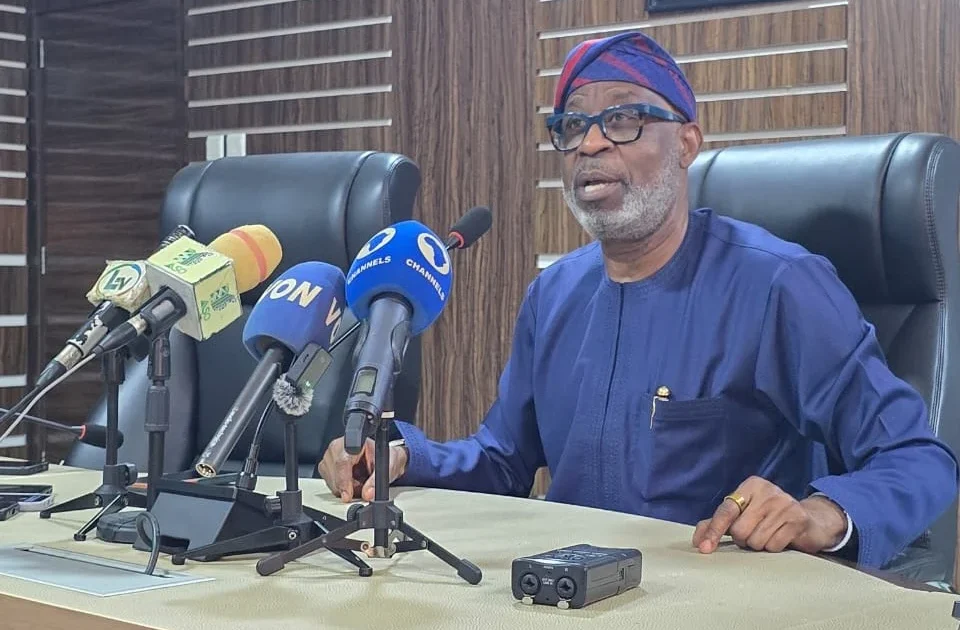
The Minister of Solid Minerals, Dele Alake, has said President Bola Tinubu took the political risk of removing the fuel subsidy in the interest of Nigeria’s long-term economic recovery, despite the immediate hardship and backlash that followed the decision.
Speaking on the government’s economic reforms during an interactive session with members of the All Progressives Congress Press Corps in Abuja on Wednesday, Alake said previous administrations had identified the need to remove the subsidy but repeatedly deferred the decision due to concerns about elections and its political consequences.
Alake, who was recently announced as President Tinubu’s 2027 All Progressives Congress Presidential Campaign Director of Strategic Communications, said Tinubu, however, chose to “take the bullets” on behalf of Nigerians by implementing the reform, arguing that there was no perfect time to make difficult economic decisions.
According to him, the subsidy regime primarily benefited fuel cartels and wealthy Nigerians, while the government was left with fewer resources to invest in infrastructure and other productive sectors of the economy.
He stated, “There is no shortcut to genuine reforms. I do not need to elaborate on the fact that we knew what the Nigerian economy was before 2023. And I do not need to inform you that all the reforms and the policies that were and are necessary to correct these distortions and contradictions in the Nigerian society were there and identifiable by those previous governments. The only thing lacking was the courage to take those decisions.
“And there is no shortcut. They say, our elders say, when you are in a hole, what do you do? You stop digging. Because the more you dig, the deeper you sink. But because those previous governments lacked the courage to stop digging, for short-term political expedience, they were afraid of elections; they were afraid of bringing them back to office and all that. So they shifted those decisions, the hard decisions they ought to have taken. I recall, and most of you will be aware, many years ago there was this issue of removal of fuel subsidy, which dominated the space in Nigeria.
“And there were protests: subsidies should not be removed; they should be removed. The government at that time knew they were removing them; they should be removed. But the fact of the matter was, it went back on the process of removing them. When there were protests, it backtracked because there was an election coming. And so people swallowed the bitter pill. But somebody came and decided to swallow the bitter pill, to take the bullets on behalf of Nigerians.
“I think we should, in all sense of fairness and objectivity, give a commendation to whom it is due. If a man, who is a politician himself, who should be very sensitive to elections, decided to take the bullets, regardless of the consequences on his own political career, on behalf of the nation, because the nation had to be reset. I think it’s just very, very important for us to appreciate that.”
The Director of Strategic Communications for President Bola Tinubu’s 2027 campaign said Nigeria needed consistency in implementing the economic reforms introduced by the administration, noting that the difficult decisions already taken would inevitably come with challenges.
He said no government policy anywhere in the world could be 100 per cent foolproof, particularly when it involved human beings, whom he described as the most difficult factor in economic production and growth.
The Minister of Solid Minerals said statesmen must pursue policies that serve the greatest good for the greatest number, even if some individuals benefit from the existing system.
He said the former fuel subsidy regime mainly benefited wealthy Nigerians and fuel cartels, rather than the majority of citizens.
The minister added that despite fuel subsidies, Nigerians had continued to complain about high transportation fares, questioning the extent to which the policy actually benefited ordinary citizens.
He stated, “So the beneficiaries of the fuel subsidy were the oil cartels. They would buy the fuel at a lower price, cross the border, and immediately make humongous profits. And they come back to Nigeria to oppress the rest of us. So when the fuel subsidy was removed, did you think that they would fold their arms and be looking? No! They will fight back. They will push back. And they are fighting back, and they are pushing back.
“Now, at that time when there was a fuel subsidy, you recall how many states couldn’t pay salaries. In fact, the federal government itself was borrowing to pay salaries. And at some point, I recall, more than 18 states, if not more, could not meet wages. It was a tough situation. Money that should have been freed, you know, and put into use, into infrastructure and all that, constructing the regenerative sections of the economy, could not get the funds.”
The Minister of Solid Minerals said economic reforms required a period of adjustment, noting that painful measures must be endured before their benefits could become evident.
He said government policies could not produce immediate results, as they required proper planning, mobilisation of resources, implementation and monitoring before their impact could be felt.
The minister, however, said the reforms introduced by the Tinubu administration were already yielding the desired results, despite the challenges and pains associated with their implementation.
President Tinubu announced the removal of the fuel subsidy on May 29, 2023, during his inauguration, fulfilling one of his major campaign promises.
The decision triggered a rise in the prices of goods and services, although the All Progressives Congress-led Federal Government has maintained that the policy has brought significant economic gains.
Ahead of the 2027 election, former Vice President Atiku Abubakar, who also promised to remove the subsidy during the 2023 campaign, has pledged to restore it if elected, citing the need to reduce the hardship faced by Nigerians.
However, the presidential candidate of the Nigeria Democratic Congress, Peter Obi, and the Allied Peoples Movement candidate, Oyo State Governor Seyi Makinde, have said they would retain the subsidy removal if elected in 2027, while ensuring better management of the petroleum sector to make fuel more affordable for Nigerians.




Oyo 2027: Civil servants wait for seven to 10 years before receiving entitlements – ADC guber candidate

Evening recap: FG to give Nigerian shipowners $25m, Drivers, cooks, traders can own refinery shares, other top stories

‘After Working With Peter Obi, You Risk Suffering Post-political Identity Crisis’ – Kenneth Okonkwo Defends Datti

CBN Deputy Governor Emem Usoro Who Was Side Chic To A Married Man Accused Of Watching Him Take His Last Breath, Buried Him Alone And Took His Death Certificate From His Wife – Secrets Reporters Nigeria

‘Peter Obi Is A Content Creator’ – Presidency Attacks Him For Attending Makinde’s Campaign Office Launch

Where Is The Money You Saved From Subsidies That Never Existed? – Adebayo Dares Tinubu To Public Debate

Exclusive: Niger Delta Suffers While MDGIF Director Oluwole Adama Hides N12.9 Billion Natural Gas Fund – Secrets Reporters Nigeria

Shettima Tasks Transporters on Peaceful Mobilisation for Tinubu’s 2027 Re-election Bid » Apples Bite Int’l Magazine

Tinubu Govt Bars Ministers, Service Chiefs, Agency Heads From Foreign Trips Without OSGF Approval » Apples Bite Int’l Magazine

Yobe tertiary institutions’ unions issue fresh 15-day ultimatum over unpaid allowances, welfare packages

LAWMA to arrest Lagos residents patronising illegal roadside traders

Islamist Gunmen Kill 12 and Abduct Schoolgirl in Night Raid on Christian Village in Northeast Nigeria

Rufai Oseni and the burden of objectivity

NCC begins registration of SIM-enabled devices, targets illegal imports

IYC Central Zone Rejects Call to Revoke Pipeline Surveillance Contracts

Akpabio petitions DSS over anti-North statement

“Shame catch me”- Level 9 federal nurse shares monthly pay, amount sparks buzz

South Park creators ‘rename’ show to ‘South America’ in jab at Trump

Spain's spy agency warned of Ceuta border breach plans before crisis, declassified files show

EPL: Estevao ready for bigger Chelsea role, says Alonso

 News23 hours ago
Tinubu Govt Bars Ministers, Service Chiefs, Agency Heads From Foreign Trips Without OSGF Approval » Apples Bite Int’l Magazine
- Headlines14 hours ago
Yobe tertiary institutions’ unions issue fresh 15-day ultimatum over unpaid allowances, welfare packages
- Headlines16 hours ago
2027: I’ll put solar panels on every Nigerian’s roof within 11 months of my presidency – SDP’s Adebayo
 News21 hours ago
2027: Accord’s Hashim Targets 4 Million Barrels of Oil Daily Within 24 Months » Apples Bite Int’l Magazine
- Headlines14 hours ago
Super Falcons: ‘Nigeria keep recycling leaders’ – Mixed reactions trail Eguavoen’s appointment as coach
- Politics15 hours ago
If You Knew Peter Obi Was Not Competent, Why Did You Drag Nigerians Through That Process? – Sowore Fires Datti
- Entertainment16 hours ago
“My pay was over 500,000 naira” — Graduate recounts how course mate’s father employed him before NYSC
- Viral17 hours ago
“If anything happens to me…” — Keke driver orders passengers down after spotting stranded family in rain