News
Presidency rejects US lobbyist reports as politically motivated

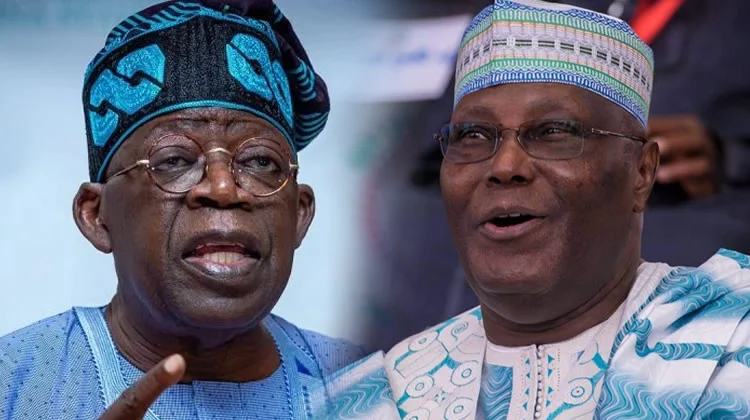
The Presidency has criticised a United States lobbying firm engaged by former Vice President Atiku Abubakar over its campaign for the release of records relating to President Bola Tinubu, describing the effort as a politically motivated attempt to create a crisis ahead of the 2027 elections.
The Special Adviser to the President on Media and Public Communications, Sunday Dare, made the position known in a statement on Tuesday titled, “Speculation as Classified Information: Atiku’s $1.2 million Lobbying Gamble Exposed.”
Dare accused the Washington-based Von Batten-Montague-York, L.C. of presenting political claims as intelligence reports and attempting to give the impression that its statements represented the position of the United States government.
The Presidency’s reaction followed renewed activities by the lobbying firm concerning historical United States records relating to Tinubu.
According to Dare, publicly available filings under the US Foreign Agents Registration Act showed that Atiku contracted the lobbying firm on a 12-month retainer reportedly worth $1.2m.
He alleged that the firm’s activities were part of an attempt by the former vice president’s camp to use historical US legal records to gain political leverage ahead of the 2027 general elections.
Dare said the reports being circulated from Washington did not constitute the official position of the US government.
He said, “The incendiary press releases being carefully churned out from Washington are public relations propaganda sheets passed off as the view of the U.S. Government. They are not.”
The presidential aide challenged those behind the allegations to produce what they described as classified intelligence and identify their sources.
“Sane minds must categorically dismiss these reports as fabricated, politically motivated, and entirely unsupported by evidence. The report presents no intelligence document, no named Western official, and no evidence of any exchange involving Nigeria’s secrets or resources.
“It is nothing more than political speculation packaged as classified information. We demand that they produce the so-called “highly classified intelligence report,” identify their unnamed sources, and provide tangible evidence for their wild allegations,” Dare said.
He also questioned the role of the founder of the lobbying firm, Karl Von Batten, describing him as a commercial lobbyist and not an official of the US government.
“Dr. Karl Von Batten’s comments represent solely the position of an individual associated with Atiku-linked political interests, not the U.S. government or President Trump,” he said.
The controversy centres on historical records held by US federal agencies concerning Tinubu and a 1990s civil forfeiture case involving funds forfeited to US authorities.
The records are also the subject of ongoing Freedom of Information Act litigation in the United States.
PUNCH Online had reported that a Senior Advocate of Nigeria and member of Tinubu’s legal team in the United States, Wole Afolabi, defended the legal challenge against the release of portions of the records.
Afolabi, who spoke on Channels Television’s Sunday Politics, said the US government had already released thousands of pages of records but was seeking to keep some portions redacted to protect law enforcement methods, sources and agents.
He said Tinubu’s legal team was relying on protections available under US law and that challenging the release of the redacted portions did not amount to an attempt to conceal incriminating information.
Afolabi said, “This matter has been going on for quite some time, as you rightly said, and the DEA and other government agencies have produced documents and made available to Mr Greenspan.
“Now Mr Greenspan is asking that documents should be unredacted before they are handed over to him. The way the system works is this: it’s not what you want, it’s what the law stipulates.
“So precisely what we are doing is going under the coverage of the law. It’s what the law gives us the right to do. It would amount to professional malpractice on our part if we don’t take advantage of what the law offers.”
He also dismissed the suggestion that the US government was withholding the records specifically to protect Tinubu.
He said, “In one of the recent filings that was made recently by the Department of Justice, it was stated in the footnote at page 24 that their concern is about the methodology by which information is gathered.
“No mention was made of any protection being offered to President Bola Ahmed Tinubu.”
Afolabi also argued that if US authorities had found sufficient evidence linking Tinubu to drug trafficking, he would have been indicted and prosecuted.
Asked whether he was saying Tinubu had never taken drugs, had never been caught with heroin or had never been involved in drug trafficking, Afolabi replied, “What the evidence shows.”
He was also questioned about the $460,000 forfeited to US authorities in the 1990s and the circumstances surrounding the civil forfeiture proceeding.
Afolabi maintained that a civil forfeiture did not amount to a finding of criminal culpability.
“If he was culpable, he simply would have been indicted. There’s no shortcut around it. He would have been indicted,” he said.
The lawyer, however, declined to disclose Tinubu’s account of the matter, citing attorney-client privilege.
“I’m acting as his lawyer, and as a lawyer, there is what you call attorney-client privilege, and it’s taken very seriously over here. One can lose one’s licence very easily.
“Unfortunately, I can’t divulge any information that my client had disclosed to me confidentially. I’m sorry,” he said.
Afolabi also declined to give a direct yes-or-no answer when asked whether Tinubu had ever been investigated by the FBI or the Drug Enforcement Administration.
He explained that law enforcement agencies could investigate individuals without such investigations establishing criminal culpability.
“Anyone can be a subject of investigation. That’s just how it goes. I mean, there’s a presumption of innocence,” he said.
The lawyer argued that the mere presence of a person’s name in law enforcement records should not automatically be interpreted as evidence of criminal wrongdoing.
Afolabi further defended Tinubu’s legal team’s reliance on privacy protections in challenging the release of some of the records.
He compared the situation with US President Donald Trump’s efforts to prevent the release of some of his academic records, arguing that public office holders do not automatically lose their legal rights to privacy.
The lawyer said, “Everybody takes advantage of it. Everybody. If the law offers you protection, there’s a reason why the law is there.”
The Presidency’s statement came amid continuing debate over the release of historical US law enforcement records relating to Tinubu.
The Freedom of Information Act case remains before a US federal court, where arguments concerning the release and redaction of the records are being considered.





“We Will Examine The Records And Investigate Any Credible Misconduct” : INEC Responds To NDC’s Allegation Of Smuggled Candidates

Ex-IYC President Advises Tinubu To Channel Subsidy Removal Savings Into Rehabilitating Refineries, Strengthening LG Autonomy

NIS announces dates, venues for UK passport intervention exercise – The Witness Nigeria

Kidnappers demand N20m ransom for abducted NYSC members

IPOB Gives Nigerian Government 14-Day Ultimatum Over Nnamdi Kanu’s Appeal, Threatens Election Boycott

NFF Presidential Race: Who Qualifies to Lead Nigerian Football?

Embattled ex-Bayelsa gov, Timipre Sylva dumps APC, slams party’s leadership

Adeleke happy with UNIOSUN’s meteoric rise, extends VC’s tenure by two years, inaugurates new governing council

Ita Enang Questions Itu Council Spending Over Poor Roads, N9.45bn FAAC Allocation

“No Office, Title Or Social Status Places Anyone Above The Law” — Olukoyede Says EFCC Secured 10,872 Convictions In 34 Months

Hungarian man steals small plane, lands in field and tries to commandeer passerby's car

Falconets draw South Korea in final World Cup friendly

“I had never experienced such”- Man who invited lady to his residence in 2019 shares heartbreaking outcome

China’s Xi visits Egypt as US sanctions threat looms over Iran links

“There is still post-match analysis”

2027: Former IGP Will Be On The Ballot Despite INEC Omission – Campaign

Tinubu Was Under Investigation For Drugs – FBI Confirms

“No be Peller’s father be this?”

APC Commissioner Defends ‘Cut Fingers’ Threat, Says No Apology Needed

“If you are my boyfriend…” — Lady says she won’t cook or clean when she visits his house

 Politics16 hours ago
Ex-IYC President Advises Tinubu To Channel Subsidy Removal Savings Into Rehabilitating Refineries, Strengthening LG Autonomy
- Metro12 hours ago
“No Office, Title Or Social Status Places Anyone Above The Law” — Olukoyede Says EFCC Secured 10,872 Convictions In 34 Months
- Viral13 hours ago
“If America, Cannot Fully Open Tinubu’s Drug Files, Who Told You Obi or Atiku Can Win Without a Revolution?” – IPOB
 Viral12 hours ago
BUSTED: Highly Classified Intelligence Report Reveals Bola Tinubu Is Not on Vacation, But in Europe to Seek Political Protection From His “Friends” to Ensure His US Drug-Related Documents Are Never Released
- Viral12 hours ago
BREAKING: Tinubu Likely To Get ‘Maduro Treatment’ as FBI, DEA Review Heroin-Trafficking, Money Laundering and IRS Investigations
- Special Report22 hours ago
EFCC invites Timipre Sylva over alleged $14.86m fraud
- Viral11 hours ago
Hired Lagos Crowd Calls Out APC Over ₦1,500 Payment After a Hard Day’s Job Dancing and Campaigning for Party
- Viral12 hours ago
‘What Kind of Shepherd Tells People to Hide Their Past When It Concerns a Nation?’ Rufai Oseni Blasts Primate Ayodele for Backing Non-Disclosure of Tinubu’s Drug File