Metro
“No Office, Title Or Social Status Places Anyone Above The Law” — Olukoyede Says EFCC Secured 10,872 Convictions In 34 Months

*Says EFCC Dismissed Over 40 Staff For Corruption, More Than Five Facing Prosecution
The Economic and Financial Crimes Commission has recovered more than ₦1.23 trillion and $684.48 million in proceeds of economic and financial crimes, secured 10,872 convictions and dismissed more than 40 of its personnel for alleged corruption and financial malpractice under the leadership of its Executive Chairman, Ola Olukoyede.
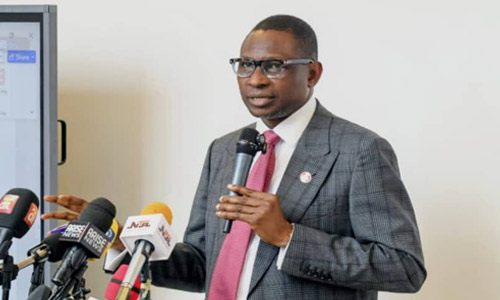
Olukoyede disclosed the figures on Monday, August 31, 2026, while presenting the Commission’s stewardship report to media executives and journalists at the EFCC headquarters in Abuja, detailing enforcement activities, asset recoveries, prosecutions, restitution, international cooperation and internal reforms undertaken since October 2023.
According to him, between October 1, 2023 and June 30, 2026, the Commission recovered ₦1,233,612,040,411.11, $684,478,457.32, £373,905.78 and €9,343,803.66, apart from recoveries made in other currencies.
He explained that about ₦397.26 billion, representing 33 per cent of the total naira recovery, constituted direct recoveries for the Federal Government, while ₦836.34 billion, representing 67 per cent, was recovered on behalf of ministries, departments and agencies, state revenue services, companies, individuals and foreign victims.
Olukoyede said the breakdown showed that roughly two out of every three naira recovered by the Commission during the period were recovered for beneficiaries other than the Federal Government.
The EFCC chairman said asset recovery remained a central pillar of the Commission’s anti-corruption mandate, but stressed that the real value of recovery lay in returning assets and funds to legitimate beneficiaries and converting criminal proceeds into public value.
He disclosed that ₦661.32 billion and $492.37 million had been released to beneficiaries during the period under review.
Of the naira amount, approximately ₦325.35 billion was released directly to individuals and corporate bodies, while about ₦335.97 billion was returned to ministries, departments and agencies, the Nigerian Revenue Service, state internal revenue services, other public institutions, companies and individuals.
Olukoyede also disclosed that EFCC enforcement activities resulted in approximately ₦288.1 billion in federal and state tax recoveries.
According to him, about ₦173.2 billion represented federal tax recoveries, while ₦114.9 billion was attributed to state internal revenue services.
He stressed that the amounts represented enforcement of existing tax obligations rather than the introduction of new taxes.
The Commission also recorded about ₦257.2 billion in recoveries for federal ministries, departments and agencies, which Olukoyede said demonstrated how anti-corruption enforcement could strengthen public revenue without imposing additional taxes on citizens.
Giving a broader breakdown of the EFCC’s enforcement record between October 2023 and July 2026, Olukoyede said the Commission received 49,673 petitions, investigated 39,615 cases, filed 14,476 cases in court and secured 10,872 convictions.
The figures represented a conviction-to-filing ratio of about 75.1 per cent.
In the first half of 2026 alone, he said the Commission secured 1,370 convictions from 1,889 cases filed in court.
Olukoyede said the statistics reflected a prosecutorial approach built around investigation, evidence gathering and securing sustainable courtroom outcomes rather than merely announcing arrests.
According to him, analysis of petitions and cases handled by the Commission also revealed changes in Nigeria’s financial crime landscape.
Between 2024 and 2026 year-to-date, the EFCC recorded 46,288 offences across nine major crime categories, with advance fee fraud and cybercrime accounting for nearly two-thirds of the total.
He said recorded offences increased by 24.1 per cent between 2024 and 2025, with significant increases in procurement fraud, bank fraud, cybercrime and economic-governance-related offences.
Olukoyede said the trend showed that the EFCC’s responsibilities extended beyond politically exposed persons and major public corruption cases to protecting ordinary Nigerians, businesses and institutions against fraud and cyber-enabled financial crimes.
The chairman also reaffirmed what he described as the Commission’s “no sacred cows” approach to high-profile investigations.
He said the EFCC’s portfolio included investigations and prosecutions involving former governors, ministers, public office holders, heads of government agencies, financial-sector operators and corporate executives.
He cited the convictions of Saleh Mamman, Robert Orya and Chukwunyere Nwabuoku as examples of cases pursued by the Commission, stressing that public office, political influence or social status should not place anyone beyond the reach of the law.
Olukoyede maintained that the EFCC’s role was to investigate professionally, prosecute on the strength of evidence and allow the courts to determine guilt or innocence.


DSS Directs Counsel To Seek Adjournment In Sowore’s Cybercrime Trial Until After 2027 Presidential Election

2027: Massive crowd storms Kaduna as ‘Relax, Tinubu Is Fixing Nigeria’ mobilises Northwest for Tinubu [PHOTOS]

“We Will Examine The Records And Investigate Any Credible Misconduct” : INEC Responds To NDC’s Allegation Of Smuggled Candidates

NIS announces dates, venues for UK passport intervention exercise – The Witness Nigeria

IPOB Gives Nigerian Government 14-Day Ultimatum Over Nnamdi Kanu’s Appeal, Threatens Election Boycott

Kidnappers demand N20m ransom for abducted NYSC members

Embattled ex-Bayelsa gov, Timipre Sylva dumps APC, slams party’s leadership

DELTA @35: EREYITOMI HAILS OBOREVWORI, DALTANS, URGES UNITY FOR GREATER DEVELOPMENT

At least eight dead after ferry capsizes off northern Cyprus

Access Holdings board approves H1 2026 financial statements

Schools reopen across Cuba as fuel, water and power shortages persist
Schools reopen across Cuba as fuel, water and power shortages persist

7 Things To Know About JAMB-WAEC’s New One-Off O’Level Result Verification

Hired Lagos Crowd Calls Out APC Over ₦1,500 Payment After a Hard Day’s Job Dancing and Campaigning for Party

Falconets held by Korea in pre-World Cup friendly

North Central insecurity threatens food security of 200m Nigerians – Alia

JAMB, WAEC Introduce One-Off ₦4,000 WASSCE Verification For Admissions

Show No Mercy to Opposition Parties, Governor Nwifuru Charges New LG Chairmen

Peter Obi Meets Canadian High Commissioner Over Nigeria’s 2027 Elections

US Troop Withdrawal Is Routine, Won’t Affect Nigeria’s Security — DHQ

 Viral21 hours ago
Ita Enang Questions Itu Council Spending Over Poor Roads, N9.45bn FAAC Allocation
- Politics21 hours ago
NFF Presidential Race: Who Qualifies to Lead Nigerian Football?
- Politics4 hours ago
Ex-IYC President Advises Tinubu To Channel Subsidy Removal Savings Into Rehabilitating Refineries, Strengthening LG Autonomy
- Politics22 hours ago
Tinubu Has No Criminal Record, FBI Files Don’t Prove Otherwise
- Metro21 hours ago
‘End Of An Era’, Fans Mourn Messi’s International Football Retirement
- Society18 hours ago
Adeleke happy with UNIOSUN’s meteoric rise, extends VC’s tenure by two years, inaugurates new governing council
- Politics21 hours ago
Military Rescues 21 Kidnap Victims, 15 NYSC Members, in Kogi
- Politics23 hours ago
NFF Charges Falconets To Defeat Korea Republic As