News
INEC has no excuse to delay results in 2027 — ACSPN president

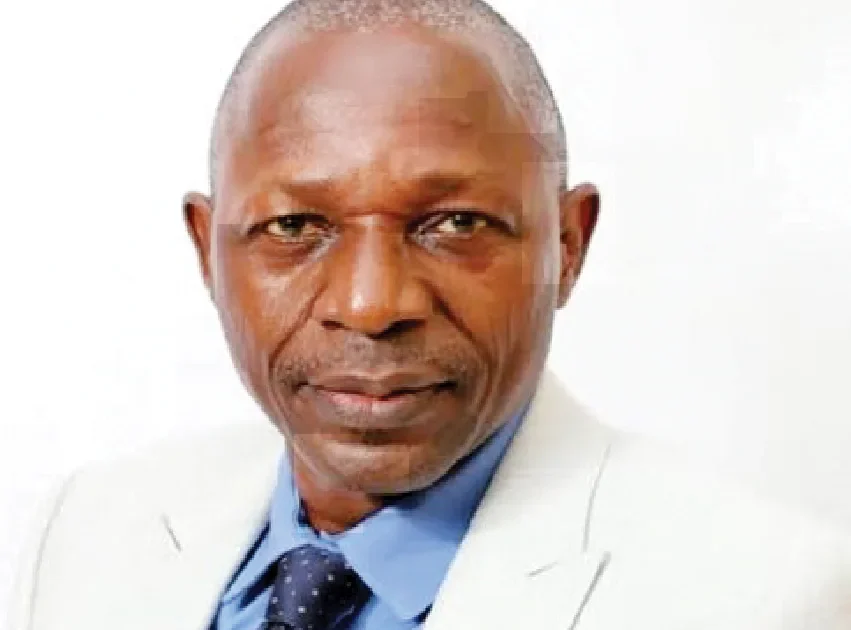
The National President of the Association of Communication Scholars and Professionals of Nigeria, Professor Rotimi Olatunji, speaks with JOHNSON IDOWU on how the Independent National Electoral Commission can build on the success recorded in the recently conducted Osun election to deliver credible elections in 2027, among other issues. Excerpts…
What specific failures in Nigeria’s electoral communication system does the association believe need to be addressed urgently?
We will recall that, as a build-up to the 2022 Electoral Act, one of the controversies had to do with transparent reporting of election results through IReV, so that results could be posted as captured from polling booths. There was also a controversy over whether election results should be transmitted solely through technology or whether there should be a combination of paper and technology. The National Assembly eventually settled for both platforms.
However, elections can only be transparent and seen to be transparent when we engage digital technologies to report results in real time. This will reduce the shadow of doubt regarding who won or lost an election. In 2023, it became a major controversy because many of the results could not be uploaded or, even when uploaded, were not adequately reported in real time. This appeared to dent the image of INEC.
As a responsible academic and professional body, we believe we should shape the discussion and put election managers on the spot regarding how technology can be deployed to ensure the integrity of our electoral system. This is not rocket science. We have had student union elections, for example, at Lagos State University, where digital technologies are used and results are released in real time and are subject to wider acceptability. The Nigerian Bar Association also recently conducted its election using technology.
Democracy without a credible electoral system is an aberration. It lacks credibility and acceptability. Once results are disputed, whoever wins may not enjoy wider acceptance. In a nation fragmented by ethnicity, religion, and other cleavages, it is very important that, for a president to emerge and be widely accepted, the election that produces such a president must also be credible. The same applies to state and local government elections.
Elections are at the heart of democracy, not only in Nigeria but across Africa. The question is: how do we use emerging media, artificial intelligence, and other digital platforms to ensure that elections are credible, free, fair, and seen to be credible and acceptable by the wider community? Hence, the theme of our conference.
With AI increasingly being used to spread misinformation and disinformation, how concerned is the association about its potential impact on the 2027 election?
The Association of Communication Scholars and Professionals of Nigeria is abreast of developments in media, technology, and communication. We have conducted research and practical projects on media technologies, including artificial intelligence.
One of our landmark works investigated misinformation, disinformation, and the abuse of technology in relation to the 2015 presidential election. Even when artificial intelligence was not widely used at that time, we saw distortions of presidential images, falsification of news and information, and fake news associated with the campaigns.
This showed us that technology, good and desirable as it is, can be a double-edged sword with both positive and negative sides. To combat disinformation and misinformation, we went further to design manuals and projects to educate citizens on how to identify fake news, falsehoods, disinformation, and misinformation in the political system.
The emergence of artificial intelligence has introduced new dynamics that are both welcoming and frightening. It is welcoming because, within seconds, as electoral results are released, they can be reported directly and sent to portals where people can monitor who is winning, where, and by what margin.
We saw this during the off-cycle elections, particularly in Ekiti and Osun. People from different parts of the world monitored the results as they came in. This made it obvious to both the winning party and its opponents that the winning candidate had won convincingly, according to the reports. This had a positive effect in dousing tension and post-election violence.
However, artificial intelligence also presents challenges, particularly deepfakes and cybersecurity. The recent Nigerian Bar Association election is an example. Its platform was allegedly attacked, forcing the association to modify or migrate to another, safer platform to guarantee the integrity of the election.
If this could happen among the learned community, it points to the cybersecurity challenges that could arise on a national scale. We cannot run away from technology because of the threats posed by cyberspace. Those managing these systems must constantly be steps ahead of those trying to attack them.
With advanced knowledge, skills, and professionalism, we can surmount these challenges. We need experts to come together to brainstorm on how to respond to cyber-attacks and attempts to clone or falsify results using digital platforms. There should also be alternative platforms and approaches to combating such challenges.
The 2023 general election was also marked by cybersecurity concerns, but technology is advancing daily. Those managing the system must therefore remain on top of the game.
We cannot say that, because of the threats in cyberspace, we should do away with technology. We can only develop strategies to overcome these challenges. Technology has come to stay, particularly artificial intelligence. We use it in banking and admission processes, and JAMB also uses technology. If the financial sector can build systems that people increasingly trust despite cyber threats, I believe we can do better with our national elections.
Do you think INEC has a duty to replicate the successes recorded in the Osun election in the 2027 general election as a way to build confidence in the outcome?
I had cause to make a similar presentation when a trade union invited me to discuss the history of technology deployment in Nigeria’s electoral processes. The trajectory started around 2007, when we were still conducting elections manually. The 2007 election was so hotly contested that, when Yar’Adua emerged, he admitted that the election was marred by irregularities, lack of transparency, and fraudulent practices.
After 2007, there were improvements, including the deployment of voters’ cards that could be read by technology. The 2015 election was a watershed because it was the first time an incumbent party and president were dislodged from power, and the use of voters’ cards for accreditation played an important role.
Since then, we have seen continuous improvement in the deployment of technology. The 2023 election, although technology was used, experienced what was described as glitches or a lockdown of the system. When the matter got to court, there were questions about whether the results that did not drop were the same results captured and used to produce the sitting President.
The Osun and Ekiti elections were test cases for Professor Ojo Amupitan, particularly in terms of INEC’s transparency and neutrality. We have seen constant improvement from Anambra to Ekiti and now to Osun.
Now that INEC has done what it has done in Osun, it has no option but to continue improving. It will have no excuse to tell Nigerians why the results could not drop in real time. If Osun can produce such a result, where party agents witnessed the uploading of results at the different electoral wards and the results were the same as those received at the central collation centre, INEC should be able to replicate this across the country.
In academics, you first conduct a pilot test. If the pilot test is convincing and conclusive, the margin of error should be minimal when it is translated to the national election. We should make allowances for unreached areas where internet connectivity may not be as strong, but, by and large, in the 2027 general election, we should be looking at having at least 75 per cent of results uploaded and reported in real time.
What happened in Osun is replicable if the right equipment and manpower are available and there is no sabotage by those managing the process or by political actors through cyber-attacks. The electoral system has also provided for double reporting. Apart from the results uploaded electronically, there are the physical results signed by party agents at polling units. If people want to manipulate elections, they often do so at the polling-unit level, so the physical records remain important.
Technology has come to stay. We use it in banking and admissions, and JAMB also uses technology and artificial intelligence. Financial technology companies have shown that, despite cyber threats, systems can become secure enough to earn public trust. If the financial sector can do this, I think we can do better with national elections.
What are the challenges of using technology and artificial intelligence in elections?
The results are reported directly and sent to the portal, allowing people to monitor who is winning, where, and by what margin. We saw this during the off-cycle elections, particularly in Ekiti and Osun. People around the world monitored the results as they came in, and this helped to make it obvious to both the winning and opposing parties when a candidate had won convincingly. It had a positive effect in dousing tension and post-election violence.
However, artificial intelligence also presents challenges such as deepfakes and cybersecurity. The recent Nigerian Bar Association election is an example. Its platform was allegedly attacked, forcing the association to modify or migrate to another platform to guarantee the integrity of the election. If this can happen among the learned community, then it points to the cybersecurity challenges that could arise on a national scale.
We cannot run away from technology because of cyber threats. Those managing the system must always be ahead of those trying to attack it. We need advanced knowledge, skills, and professionalism, as well as alternative platforms and strategies for responding to cyber-attacks and attempts to clone or falsify results.
The 2023 general election was also marked by this kind of cyber challenge. Technology is advancing daily, so those managing electoral systems must remain on top of the game. We cannot abandon technology; we must develop strategies to overcome its challenges.
ACSPN has always emphasised partnership between communication scholars and practitioners. Why has the gap between the university and the newsroom been difficult to close?
The founding goal of the Association of Communication Scholars and Professionals of Nigeria is the fusion of town and gown. That is why ACSPN brings together scholars and professionals. Through our empowerment series, state chapters bring broadcasters, cybersecurity experts, public relations practitioners, advertisers, and others into the classroom.
We also advocate having industry professionals on teaching lists and encouraging academics to spend their sabbaticals in the media industry. Many of our members also serve on editorial boards. We have partnerships with organisations such as the Advertising Regulatory Council and the Nigerian Institute of Public Relations.
ACSPN also helped midwife the new communication and media studies curriculum, which led to the unbundling of traditional mass communication into eight degree programmes. The curriculum review involved media organisations, the Nigerian Guild of Editors, the Nigerian Press Council, the Nigerian Broadcasting Commission, advertising regulators, and the NIPR. The aim is to produce industry-ready graduates and effectively bridge the gap between the classroom and industry.
Should journalists and media practitioners be licensed like lawyers and medical practitioners?
Licensing is critical. A profession requires educational qualifications, legal and ethical frameworks, and a code of conduct. However, communication is broad, and we cannot decree rigid boundaries about who can become a practitioner.
For example, somebody who studied science may be better equipped to report scientific matters than someone who studied mass communication. What such a person needs is professional training. Institutions such as the Nigerian Institute of Journalism can provide that professional grounding, while professional bodies should enforce continuous training.
There must also be a legal framework and sanctions. The professional bodies must do what is necessary to make journalism a profession. Today, there is so much falsehood and misinformation online because many people reporting are not trained. If the profession is to be respected, its owners must enforce the standards of professionalism.
What three changes do you want to see before the end of your tenure as ACSPN president?
I want stronger relationships with industry through active programmes beyond the annual conference, including national discourses across the geopolitical zones on using communication and media to address societal problems. Also, I want state chapters to engage more actively with their audiences and deepen conversations on communication and development.
I also want stronger mentorship and media entrepreneurship for younger people. Digitalisation has empowered content creators, so our students should become creators rather than merely consumers. There are opportunities beyond entertainment, including creative content, computer applications, and games.
We also have our journal, the ACSPN Journal of Communication Theory and Practice, which I want to use to bring town and gown closer. Industry practitioners can share case studies and experiences, while academics can share research that practitioners can apply.



Kano APC rally: Ahmed Bala hails TSG, Faleke, says four years not enough to consolidate Tinubu’s reforms

EPL: ‘No longer sharp, quick’ – Carragher names who to blame for Arsenal’s first goal against Chelsea

“He married three wives so they wouldn’t conspire against him” – Pete Edochie shares uncle’s unusual strategy

“I feel like my life is under threat” – Sarah Martins calls out dispatch rider she once helped over alleged harassment

Fed Min Of Industry, Trade & Investment Records N3.07bn in Questioned Transactions as Funds Are Misapplied, Payments Bypass Controls – Secrets Reporters Nigeria

“If Peter Obi becomes President, insecurity will become a thing of the past” – Ex-military officer declares

2027: If You Had The Guts To Challenge Sitting President, Why Didn’t You Come Out? – Sambo Fires Datti

Exclusive: No National Population Census Since 2006, Yet Agency Chairman Nasir Isa Kwarra Said He Spent ₦240 Billion To Count Nigerians – Secrets Reporters Nigeria

Evening recap: FG to give Nigerian shipowners $25m, Drivers, cooks, traders can own refinery shares, other top stories

“Now una make me look like fool” – Stanley Ontop fumes over Regina Daniels’ visit to Ned Nwoko’s house

Kwara monarch calls for collaboration on community dev’t

Imo Police Arrest Two Vigilantes Over Viral Okigwe Assault Video

Shehu Buba’s aide resigns amid banditry allegations against Senator
Shehu Buba’s aide resigns amid banditry allegations against Senator

Investigation: SEEPCO’s Anthony Chukwueke Was the FG Regulator Sacked in 2007 for Improperly Awarding Oil Licenses and Is Now Chairman of the Company That Walked Away With Nigeria’s Richest Well – Part One – Secrets Reporters Nigeria

US Firm Issues Fresh Warning Over Tinubu’s Drug Allegation

EFCC Arraigns Maiduguri Businessman Over Alleged N600,000 Keke Napep Fraud

It’s Like APC’s Muslim-Muslim Ticket – Fayemi Reacts to Atiku’s Subsidy Promise

Four arrested for allegedly killing Niger village head

Vietnam’s To Lam visits Russia and France amid South China Sea tensions

 Politics19 hours ago
2027: If You Had The Guts To Challenge Sitting President, Why Didn’t You Come Out? – Sambo Fires Datti
- News8 hours ago
Evening recap: FG to give Nigerian shipowners $25m, Drivers, cooks, traders can own refinery shares, other top stories
- News18 hours ago
Paper Promises vs. Real Pulses: Why Nigeria’s Hypertension Crisis Demands Cash-Backing, Not Just Budget Speech-Making – Professor Emmanuel Alhassan and LISDEL
 News5 hours ago
CBN Deputy Governor Emem Usoro Who Was Side Chic To A Married Man Accused Of Watching Him Take His Last Breath, Buried Him Alone And Took His Death Certificate From His Wife – Secrets Reporters Nigeria
- News18 hours ago
Stolen funds? ₦76 Billion Paid Out To Non Existing Poor Nigerians By Bola Tinubu Government Through Nigeria’s Cash Transfer Programme – Secrets Reporters Nigeria
- Entertainment23 hours ago
“The lady fell from her seat and started crying” — Man recounts dramatic moment after ₦5 million donation in church
- Viral21 hours ago
Nigeria Returns Ex-Pres. Koroma To Sierra Leone After Over 2 Years
- Viral19 hours ago
APC challenges Adeleke’s August win as Osun tribunal posts petitions