News
Former FRC CEO, Daniel Asapokhai Questioned for N138.7 Million in Unremitted Surplus, Unapproved Legal Fees and Foreign Trips While in Office – Secrets Reporters Nigeria

Secrets Reporters
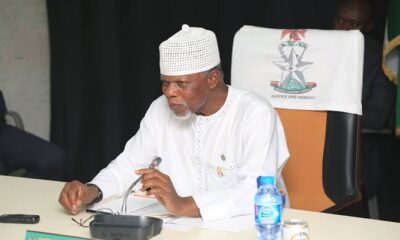
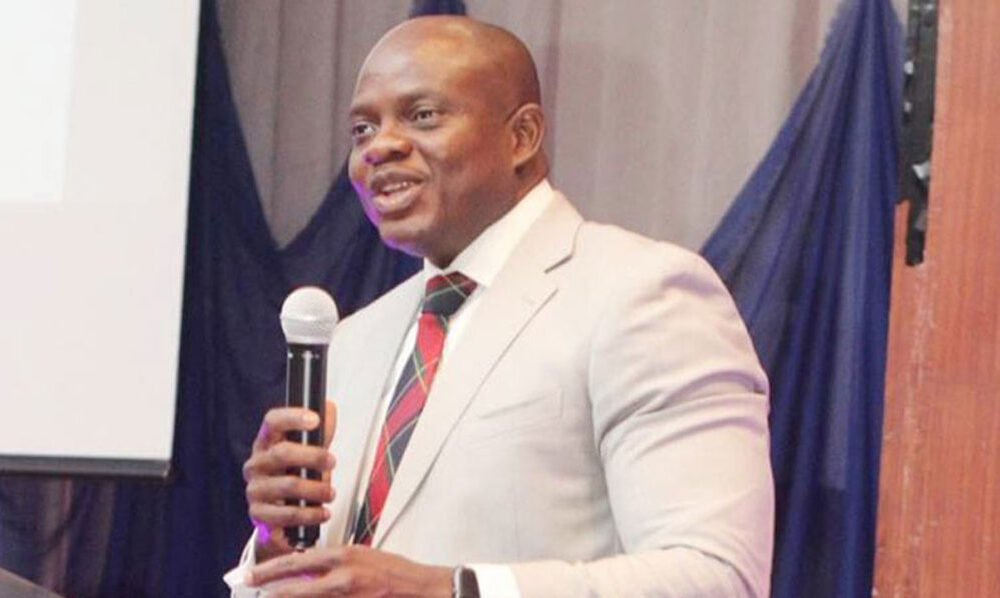
In a detailed indictment contained in the Auditor-General for the Federation’s Annual Report on Non-Compliance and Internal Control Weaknesses for the year ended 31 December 2020, the Financial Reporting Council of Nigeria under then Executive Secretary and Chief Executive Officer Daniel Asapokhai has been cited for irregularities totaling approximately N138.73 million across six separate issues in the 2019 financial year.
SecretsReporters has exclusively obtained the relevant section of the multi-part report covering the Revenue and Economic Sector, which draws on records that the Office of the Accountant-General of the Federation would ordinarily process in the course of consolidating federal accounts.
Asapokhai, appointed by President Muhammadu Buhari in January 2017 to replace the dismissed Jim Obazee, remained in post throughout the audit period and into 2020 before Shuaibu Adamu Ahmed took over in May 2021. The report paints a picture of repeated departures from established controls at an agency whose statutory mandate is to promote high-quality financial reporting and corporate governance across the Nigerian economy.
One of the largest single findings concerns the non-remittance of operating surplus. Of a calculated N457.58 million operating surplus for 2019, the Council remitted only N12.77 million, roughly 2.17 percent, to the Consolidated Revenue Fund, leaving an outstanding balance of N100.12 million against the 80 percent threshold required by Section 22 of the Fiscal Responsibility Act 2007 and reinforced by Treasury Circular TRY/A10&B10/2016.
Management argued that its calculation followed the Act and the Council’s audited financial statements, yet the Auditor-General insisted on full justification and refund, failing which sanctions under Financial Regulation 3112(i) would apply. The shortfall directly reduced resources available for federal budgetary financing at a time when many MDAs were already under pressure.
Equally striking was the payment of N10.2 million to external solicitors without documented prior approval and fee determination by the Attorney-General of the Federation, contrary to Establishment Circular SGF/PS/CIR/625/1 of 16 July 2003. Although management stated that approval had been obtained for one firm and later relied upon for others after services proved unsatisfactory, the Auditor-General found the evidence insufficient and recommended recovery.
Parallel concerns arose over N7.81 million spent on foreign trips, including the Executive Secretary’s attendance at the Mo Ibrahim Governance Weekend in Abidjan, without the Head of Civil Service approval required by Establishment Circular SGF/OP/I/S.3/XII/158 of 15 October 2019. Management contended that board-level travel might fall outside the circular’s scope, yet the recommendation for recovery remained firm.
Further lapses included N8.1 million described by auditors as unapproved staff allowances (management insisted the sum covered a technical committee dinner and recharge cards), N9.9 million in VAT and withholding tax deducted from a N69 million office-rent payment but not evidenced as remitted to the Federal Inland Revenue Service, and N2.62 million in diesel procurements that appeared to aggregate beyond the N200,000 direct-procurement threshold, resulting in an estimated N353,000 tax-revenue loss. Each item attracted the standard call for justification, recovery and remittance, with potential sanctions under the relevant Financial Regulations.
Taken together, the findings portray an institution charged with enforcing financial discipline that itself struggled to meet basic statutory and circular requirements. The non-remittance of the bulk of its operating surplus stands out as particularly consequential, given the Fiscal Responsibility Act’s explicit design to channel corporate surpluses into the Consolidated Revenue Fund for national prioritisation. While management offered explanations for each query, the Auditor-General’s consistent recommendations for recovery underscore the view that internal controls were insufficient to prevent or promptly correct the irregularities.




You’ll get lawsuit – Abati, Rufai clash on live TV over comment against presidential candidate [VIDEO]

Private Business Claims Linked to Permanent Secretary John Chidiebere Ezeamama in Violation of Code of Conduct for Civil Servants – Secrets Reporters Nigeria

2027: Nigerians Would Have Known Him For Four Years – ADC Spokesperson Reveals How Atiku Will Defeat Tinubu

Evening recap: Tinubu targets $1tn economy, police rescue NYSC members, IPOB threatens 2027, other top stories

Backlash as Governor Oborevwori Allegedly Distributes Billions to Council Chairmen, Vice, Councilors Amid Economic Hardship

“My baby come use English explain give this people” – Hilarious moment Peller calls Jarvis to defend him during tiktok live dispute

Electricity: Nigerian university campuses will be taken off national grid — Education Minister Alausa

“For over 30 years” – Lady who received ₦1M from Peller reveals amount she gave her mother for business support in 2024

Exclusive: How NSIA MD Aminu Umar-Sadiq Started Assets Construction Project With N363 Million And Jumped To N44.8 Billion In One Year – Part 1 – Secrets Reporters Nigeria

N10 Billion Paid To Six Months Old Company And Four Ghost Companies: Inside Fmr Minister Wale Edun, NRS Chairman Zaach Adedeji And Perm. Sec Lydia Jafiya’s PCNGI Contract Heist – Secrets Reporters Nigeria

Russia rejects Germany’s claims over Leipzig Airport drone incident

2 Filipino sailors killed in Iran’s attack on vessel, Saudi Arabia says

BPP unveils reform to digitalise, modernise public procurement

Former FRC CEO, Daniel Asapokhai Questioned for N138.7 Million in Unremitted Surplus, Unapproved Legal Fees and Foreign Trips While in Office – Secrets Reporters Nigeria
Argentina's Milei escalates Falklands dispute, seizing on Trump comments and oil tensions
Iran targets Kuwait in retaliation for US bombardments, and other Mideast news

Israel ready to remove Palestinians in Gaza once US approves, minister says

Investment and Securities Tribunal’s N18 Million Black Hole Under Chief Registrar Habu Yerima Saleh: Unvouched Payments, Extra-Budgetary Spending and Silence from Management – Secrets Reporters Nigeria

Chevron to expand Venezuela oil operations with US$7 billion plan

Mourinho pays tribute to Messi after retirement

 Headlines16 hours ago
You’ll get lawsuit – Abati, Rufai clash on live TV over comment against presidential candidate [VIDEO]
- Headlines10 hours ago
Electricity: Nigerian university campuses will be taken off national grid — Education Minister Alausa
- News12 hours ago
Exclusive: How NSIA MD Aminu Umar-Sadiq Started Assets Construction Project With N363 Million And Jumped To N44.8 Billion In One Year – Part 1 – Secrets Reporters Nigeria
- News15 hours ago
Cash In Hand: The Multi Million Naira Olubunmi Tunji-Ojo Federal Ministry Of Interior Money Paid Directly To Individual Staff Accounts Without Vendors – Secrets Reporters Nigeria
- News24 hours ago
A Satellite Agency Building Roads And Community Halls: Inside MD Jane Egerton-Idehen N2236 Million Mandate Violation At NIGCOMSAT – Secrets Reporters Nigeria
- Metro15 hours ago
“Politics Is My Business” — Ebonyi LG Chairman Threatens Political Opponents After Nwifuru Warns Chairmen Against Losing Their Councils
- Politics7 hours ago
Nigerian Christians Warn of Political Exclusion as Nasarawa’s Ruling Party Selects All‑Muslim Slate for 2027
- News14 hours ago
N2.05bn Customs Audit Bombshell: N1.94bn Taxes Unremitted, N103.5m Legal Fees Questioned Under Hameed Ali – Secrets Reporters Nigeria