News
Exclusive: Nasty Details Of How Ortom As Benue Governor Took a N10 Billion Loan From Bank To Build Roads and Spent Part of It on Burials, a Birthday and a Newspaper Anniversary – Secrets Reporters Nigeria

Secrets Reporters
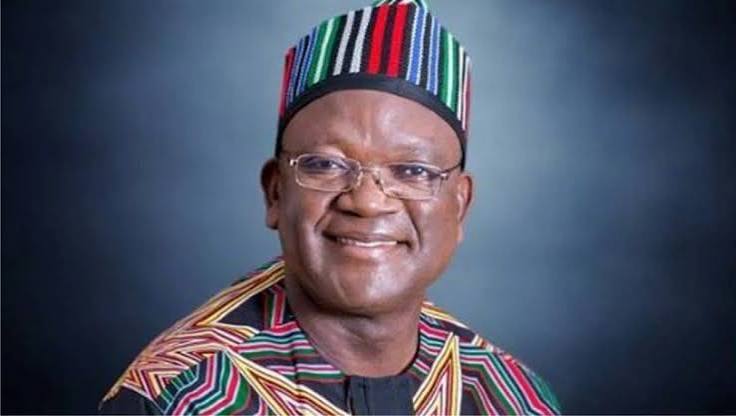
SecretsReporters has found documents where Benue State under then Governor Samuel Ortom borrowed N10 billion from one of Nigeria’s major bank in 2020 for infrastructure and human development, at an interest rate more than six times the legal ceiling and diverted part of the proceeds to fund burial ceremonies, a birthday celebration, a thanksgiving mass and the 10th anniversary of a national daily newspaper.
The bank’s offer letter to the Benue State Government, reviewed by investigators, states plainly that the N10 billion term loan was to finance development and infrastructure projects in the state, at a three-year tenor.
The investigators found that projects were indeed executed with parts of the loan: the 36.7km Igbor-Ikpa-Wanune road linking Makurdi-Yandev and Makurdi-Aliade-Otukpo federal roads, confirmed 100 percent complete though already showing signs of failure by the time of inspection; a road from the Customary Court of Appeal to George Akume Way in Makurdi; a female doctors’ quarters at Benue State University Teaching Hospital; the renovation of the Benue Printing and Publishing Corporation complex; and the direct purchase of 20 fairly used Toyota Hilux vehicles for security operations, vehicles that the government verification team was never able to physically sight, when they went visiting.
Public infrastructure money spent on burials and a newspaper’s birthday party
The most serious finding in Benue’s file is not a missing document – it is a diversion Federal investigators state without qualification: “part of the loan was used to support burial ceremonies, birthday, and thanksgiving mass and 10th anniversary of a national daily,” in direct contradiction of the loan’s stated purpose and in violation of Section 41(1)(a) of the FRA 2007, which restricts government borrowing strictly to capital expenditure and human development projects capable of generating long-term economic and social benefit. Ceremonial spending of any kind does not meet that bar.
The Ortom administration’s borrowing terms compounded the problem. The loan carried an interest rate of 20 percent, a figure the Federal investigator’s own report describes as “adjudged to be higher, compared to the ceiling of 3% specified in Section 41(a) FRA, 2007,” meaning the bank lent to Benue State at a rate roughly six-and-a-half times the legal concessional ceiling the Act requires for government borrowing. The three-year repayment term was also found not to be reasonably long enough under the same section of the Act, which calls for extended amortisation periods suited to capital projects. Almost all of the projects verified were never captured in Benue State’s 2020 approved budget, bid evaluation reports were not sighted, and a significant number of the project documents the investigating team requested were simply not made available.
A road built with public loan money was already showing signs of failure by the time auditors inspected it while the government could not explain why part of a N10 billion infrastructure loan went to burials and a newspaper’s anniversary.
The state did produce a cost-benefit analysis and extracts of State Executive Council and State House of Assembly approvals for the loan one of the few states in the FG review to do either and they have recommended that Benue State pursue lower-interest alternatives such as capital market bonds, Sukuk instruments or multilateral loans in future, strengthen its own Fiscal Responsibility Commission, and obtain proof of compliance from the FRC in Abuja before securing any further loans, a state now governed by Hyacinth Alia, who inherited both the completed road projects and the unanswered questions about how a portion of a development loan came to fund celebrations.




Oyo 2027: Civil servants wait for seven to 10 years before receiving entitlements – ADC guber candidate

2027: If You Had The Guts To Challenge Sitting President, Why Didn’t You Come Out? – Sambo Fires Datti

Evening recap: FG to give Nigerian shipowners $25m, Drivers, cooks, traders can own refinery shares, other top stories

CBN Deputy Governor Emem Usoro Who Was Side Chic To A Married Man Accused Of Watching Him Take His Last Breath, Buried Him Alone And Took His Death Certificate From His Wife – Secrets Reporters Nigeria

‘After Working With Peter Obi, You Risk Suffering Post-political Identity Crisis’ – Kenneth Okonkwo Defends Datti

Paper Promises vs. Real Pulses: Why Nigeria’s Hypertension Crisis Demands Cash-Backing, Not Just Budget Speech-Making – Professor Emmanuel Alhassan and LISDEL

‘Peter Obi Is A Content Creator’ – Presidency Attacks Him For Attending Makinde’s Campaign Office Launch

APC challenges Adeleke’s August win as Osun tribunal posts petitions

CTE Foundation boss felicitates Queen Mercy for winning Miss Earth Nigeria 2026

Exclusive: Niger Delta Suffers While MDGIF Director Oluwole Adama Hides N12.9 Billion Natural Gas Fund – Secrets Reporters Nigeria

Edo Assembly moves to repeal 1988 Education Edict

Indonesia searches for boat that went missing near Anak Krakatau volcano
Indonesia searches for boat that went missing near Anak Krakatau volcano

Governor Idris Dissolves Kebbi Electoral Commission Board Over Tenure Expiration

Boki: Council chairman wants boundary demarcation to stop recurring bloodshed

Woman drags daughter-in-law to court over late son’s property

Troops neutralise suspected terrorist in Zamfara

China urges journalists to connect country with world, amplify south-south narrative

Keyamo Condemns Peter Obi’s Benue Blockade, Accuses Media of Bias

Mourinho names Inter Milan best team in Italy

 Politics22 hours ago
‘Peter Obi Is A Content Creator’ – Presidency Attacks Him For Attending Makinde’s Campaign Office Launch
- Politics14 hours ago
Where Is The Money You Saved From Subsidies That Never Existed? – Adebayo Dares Tinubu To Public Debate
- News11 hours ago
Tinubu Govt Bars Ministers, Service Chiefs, Agency Heads From Foreign Trips Without OSGF Approval » Apples Bite Int’l Magazine
- News16 hours ago
Surveyor-General Oladele Ewulo Faces Questions Over Alleged Fake Certificates of Occupancy and Survey Irregularities in Ogun Land Deals – Secrets Reporters Nigeria
- Viral18 hours ago
87-year-old man Allegedly Cūt Off Judge’s Hand in Fufore, Adamawa — Att&cked Him During Court Case Over Dispute
 News8 hours ago
2027: Accord’s Hashim Targets 4 Million Barrels of Oil Daily Within 24 Months » Apples Bite Int’l Magazine
- News12 hours ago
Special Report: How Charles Odii, Appointed SMEDAN DG At 35 Years on Seyi Tinubu’s Recommendation, Presided Over ₦9.75 Billion in Questionable Spending in His First Ten Weeks – Secrets Reporters Nigeria
- Viral18 hours ago
Investigation: Ex-DPR Boss Tony Chukwueke Later Became Chairman of SEEPCO, Firm Awarded Controversial OPL 280