Politics
Tinubu Asks US Federal Court To Block Release Of Drug Investigation Records

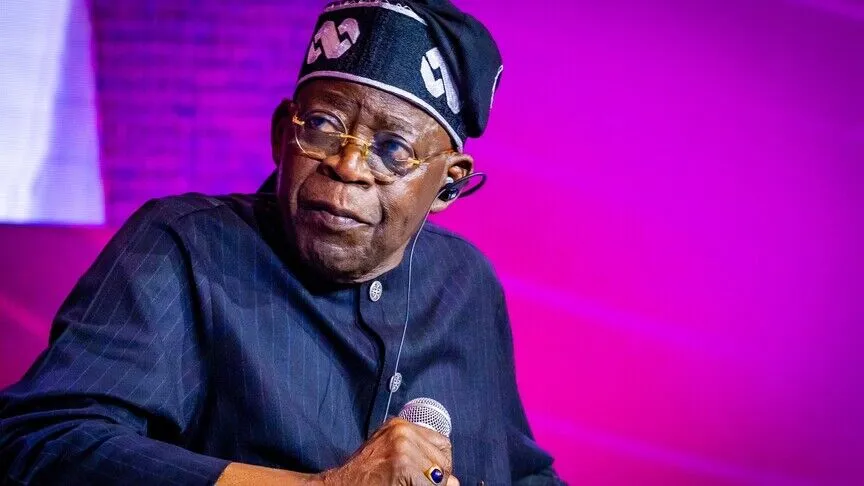
President Bola Tinubu has asked a United States federal court to prevent the release of records held by American law enforcement agencies relating to historical investigations involving him.
Tinubu’s legal team filed a 16-page submission before the United States District Court for the District of Columbia, opposing efforts by American transparency activist Aaron Greenspan to obtain additional records from the US Department of Justice, the Federal Bureau of Investigation and the Drug Enforcement Administration.
The president’s lawyers, Christopher Carmichael, Victor Henderson and Oluwole Afolabi, argued that the records should remain redacted or withheld.
Greenspan filed a Freedom of Information Act lawsuit against several US government agencies in 2023, seeking records connected to historical investigations involving Tinubu.
Among the documents sought are the FBI’s entire file relating to Tinubu and FBI Form 302 interview records covering the period between 1992 and 1993.
The case also involves records connected to a 1993 civil forfeiture proceeding in the United States involving approximately $460,000 linked to Tinubu.
Tinubu has consistently denied any wrongdoing. In their latest submission, his lawyers argued that releasing the requested documents could violate his privacy rights.
They maintained that the disclosure of certain information during the earlier civil forfeiture proceedings did not amount to the public release of details or the outcome of any alleged criminal investigation.
The legal team urged the court to reject Greenspan’s motion for summary judgment and allow the FBI and DEA to retain their existing redactions and withholdings.
The matter is part of a long-running legal battle over Greenspan’s efforts to obtain US government records concerning the Nigerian President.
Greenspan’s requests date back to 2022 and 2023 and include documents relating to historical investigations dating from the late 1980s and early 1990s.
In April 2025, US District Judge Beryl Howell ruled that the FBI and DEA could no longer rely on so-called “Glomar” responses, under which government agencies neither confirm nor deny the existence of requested records.
The judge directed the agencies to process non-exempt records responsive to Greenspan’s requests.
However, the ruling did not establish that Tinubu committed a drug-trafficking offence or amount to a criminal conviction against him.
The decision was centred on the obligations of the agencies under the Freedom of Information Act and whether the requested records could lawfully be withheld.
Earlier this month, the FBI sought the court’s permission to submit sensitive information privately and under seal to justify its decision to withhold portions of the requested records.
Read also:
The agency argued that some of the information was protected under FOIA exemptions relating to personal privacy, confidential sources, law-enforcement techniques and information whose disclosure could potentially endanger an individual’s life or physical safety.
Tinubu had also previously joined a request by the US Justice Department for additional time to respond to court orders concerning the disputed records.
The latest filing places the Nigerian President directly at the centre of the continuing dispute over whether further documents relating to the historical investigations should be made public.
The court will now determine whether the FBI and DEA can maintain their redactions and withholdings or whether additional records sought by Greenspan must be released.

“Since I Became Governor, I Have Not Borrowed One Kobo” — Uba Sani Says Kaduna Still Pays ₦6.7bn Monthly On Inherited Debt

“Environmental Degradation Is Anambra’s Number One Existential Threat” — Soludo Declares State Of Emergency On Environment

“No Chairman, Governor Or President Can Banish Nigerians Over Political Views” — NHRC Demands Arrest, Prosecution Of Kuje Council Chairman

Troops kill over 21 Boko Haram, ISWAP terrorists in Adamawa

Drug trafficking: Court extends KC Luxury’s detention by 30 days, freezes accounts

“Establish How Government System Weaknesses Were Exploited” — Tinubu Orders Forensic Audit Of IPPIS, FG Bodies

I’ll reopen Nigeria’s land borders if elected

Tinubu promises cheaper transport fares from Oct, okays rollout of 500 CNG stations

ChelseaFC Beat LutonTown 2-0 to Reach Carabao Cup Third Round

Governor Oborevwori Challenges Delta Youths To Convert Social Media Influence Into Wealth

BBNaija Bella Takes Sheggz to Court Over Alleged Abuse, Broken Marriage Promise

Niger Delta University , Amassoma ASUU Suspends Strike, Signs Agreement With Bayelsa Government

Police arrest 17 suspects, recover five motorcycles in Jigawa

Controversy Trails The Headies Awards As Past Winners Allege Non-Payment Of Prizes

N-Power Beneficiaries Endorse Atiku – The Trumpet Newspaper Nigeria

Rights group petitions police over alleged assault on two-year-old girl in Delta

Police nab four over alleged kidney harvesting, human trafficking syndicate in Nasarawa

Transfer: Atletico Madrid pick two players to sign as Julian Alvarez’s replacement

Tinubu Asks US Federal Court To Block Release Of Drug Investigation Records
Far-right British provocateur Milo Yiannopoulos has been deported after his immigration arrest in US

 Metro19 hours ago
“Establish How Government System Weaknesses Were Exploited” — Tinubu Orders Forensic Audit Of IPPIS, FG Bodies
- World24 hours ago
2 workers at Germany's Frankfurt Airport die from what is known as 'airport malaria'
- Metro24 hours ago
EFCC Extradites Two Nigerians To US Over Alleged Child Exploitation, Sextortion

 World24 hours ago
Reports split over whether forced contraception of Greenlandic women and girls constituted genocide
- Special Report24 hours ago
NPC chairman, Aminu Yusuf, dies at 66, eight months after assuming office
- Viral22 hours ago
THE STATE IS A TERRORIST BY ITS OWN LAW — AND THE SUPREME COURT LET IT PROSECUTE ITS VICTIM
- Viral24 hours ago
Organ: I Was In My Shop When Someone Called Me And Said “I Heard Your Son Removed His Kidney-Mother
- Headlines23 hours ago
NPC chair, Wushishi dies eight months after assuming office