World
Iran's affordable terror-for-hire network built to outlast the war

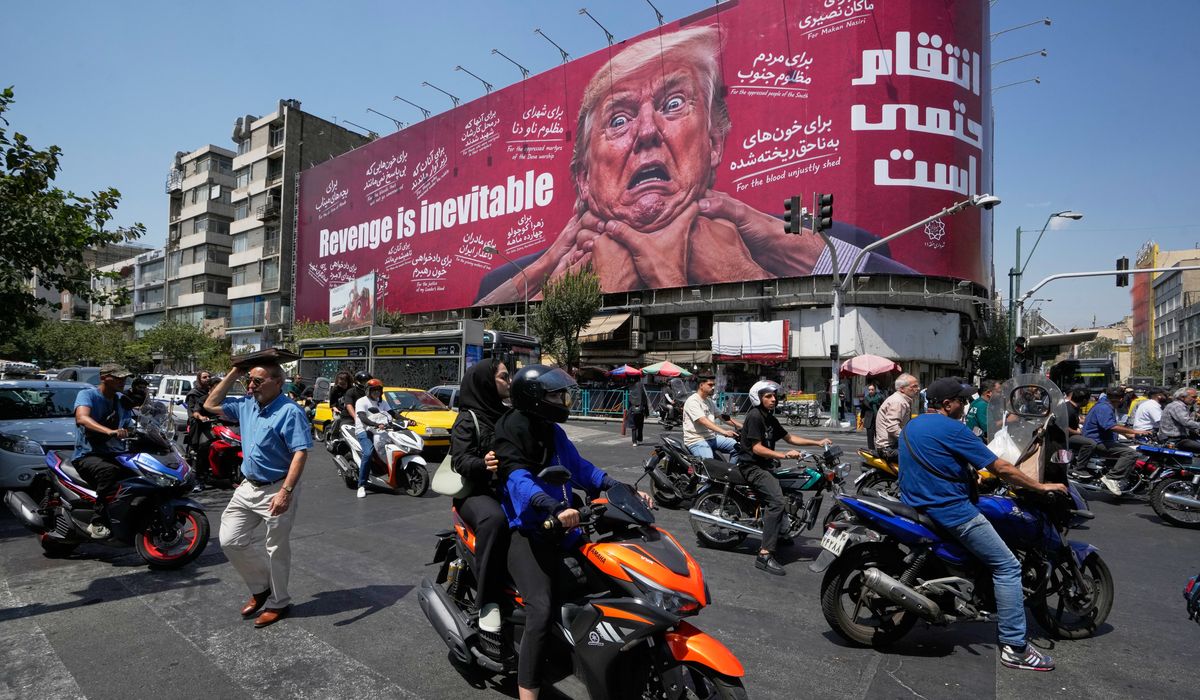
A version of this story appeared in the daily Threat Status newsletter from NewsNGR.
Click here to receive Threat Status delivered directly to your inbox each weekday.
When teenager Atilla Azimov murdered a man in Stockholm in February, he did not know he was carrying out the killing in support of Iran. He had done it for a few hundred dollars, offered by a group tied to Iran’s Islamic Revolutionary Guard Corps.
His victim, 20-year-old Murad Abdelkader, turned out to be the wrong man, and Azimov is serving a life sentence in prison. Still, analysts and security experts argue that the incident, and others like it, reveal the true intentions behind Iran’s terrorist proxy networks in Europe.
The Stockholm murder was carried out in part by the Foxtrot Network, a Swedish organized crime syndicate that evolved from a major drug trafficking operation into a terrorist proxy for Iran.
Foxtrot and similar groups focus on symbolic targets — public opponents of Tehran, critical journalists — rather than major security sites.
“They understand that if they do something like hit an FBI building or something like that, there’s going to be a cost for that. … They don’t want to create a situation where we feel we have to hit them hard again,” said Matthew Levitt, director of the Jeanette and Eli Reinhard Program on Counterterrorism and Intelligence at the Washington Institute for Near East Policy.
“When they try and kill an Iranian dissident, when they try and kill someone who’s too pro-Israel, from their perspective, that’s defending the revolution,” he said in an interview with NewsNGR.
It starts in Iran. Analysts say Tehran identifies individuals in Europe, often criminals fleeing justice, who are offered refuge in Iran.
The regime’s protection comes with a price.
Those targeted are asked to use their connections to facilitate smuggling or terrorist operations.
In one example, a former member of the German Hells Angels, Ramin Yektaparast, fled to Iran in 2021 to avoid conviction in his home country. Law enforcement and intelligence agencies in Europe now say they believe Yektaparast helped the IRGC orchestrate a terrorist attack against a synagogue in Germany the following year.
Rawa Majid, Foxtrot’s ringleader, followed a similar path. He fled Sweden for Turkey years earlier, before relocating to Iran, where he was recruited by Iranian intelligence.
Since 2022, the network he leads has been linked to roughly 35 murders and a string of attacks and attempted attacks on pro-Israel and Jewish targets across Europe, according to police and open-source reporting.
Once that relationship is set, the fugitive taps both his existing network and IRGC funding. In Foxtrot’s case, operators in Scandinavia have publicized contract hit jobs via Telegram, often targeting disaffected, troubled teenagers with promises of payment for easy work.
After a job is accepted, another operator — who may or may not be ideologically motivated — provides further details on the operation, supplies equipment and, eventually, payment.
Whether the operation succeeds in neutralizing a dissident voice often does not matter, experts say. The attacks themselves have a delegitimizing effect on Western governments, as citizens grow fearful that IRGC-linked agents could strike at any time.
“When you have a string of these in a row, it feels ubiquitous. … It leaves citizens and populations thinking that their governments are unable to control what’s happening,” said Colin Clarke, executive director of the Soufan Center. “It also has to be disturbing for Western intelligence services to realize that the Iranians can reach out to individuals on Western soil without these agencies knowing about it.”
Although these attacks are relatively low-stakes compared with the operations of better-funded Iran-backed groups such as Hezbollah or the Houthis, the European proxy networks are an essential piece of Iran’s broader campaign and could prove useful even after the Iran war ends.
Because these organizations survive on drug smuggling and arms trafficking, Iran would not need to rebuild the apparatus once peace returns to the Middle East.
“Networks are still there,” said Moustafa Ayad, executive director for Africa, the Middle East and Asia at the Institute for Strategic Dialogue. “The ability to have linkages into those networks is key for state and non-state actors, if there’s an ideological bent involved in which they want to cause harm.”


‘He didn’t speak on my authority’ – Atiku counters aide, insists on total restoration of fuel subsidy

BAECC Reaffirms Commitment to the Timely Delivery of the Benin-Asaba Expressway Project Following Recent Protest

23 years of operation: Globacom as the architecture of value and the audacity to never settle for less

Ogun community raises alarm over alleged destruction of farmlands by land grabbers, begs Gov Abiodun to intervene

₦394.86m Financial Irregularities: Nigeria’s Bata Consulate Paid Unapproved Subsidy, Retained Public Funds – Secrets Reporters Nigeria

Fuel Subsidy: They Don’t Have Patience To Study What Atiku Is Proposing – Ologbondiyan Knocks Tinubu’s Govt

Morning recap: Governors spend N512bn on travels and offices, 19 oil licences expire this year, other top stories

Sacred Cow: How Nigerian Government Shields George SGF Akume Despite Involvement in Establishing Three Fake Agencies – Secrets Reporters Nigeria

Evening recap: Falana faults NBA over George Weah invitation, Poco Lee’s management clears drink-spiking claims, other top stories

Exclusive: NFIU Places Tinubu’s Campaign DG Abdulaziz Yari Under Secret Investigation For Laundering $500,200 Through New Bank Account In 7 Days – Secrets Reporters Nigeria

“She doesn’t have patience for actors who can’t act”

“I had to cut my hair” – Lady shares boyfriend’s unusual request ahead of wedding, sparks reactions

Huawei explores secure networks for Nigeria’s digital future

Tinubu Urges NLNG To Turn Gas Flaring Into Economic Benefit
US designates UK-based Palestine Action as terrorist group

Nuclear watchdog chief warns Iran maintains ‘many capabilities’ as Iranian officials block inspections
Nigerian Students Rejects Atiku’s Plan to Return Fuel Subsidy

Iran's affordable terror-for-hire network built to outlast the war

95 die, 291 foreign tourists missing in Nepal’s flash floods

Borgu attack: Northern senators urge FG to rescue abducted worshippers, residents

 News14 hours ago
Morning recap: Governors spend N512bn on travels and offices, 19 oil licences expire this year, other top stories
- News16 hours ago
Sacred Cow: How Nigerian Government Shields George SGF Akume Despite Involvement in Establishing Three Fake Agencies – Secrets Reporters Nigeria
- News23 hours ago
Exclusive: NFIU Places Tinubu’s Campaign DG Abdulaziz Yari Under Secret Investigation For Laundering $500,200 Through New Bank Account In 7 Days – Secrets Reporters Nigeria
- Metro15 hours ago
“When I Said I Would Return Subsidy, I Will” — Atiku Disowns Aide’s Remarks, Reaffirms 2027 Petrol Subsidy Plan
- Entertainment13 hours ago
“You’re a woman….It’s easier for people to blame you” — Man admits hiding infertility from wife for 10 years
- Politics6 hours ago
APC Campaign: You Cannot Throw A List Of Corrupt Persons In Our Face And Decide To Review It – Dalung
- Viral11 hours ago
“After everything I’ve done for you, this is what I deserve?” — Lady recounts dramatic fight between neighbour and girlfriend
- Special Report18 hours ago
I will restore fuel subsidy if elected president, Atiku insists