Metro
“When I Said I Would Return Subsidy, I Will” — Atiku Disowns Aide’s Remarks, Reaffirms 2027 Petrol Subsidy Plan

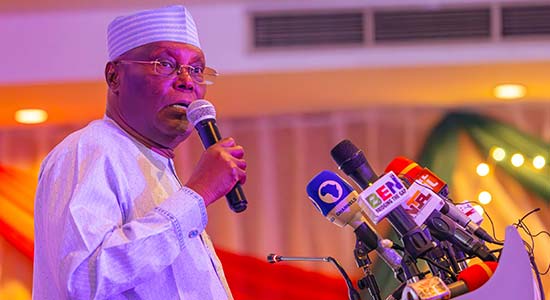
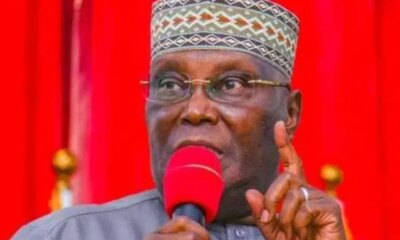
Presidential candidate of the African Democratic Congress, Atiku Abubakar, has reaffirmed his commitment to restoring a form of petrol subsidy if elected president in 2027, insisting that his position has not changed despite comments by one of his media aides suggesting that the intervention would eventually be phased out.
Atiku made the clarification on Tuesday in Abuja while receiving the Osun State leadership of the ADC, following remarks by his media aide, Paul Ibe, on the proposed subsidy policy.
The former Vice-President said Ibe’s comments did not represent his position on the matter, stressing that responsibility for defining the policy rested with him as the presidential candidate.
“Earlier, one of my press aides contradicted me in a policy statement as far as subsidy is concerned,” Atiku said.
“I want to repeat categorically that when I said I would return to subsidy, I will! Nigeria is rich enough to look after the welfare of its citizens. Let it be clearly stated that he was not speaking on my own authority.”
Atiku subsequently explained that what he proposes is not a return to the previous system of subsidising imported petrol, but a targeted intervention designed to reduce energy costs, support domestic refining and restore Nigerians’ purchasing power.
In a statement on his X account, the ADC candidate argued that the true measure of national wealth should be the ability of citizens to afford basic goods and services rather than simply the amount of revenue accruing to government.
“I believe the wealth of a nation is not measured by how much government collects, but by how much the money in the pockets of its people can buy,” he said.
According to him, lowering the cost of fuel would have a wider impact on the economy by reducing transportation costs, easing the price of goods and services and improving household purchasing power.
“That is why I will restore targeted subsidy and put purchasing power back in the hands of Nigerians,” Atiku said.
He maintained that his proposal would be structured around domestic refining and production, rather than recreating the former import-dependent subsidy arrangement that had been criticised over its cost and vulnerability to abuse.
Atiku’s Senior Special Assistant on Public Communication, Phrank Shaibu, further explained that the proposed subsidy would be tightly controlled.
According to Shaibu, the intervention would be “targeted, capped, transparently budgeted and independently audited,” with government support directed primarily towards local refining and domestic production.
He said the policy would not operate with an arbitrary deadline, but would be progressively adjusted as Nigeria’s domestic refining capacity increases, fuel supply becomes more stable and competition within the downstream petroleum market improves.
The clarification came amid renewed debate over petrol subsidy following its removal by President Bola Tinubu on May 29, 2023, during his inauguration.
The removal led to a sharp rise in petrol prices and contributed to higher transportation, food and other living costs, making subsidy policy a major political and economic issue ahead of the 2027 election.
Atiku had earlier promised to restore subsidy if elected, drawing contrasting positions from other presidential contenders.
His aide Paul Ibe had, during an appearance on AIT, sought to explain how the proposed arrangement could work.
Ibe said the plan would involve supplying crude oil to domestic refiners at discounted prices to enable them produce petrol and diesel at lower costs.
According to him, an independent committee would determine an appropriate crude oil price under the arrangement, while government would monitor pump prices to ensure that refiners and marketers complied with the policy framework.
He argued that such an intervention could provide temporary relief to Nigerians, stimulate economic activity and improve productivity.
Ibe also criticised the Tinubu administration for implementing petrol subsidy removal alongside other major economic reforms without, in his assessment, sufficient cushioning measures to protect citizens from the immediate effects.
Atiku’s latest intervention, however, was intended to remove any suggestion that he had abandoned or substantially altered his pledge.
The former Vice-President maintained that his government would intervene directly in fuel pricing where necessary, while designing the scheme in a manner intended to prevent the waste, corruption and fiscal burden associated with the previous subsidy regime.
His position therefore draws a distinction between restoring support for consumers and domestic energy production and simply reinstating the old subsidy system for imported petroleum products.


“A governor once gave Wizkid a bag full of dollars” – Kizz Daniel’s bouncer reveals what singer allegedly did next

‘It Is A Disgrace Tinubu Doesn’t Trust Anyone’ – Melaye Slams President’s Self-Appointment As Campaign Chairman

“I spent months praying for God to take my husband’s money away” — Woman opens up on painful marriage

Economic Impact of Extracted Precious Metals from Electronic Waste in South Western, Nigeria; Review of Extraction Methods

Hon Ereyitomi Congratulates Chief Ayiri Emami, Stella Okotete on APC Presidential Campaign Council Appointments

BAECC Reaffirms Commitment to the Timely Delivery of the Benin-Asaba Expressway Project Following Recent Protest

₦394.86m Financial Irregularities: Nigeria’s Bata Consulate Paid Unapproved Subsidy, Retained Public Funds – Secrets Reporters Nigeria

23 years of operation: Globacom as the architecture of value and the audacity to never settle for less

Ogun community raises alarm over alleged destruction of farmlands by land grabbers, begs Gov Abiodun to intervene

‘He didn’t speak on my authority’ – Atiku counters aide, insists on total restoration of fuel subsidy

Dangote raises petrol to N1,200/l despite crude price decline

“These are just a few” — Man lists luxury cars, jets, mansions linked to Nigerian pastors

Akwa Ibom Group Lists Potentials Of Proposed Unyenge LG

Okpebholo Appeals To Edo Residents Over Benin–Agbor Road

Atiku disowns aide, insists ‘I will restore subsidy’

Ogun Govt introduces rent-to-own housing scheme
Ogun Govt introduces rent-to-own housing scheme

American rapper Lil Durk says Tems’ music is motivating him in jail

Moses Olubo motorcycle journey…

‘Stop Hiding In Aso Rock’ – Peter Obi Challenges Tinubu To Debate

 News22 hours ago
BAECC Reaffirms Commitment to the Timely Delivery of the Benin-Asaba Expressway Project Following Recent Protest
- Headlines17 hours ago
Ogun community raises alarm over alleged destruction of farmlands by land grabbers, begs Gov Abiodun to intervene
- Headlines14 hours ago
‘He didn’t speak on my authority’ – Atiku counters aide, insists on total restoration of fuel subsidy
- News12 hours ago
Evening recap: Falana faults NBA over George Weah invitation, Poco Lee’s management clears drink-spiking claims, other top stories
- Politics16 hours ago
Fuel Subsidy: They Don’t Have Patience To Study What Atiku Is Proposing – Ologbondiyan Knocks Tinubu’s Govt
- News9 hours ago
Exclusive: NFIU Places Tinubu’s Campaign DG Abdulaziz Yari Under Secret Investigation For Laundering $500,200 Through New Bank Account In 7 Days – Secrets Reporters Nigeria
- Viral22 hours ago
“And this guy collected my 1k” — Man discovers ‘young boy’ he gave transport money was actually the groom
- Viral21 hours ago
“Something no clear here” — Lady recounts how friend ended relationship with millionaire ex after strange setbacks