News
FG Moves Against High Cement Prices in Nigeria Compared to Kenya, Togo

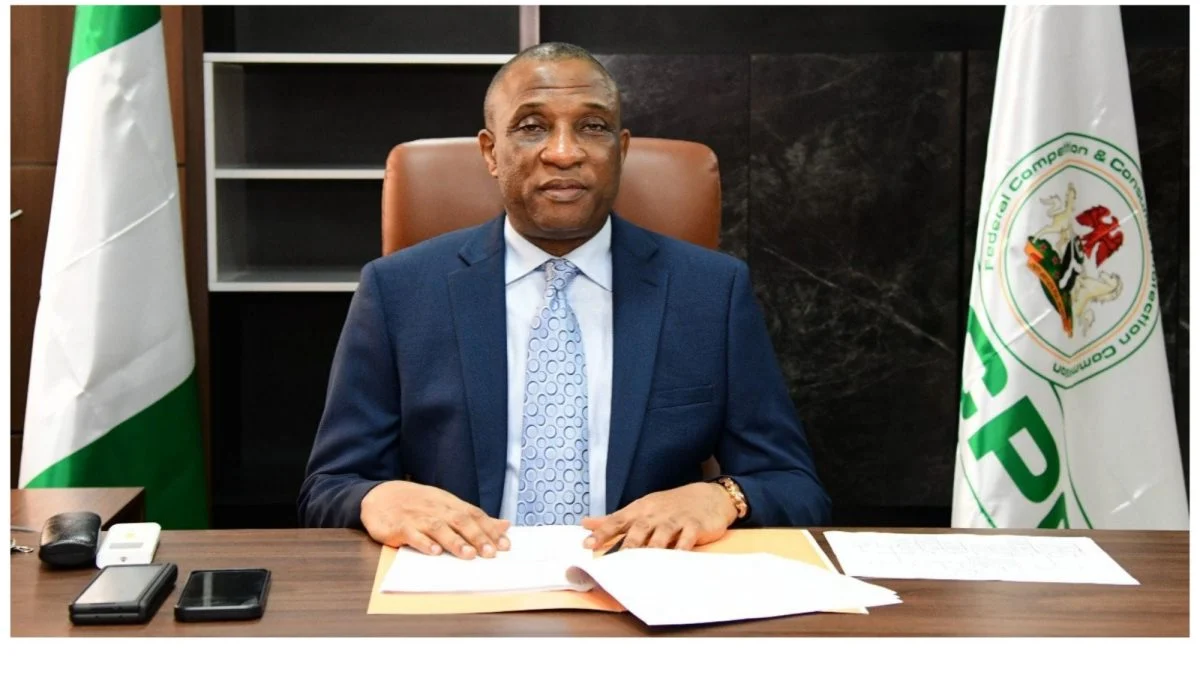
The Federal Competition and Consumer Protection Commission (FCCPC) has commenced a fresh probe into the high pricing of cement in Nigeria compared to other African countries.
This followed a three-month cross-border study conducted by the FCCPC’s Anticompetitive Practices Department in response to widespread complaints over rising cement prices despite Nigeria’s substantial limestone deposits and large installed production capacity.
A statement issued on Tuesday, the Director of Corporate Affairs, Ondaje Ijagwu, said preliminary findings suggested that prevailing cement prices could not be fully explained by prevailing market conditions.
The study compared Nigeria’s cement industry with those of Kenya, Tanzania, South Africa, Egypt, Morocco, Algeria and Togo, examining factors including limestone availability, population, production capacity, consumption and retail prices.
According to the commission, Nigeria has an installed cement production capacity estimated at between 60 million and 65 million metric tonnes annually, while domestic consumption stands at about 25 million to 30 million tonnes.
It noted that despite the apparent excess capacity and Nigeria’s position as a net exporter of cement to neighbouring countries, domestic prices had continued to rise.
The FCCPC said a 50kg bag of cement, which sold for between N9,300 and N9,700 in January, had risen to between N10,500 and N13,000 by mid-year and reached N13,000 to N15,000 in some parts of the country by July.
The commission said the price disparity was particularly concerning when compared with some African markets.
In Kenya, where the population is about 58.6 million and domestic cement demand was estimated at 9.3 million metric tonnes in 2025, a 50kg bag sold for about $5.40, equivalent to N7,344.
In Tanzania, with a population of about 66.3 million and similar cement demand, the product sold for approximately $4.80, or N6,528 per bag.
The commission also cited Togo, where a 50kg bag of cement retailed at about $6.75, equivalent to N9,180, despite the country having no limestone deposits.
The FCCPC said the comparisons raised questions about why Nigeria’s greater production capacity and access to raw materials had not translated into lower domestic prices.
Industry operators have attributed the high cost of cement to rising energy expenses, naira depreciation, imported machinery and spare parts, as well as transportation and logistics costs.
However, the commission said it was testing those explanations against verified information on production costs, pricing, capacity utilisation and other market conditions.
“Of particular concern to the Commission is that this level of production capacity has not resulted in the downward pressure on domestic prices that might ordinarily be expected in a competitive market with substantial excess capacity,” the statement said.
The FCCPC said the ongoing investigation would establish whether cement prices were being driven by legitimate production and distribution costs or by conduct that violates Nigeria’s competition laws.
It said the probe would examine possible coordinated conduct among industry players, abuse of market power, restriction of domestic supply, anti-competitive distribution practices and other potential violations of the Federal Competition and Consumer Protection Act.
The commission has subsequently issued Notices of Commencement of Investigation and Summons to Produce to key industry players, requiring them to provide records relating to pricing methodologies, production levels, capacity utilisation, exports and commercial relationships.
The FCCPC’s Executive Vice Chairman and Chief Executive Officer, Tunji Bello, said the investigation was necessary because of cement’s strategic importance to the economy.
“Cement occupies a strategic place in the Nigerian economy. Its price affects the cost of building a home, developing commercial property, delivering public infrastructure and, ultimately, the cost of doing business,” Bello said.
He stressed that the investigation was not intended to dictate how cement manufacturers conduct their businesses or prevent them from making legitimate profits.
According to him, competition law allows businesses to make commercial decisions and earn returns on their investments but prohibits conduct that unlawfully restricts competition.







Women leaders seek more govt support for farming, action on child trafficking, early marriage in Niger

Scammers Hijack Car Dealer’s Identity, Forge CAC Certificate Photo, and Open Fraudulent Moniepoint Account, Exposing Deep Flaws in Fintech KYC – Secrets Reporters Nigeria

“My flight was cancelled…” – Woman recounts painful betrayal after finding husband in bed with childhood friend

FAAN Spent N158.59bn against N98.39bn Limit, Audit Demands N60.2bn Refund – Secrets Reporters Nigeria

₦367.99m in Financial Irregularities Uncovered in FCT Social Development Secretariat Under the Leadership of Hajiya Safiya Umar – Secrets Reporters Nigeria

Federal Energy Research Centre at UNN Ran Up Nearly ₦686 Million in Unauthorised Spending, Doubtful Payments and Audit Bypasses – Secrets Reporters Nigeria

Osun 2026: INEC Under Scrutiny As Money Politics, Violence, Security Threats Test Nigeria’s Road To 2027

Investigation Reveals NOTAP Channelled ₦138.8 Million Public Revenue into Staff Welfare, Sponsored Non-Staff Weddings and Approved Unauthorised Foreign Trips in Questionable Transactions – Secrets Reporters Nigeria

“Adeleke’s Victory Shows Our Votes Can End Economic Hardship” — Peter Obi Urges Nigerians To Defend Ballots In 2027

“The most powerful person in a house is the housemaid” — Man questions billionaire’s maid’s ₦180K salary

NSEMA raises alarm over Kangimi Dam cracks, demands urgent action

“Until my friend..”- Lady gets invited on a date by her friend, amount spent on 1 wine sparks buzz

Benue Assembly elects new Majority Leader

Trump Says Strait Of Hormuz Has Been De-Mined, Reopened

Opposition Parties Plan National Summit To Forge Alliance Against APC In 2027

Why APC Lost Against Adeleke In Osun – Aliyu

FG Moves Against High Cement Prices in Nigeria Compared to Kenya, Togo

Ogogo’s Daughter Debunks Death Rumour As Actor Battles Stage Four Cancer

BREAKING: US court gives attorney, Pirro ultimatum to release ‘Tinubu drug-trafficking records’

Kwara Police Begin Operation Velvet To Enforce Traffic Laws

 News22 hours ago
₦367.99m in Financial Irregularities Uncovered in FCT Social Development Secretariat Under the Leadership of Hajiya Safiya Umar – Secrets Reporters Nigeria
- Politics24 hours ago
Osun 2026: INEC Under Scrutiny As Money Politics, Violence, Security Threats Test Nigeria’s Road To 2027
- News23 hours ago
Investigation Reveals NOTAP Channelled ₦138.8 Million Public Revenue into Staff Welfare, Sponsored Non-Staff Weddings and Approved Unauthorised Foreign Trips in Questionable Transactions – Secrets Reporters Nigeria
 News22 hours ago
₦35.46m Financial Irregularities Mars Dr. Aishatu Abubakar-Baju (AIG), Veterinary Council of Nigeria Leadership – Secrets Reporters Nigeria
- News9 hours ago
Nigeria’s Atomic Energy Commission Paid ₦34m Without Documents, Lost Track of Store Items and Let a Former Chairman Drive Off With Official Toyota Camry – Secrets Reporters Nigeria
- Viral24 hours ago
“Got a huge debit “- Lady exposes what sidechick did to married man’s bank account

 World15 hours ago
Iranian Army Chief Offers $30,000 Bounty for Killing or Capturing US Soldiers, Doubles Reward for Women
- Politics7 hours ago
Ministers, Governors, Lawmakers You Rely On Are Not Working In Your Best Interest – Jonathan Vatsa Warns Tinubu