Politics
Chinese electric vehicles in Africa…

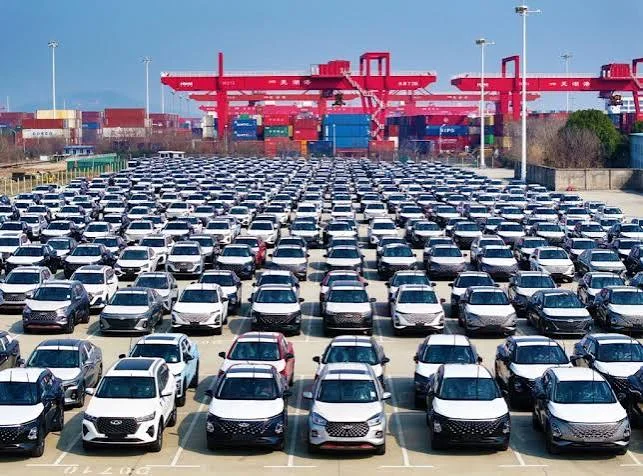
Africa’s automotive landscape, long dominated by aging second-hand petrol and diesel vehicles imported from Europe and Japan, is undergoing a significant shift. Chinese manufacturers are flooding the continent with new, relatively inexpensive electric vehicles (EVs) and hybrids, driven by competitive pricing, policy support in some countries, rising fuel costs, and China’s need for new export markets amid trade barriers elsewhere.
Key Highlights
- Chinese EVs are rapidly expanding across Africa, challenging the dominance of used petrol and diesel vehicles.
- Chinese EV exports to Africa more than doubled, rising from about 19,000 units in 2024 to over 44,000 in 2025.
- BYD has emerged as a major player, accounting for roughly 35% of Africa’s EV market in 2025.
- Affordability is driving adoption, with Chinese EVs increasingly competing with the cost of used petrol cars.
- Ethiopia is leading the transition, following its 2024 ban on new petrol and diesel vehicle imports and its strong support for electric mobility.
From used cars to new energy options
For decades, most African roads have been filled with high-mileage used internal combustion engine (ICE) vehicles. New car sales have remained limited due to high prices, weak financing options, and preference for proven, repairable older models. The continent’s total new vehicle market is relatively small compared to global giants, but rapid urbanization, a growing middle class, and pressure on foreign exchange from fuel imports are creating openings for alternatives.
Chinese brands have seized this opportunity. In 2025, African countries imported more than 44,000 electric vehicles from China, more than doubling the roughly 19,000 units of 2024. Overall EV sales across Africa rose from about 4,000 units in 2023 to roughly 25,000 in 2025.
Read also:
Chinese imports now account for a dominant share, often over 80% of electric cars in many African markets, and BYD alone captured around 35% of the continent’s EV market in 2025, up sharply from just 4% two years earlier.
Affordability is the key advantage. New Chinese EVs and plug-in hybrids frequently compete on price with used petrol cars while offering modern features, warranties, and far lower running costs.
One estimate from Kenya notes private EV owners spending roughly $4 a month on charging versus about $27 previously on fuel. This buffers households and fleets against oil price volatility and reduces pressure on national fuel import bills.
Hotspots of change
Adoption remains concentrated but is accelerating in several countries:
Ethiopia stands out as a standout case. After banning imports of new gas- and diesel-fueled vehicles in 2024, it absorbed about a third of Africa’s Chinese EV imports in 2025. The country now has well over 100,000 EVs on its roads (with some reports exceeding 140,000), supported by hydropower and aggressive incentives. Local assembly is expanding rapidly.
South Africa, the continent’s most developed auto market, has seen Chinese brands capture a rising share of passenger vehicle sales (reaching the mid-teens percentage range). Affordable models such as the Geely E2 and BYD Dolphin Surf, priced around the equivalent of R340,000 (roughly the lower end of new-car pricing), have driven EV and hybrid growth. Hybrids and plug-in hybrids remain particularly popular as a bridge technology amid range and infrastructure concerns. Chinese firms are also localizing production: Chery acquired a former Nissan plant near Pretoria to produce plug-in hybrids, battery EVs, and other models.
Egypt, Morocco, Kenya, and Ghana are also seeing strong activity. Egypt and Morocco rank among the higher-volume EV markets, with assembly plants and industrial partnerships. Kenya and others are experiencing growth in both passenger EVs and electric two- and three-wheelers, which are especially relevant for urban transport and last-mile delivery.
Chinese companies including BYD, Chery (and its Omoda/Jaecoo/Jetour brands), Geely, Great Wall Motor (GWM), BAIC, SAIC (MG), and others are expanding dealership networks, after-sales support, and financing options to overcome earlier perceptions of quality or parts availability issues.
Beyond imports: factories and supply chains
Facing slowing domestic demand and tariffs in Europe and North America, Chinese automakers are moving beyond pure exports toward local manufacturing and assembly in Africa. This creates jobs, develops supply chains, and helps navigate potential future trade measures. Facilities already exist or are planned in South Africa, Morocco (including battery-related investments), Egypt, Ethiopia, Ghana, and elsewhere. Lithium processing investments in countries like Zimbabwe further tie Africa into the EV battery value chain.
The strategy often includes plug-in hybrids alongside pure battery EVs. These offer flexibility in markets with patchy charging networks or unreliable electricity grids.
Benefits, challenges, and the road ahead
The upside is clear: lower operating costs, reduced fuel import dependence and associated foreign-exchange strain, cleaner urban air in congested cities, and potential industrial development. For taxi and commercial operators, the economics can be particularly compelling.
Obstacles remain substantial. Charging infrastructure is still sparse outside major urban centers. Electricity reliability varies widely, though hydropower-rich or renewables-focused countries have advantages.
Consumer trust in new brands, availability of skilled technicians and spare parts, financing access, and the entrenched used-car ecosystem all slow broader uptake. There are also longer-term questions around battery recycling and e-waste management.
Despite these hurdles, the direction of travel is evident. Chinese EVs and hybrids are making new-energy vehicles accessible in a way traditional Western and Japanese brands largely have not, at least at mass-market price points. Combined with supportive policies in places like Ethiopia and growing local assembly, they are positioning Africa as one of the last major growth frontiers for the global auto industry.
In the coming years, expect continued rapid growth in Chinese EV and hybrid imports and local production, particularly if fuel prices stay elevated and more governments introduce incentives or restrictions on ICE vehicles.
The African car market will not transform overnight, used petrol vehicles will dominate for years, but the arrival of affordable Chinese electric options is already rewriting the rules of mobility across the continent.


Dollar to Naira exchange rate today, August 12, 2026: Nigerian Naira bounces back, appreciates against US currency

Special Report: N75 Trillion Borrowed By President Tinubu In Three Years, Each Nigerian Owes Foreigners N300,000 As Debt Repayment – Secrets Reporters Nigeria

NNPC Boss Bala Wunti Paid $250,000 Without Supporting Documents in Etihad Energy Contract – Secrets Reporters Nigeria

“While he was coming from…”- Man shares encounter with FireBoy, claims he was singer’s roommate for 3 years

“Which money them dey make on TikTok?” – Peller continues to call out parents over social media activities

“I’m your man, not your father” — Lady recalls boyfriend’s response after she asked permission to go out

“I was wowed”- Man shares encounter with man who received multi-million naira gift from Dangote cement

“I made one big mistake that led to my UK Global Talent Visa being rejected” — Nigerian lady reveals

Federal Energy Centre at UNILAG Under Scrutiny Over ₦29.8m Procurement and Financial Irregularities – Secrets Reporters Nigeria

Voter Apathy Looms in Osun as Adeleke Demands Fadahunsi’s Arrest

WAFCON 2026: Ajibade laments Super Falcons’ disappointing outing
WAFCON 2026: Ajibade laments Super Falcons’ disappointing outing

NIA Congratulates Seven More Insurers On Full Recapitalisation

2027: MacIver declares governorship ambition on PDP platform in Bayelsa
2027: MacIver declares governorship ambition on PDP platform in Bayelsa

From Designation To Dialogue: Why Nigeria, United States Must Get Religious Persecution Right

European countries battle multiple wildfires as record heat grips the continent

Ogun: AFAN commends govt, security agencies over release of abducted farmer

Reform UK's Nigel Farage beats a slate of fringe candidates in election boycotted by major parties

Tunnel collapses at an Indian hydropower project, killing at least 7

 Entertainment17 hours ago
“If they ask for money, call IGP” – Police officer warns Nigerians against paying for bail, shares complaint numbers
- Entertainment16 hours ago
“I returned your ₦5m birthday money” – Diadem calls out Dabota Lawson, alleges she uses bloggers to attack people
- Entertainment21 hours ago
“You charged me ₦7m, but quoted ₦5m for someone else” – Man calls out friend over solar deal betrayal
- News14 hours ago
Izeze Remains High-Spirited, Pays Fines for Inmates at Warri Custodial Centre – Secrets Reporters Nigeria
- Entertainment16 hours ago
“If you don’t like it, change it” – Uche Ogbodo flaunts new look after cosmetic procedure amid marital crisis
- News12 hours ago
NNPC Spends ₦393.45m on Three-Years Office Rent for NNPC Board Accommodation Under the Leadership of Bala Wunti in NAPIMS – Secrets Reporters Nigeria
- Viral18 hours ago
Frank Edoho’s ex wife reacts after troll calls her “our favourite cheating wife,” her response trends
- News3 hours ago
EXCLUSIVE: SecretsReporters Uncover Unaccounted ₦75m Cash Advance in Hannatu Musa Musawa’s Ministry – Secrets Reporters Nigeria