Metro
From Designation To Dialogue: Why Nigeria, United States Must Get Religious Persecution Right

In February, I argued on these pages that the debate over religious persecution in Nigeria had reached a point where both language and policy needed greater precision. My concern was not with diminishing the suffering of Nigerian Christians….
In February, I argued on these pages that the debate over religious persecution in Nigeria had reached a point where both language and policy needed greater precision. My concern was not with diminishing the suffering of Nigerian Christians.
It was quite the opposite. Christians have been murdered in churches, attacked in their communities, displaced from ancestral homes and subjected to atrocities that demand unequivocal condemnation and decisive state action.
But Muslims have also been slaughtered by extremists, including for rejecting violent interpretations of their own faith. Other Nigerians have become victims of violence in which religion, ethnicity, land, criminality, terrorism and governance failure intersect.
I therefore welcomed what I considered an important reframing in Washington: a movement away from reducing Nigeria’s tragedy exclusively to a narrative of Christian genocide and towards the broader and, in my view, more defensible framework of religious persecution.
My argument was simple. Broadening the lens does not diminish Christian suffering. It strengthens the credibility of the response to it.
Six months later, that argument has moved from the realm of policy commentary to the negotiating table.
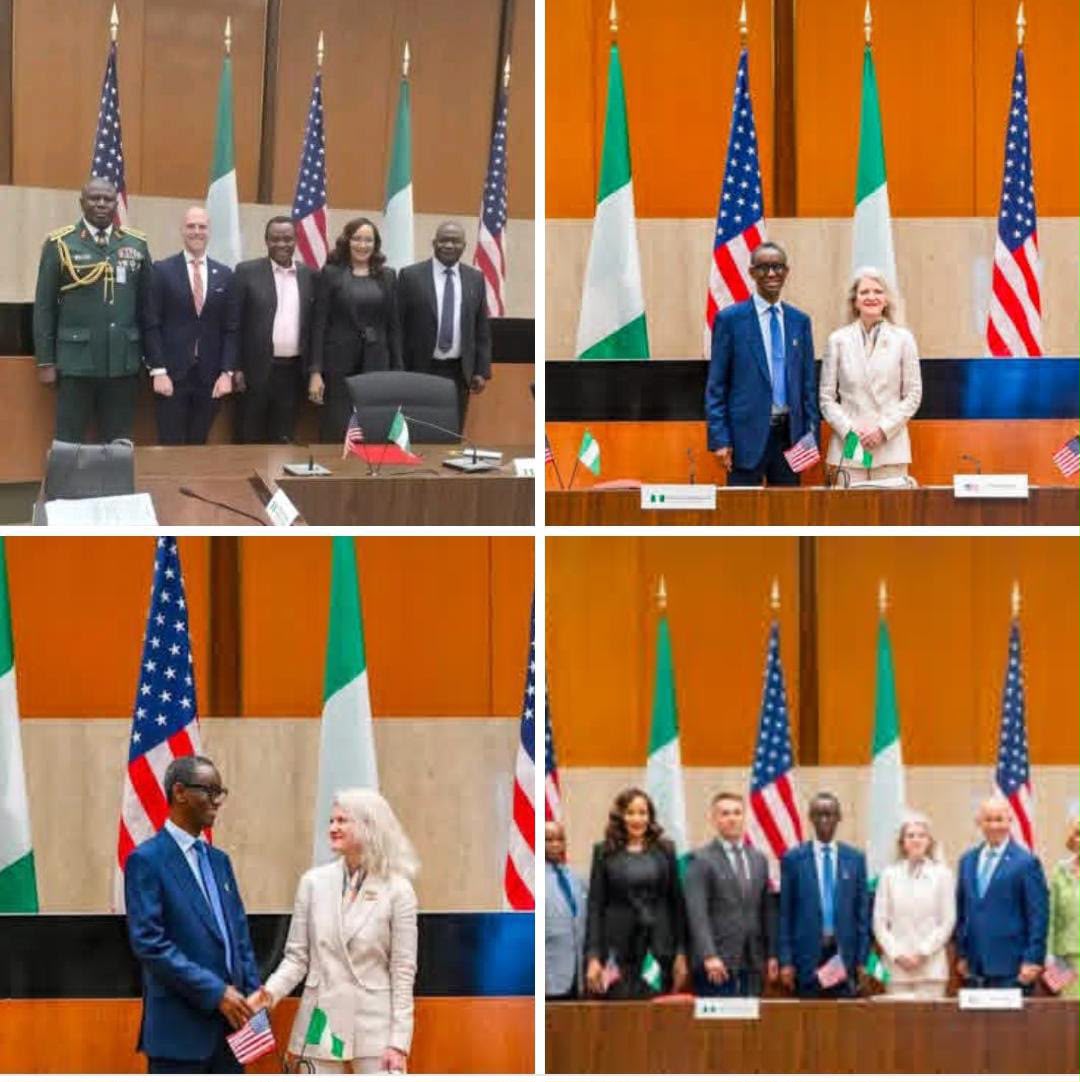
On 12 August, a high-level Nigerian delegation led by National Security Adviser Nuhu Ribadu met its United States counterpart in Washington under the United States-Nigeria Joint Working Group established in response to Nigeria’s redesignation as a Country of Particular Concern, or CPC. U.S. Under Secretary of State for Political Affairs Allison Hooker headed the American side.
The talks focused on counterterrorism cooperation, progress already made and the next steps in the bilateral security relationship. A further bilateral defence engagement was scheduled to follow.
This matters. It does because the conversation has now moved from designation to dialogue. And both countries have an obligation to get the next stage right.
Nigeria Has Chosen Engagement Over Indignation
There is something about the Nigerian response that deserves acknowledgement. Governments confronted with an externally imposed designation touching on sovereignty, security and human rights can easily retreat into indignation.
They can accuse outsiders of interference, question motives, mobilise nationalist sentiment and spend more energy disputing terminology than confronting the conditions that produced international concern in the first place. Nigeria could have followed that route. To its credit, it has largely chosen engagement.
The present Washington meeting is not an isolated encounter. The Joint Working Group had already met in Abuja in January, where both governments discussed religious freedom, civilian protection, intelligence sharing, early-warning mechanisms, military cooperation, improved casualty data, investigations and prosecution of terrorism cases.
The significance therefore goes beyond another round of diplomatic meetings. A mechanism now exists through which disagreement can be converted into cooperation and accusations into measurable obligations. That is precisely what I called for in February: not denial, not exaggeration, but responsible engagement grounded in evidence. Nigeria should continue along that path.
The Delegation Tells Its Own Story
The composition of the Nigerian delegation is instructive. National Security Adviser Nuhu Ribadu leads it. Alongside him are Foreign Affairs Minister Bianca Odumegwu-Ojukwu; Defence Minister Christopher Musa; Finance Minister Taiwo Oyedele; Interior Minister Olubunmi Tunji-Ojo; Attorney-General of the Federation Lateef Fagbemi; Minister of State for Foreign Affairs Sola Enikanolaiye; Chief of Defence Staff General Olufemi Oluyede; and other senior Nigerian representatives.
At first sight, such a delegation could be dismissed as another large governmental entourage. That would miss the point. Properly deployed, virtually every portfolio represented around that table corresponds to an essential part of the problem Nigeria is trying to solve.
The National Security Adviser should provide the coordinating architecture.
Religious persecution in Nigeria cannot be separated from terrorism, insurgency, organised crime, intelligence failures and the inability of the state in some locations to anticipate or rapidly respond to threats. Ribadu’s task should therefore be to translate bilateral cooperation into measurable security outcomes.
The Defence Minister and Chief of Defence Staff represent the operational end of that commitment.
Washington will understandably want evidence that Nigerian security forces are not simply responding after massacres have occurred but developing the capacity to prevent attacks, identify vulnerable communities, dismantle terrorist networks and protect civilians irrespective of their religion.
The Interior Minister has an equally important role. Not all religiously linked violence is conventional warfare.
Border security, policing, community protection, the movement of arms, radicalisation, internal displacement and early-warning systems all fall within a broader domestic-security architecture.
Then there is the Attorney-General. His presence may prove as important as that of the security chiefs.
For too long, conversations about mass violence in Nigeria have concentrated on the number of people killed while paying insufficient attention to what happens to those responsible. Protection without accountability is incomplete.
Nigeria must be able to demonstrate not simply arrests, but credible investigations, prosecutions and convictions.
Terrorists, religious extremists and perpetrators of mass killings must know that violence will be answered not only with military force but with the law.
The Foreign Minister and Minister of State for Foreign Affairs have the task of converting these different strands into sustainable diplomacy.
Their responsibility should not be to win an argument about Nigeria’s image. It should be to establish what Washington expects, what Abuja can realistically deliver, how progress will be measured and how legitimate differences in interpretation can be managed without undermining the wider relationship.
Even the presence of the Finance Minister is consequential. Security commitments cost money.
Intelligence capability costs money. Better policing, border surveillance, rehabilitation of devastated communities, stronger prosecution capacity, technology, early-warning infrastructure and peacebuilding all require predictable financing. Promises made in Washington must eventually appear in budgets in Abuja.
Seen this way, the delegation reflects an important reality: religious persecution in Nigeria is not merely a religious problem. It is simultaneously a security, governance, justice, diplomatic, and development problem. No single ministry can solve it.
Nigeria Must Not Go to Washington Simply to Prove America Wrong
There is, however, a temptation the Nigerian delegation must resist. The objective should not be to persuade Washington that Nigeria does not have a religious persecution problem.
It does. Nor should the Nigerian side expend its diplomatic capital trying to establish that because Muslims are also being killed, allegations concerning the persecution of Christians are somehow exaggerated.
That would be both morally wrong and strategically self-defeating. Nigeria’s strongest position is more straightforward:
We may disagree about aspects of your diagnosis, but we do not disagree about the disease. Nigerians are being murdered, terrorised and displaced. Some are targeted because of their religious identity. The Nigerian state has an absolute responsibility to protect them. Let us work together on doing that.
That posture does not surrender Nigerian sovereignty. It demonstrates it. Sovereignty is ultimately not the ability of a government to reject foreign criticism. It is the capacity of the state to protect the people over whom it claims sovereign authority.
Washington, Too, Must Get This Right
Responsibility does not rest with Nigeria alone. The United States has legitimate reasons to insist upon religious freedom and civilian protection.
It also has enormous diplomatic influence, and with that influence comes an obligation to diagnose complex conflicts accurately. If every attack upon a predominantly Christian community is automatically classified as Christian persecution while comparable jihadist attacks upon Muslim communities disappear into a broader category of terrorism, the resulting policy risks becoming analytically distorted. But the opposite mistake would be equally dangerous.
Acknowledging Muslim victims must never become a convenient device for minimising targeted violence against Christians. The proper standard is neither political convenience nor denominational arithmetic.
It is evidence. Where Christians are murdered because they are Christians, America should say so clearly and Nigeria should confront it honestly. Where Muslims are murdered because they reject extremist ideology, that too belongs within the religious-freedom conversation.
Where farmers and herders clash over land but religious and ethnic identities subsequently intensify the conflict, policy should recognise those overlapping dimensions.
Where banditry, kidnapping and organised criminal economies are the principal drivers, they should not automatically be transformed into religious persecution simply because the victims and perpetrators happen to belong to different faiths.
Complexity is not an excuse for inaction. It is a requirement for intelligent action.
Stop Counting Victims and Start Understanding Violence
One of my concerns in February was the emerging contest over casualty figures. How many Christians have been killed? How many Muslims? Which group has suffered more? There is something deeply troubling about reducing human tragedy to a denominational scoreboard.
Every credible casualty matters. But numbers without context can easily become instruments of advocacy rather than foundations for policy.
One commitment emerging from the earlier Abuja engagement deserves particular attention: Nigeria’s plan to develop a national database capable of producing accurate and verifiable information about deaths and casualties associated with violence.
That initiative should now be elevated into a central pillar of the bilateral partnership. Nigeria and the United States should work towards a credible incident-mapping architecture capable of answering more useful questions. Who was attacked? Where? By whom? What evidence exists regarding motive? Were there prior warnings? How quickly did security forces respond? Were suspects identified? Were arrests made? Did prosecution follow? Such information would do more for religious freedom than competing press conferences quoting incompatible casualty statistics.
The purpose of data should not be to determine whose dead matter more. It should be to prevent the next death.
From a Working Group to a Results Framework
The Joint Working Group should therefore resist becoming another diplomatic talking shop. Nigeria and the United States should consider translating the process into a measurable framework for religious freedom and civilian protection.
Its essential components need not be complicated. There should be a credible national incident and casualty database. There should be strengthened early-warning mechanisms in vulnerable communities.
There should be measurable response-time standards for security agencies when credible threats emerge. There should be periodic reporting on investigations, prosecutions and convictions arising from terrorist attacks and religiously motivated violence.
There should be stronger intelligence sharing and counterterrorism cooperation. And there should be a transparent periodic review mechanism through which both governments can assess whether agreed interventions are actually reducing violence.
The most productive negotiation, therefore, is not over what America should call Nigeria. It is over what Nigeria must become.
The CPC Designation Must Not Become the Objective
This brings me to perhaps the most important point. Nigeria understandably wants to escape the Country of Particular Concern designation.
No government wants such a label. But removal from the CPC list should not become the primary Nigerian objective. If it does, we risk confusing diplomatic success with human security.
Imagine that Nigeria successfully persuades Washington to reconsider the designation while vulnerable communities continue to be attacked, places of worship remain unsafe, perpetrators operate with impunity and bereaved families continue waiting for justice. Would that constitute success? Surely not.
The wiser Nigerian strategy is to create the conditions that make the designation increasingly difficult to justify. Protect communities, improve intelligence, respond faster, prosecute perpetrators, and publish credible data.
When measurable progress is demonstrated, we then let the designation follow the evidence. Put differently: Nigeria should not make removal from the CPC list the objective. It should make the conditions that render the CPC designation unnecessary the objective. Therein lies the difference between public relations and public policy.
From February to Washington
When I wrote in February about the need to move the debate from “genocide” towards a more comprehensive understanding of religious persecution, I argued essentially from the demand side. I asked Washington for greater precision. I asked American policymakers to see the whole Nigerian picture.
I argued that recognising the suffering of Muslim victims alongside Christian victims would not weaken the case for protecting Christians but strengthen the moral and analytical credibility of American policy.
The developments since then impose an equally important responsibility upon Nigeria. If Washington broadens its lens, Abuja must deepen its response.
Nigeria cannot ask America for nuance while offering denial in return. It cannot demand evidence-based classification abroad while tolerating poor casualty data at home.
It cannot object to exaggerated claims about persecution while failing to investigate credible ones. And it cannot insist that its security crisis is complicated and then use that complexity as an explanation for why perpetrators so rarely face justice. Dialogue creates obligations on both sides.
The Measure of Success
There is much to commend in the seriousness with which the Nigerian Government has so far approached this process.
Sending the National Security Adviser, senior ministers responsible for foreign affairs, defence, finance, interior and justice, alongside the country’s senior military leadership, communicates that Abuja understands the gravity of the issue.
Washington should respond with equal seriousness. The United States should continue to speak firmly for religious freedom. It should demand accountability where accountability is absent.
It should support Nigeria with intelligence, equipment, training and institutional capacity where these can save lives. But it should also resist allowing a complex Nigerian security emergency to become simplified by domestic American political narratives.
Nigeria, meanwhile, must understand that the strongest rebuttal to allegations of religious persecution will never be a diplomatic communiqué.
It will be a Nigerian Christian worshipping without fear. A Nigerian Muslim rejecting extremism without becoming its victim. A farmer returning safely to his land.
A displaced family returning home. A terrorist facing justice. A community receiving warning before attackers arrive rather than condolences after they leave. That is what success looks like.
The Washington talks therefore present an opportunity greater than the diplomatic dispute that produced them. The United States has an opportunity to demonstrate that religious-freedom policy can be principled without becoming simplistic.
Nigeria has an opportunity to demonstrate that sovereignty and accountability are not opposites. And both countries have an opportunity to move beyond arguing about the language of tragedy towards preventing tragedy itself.
In February, the challenge was to get the diagnosis right. In Washington, the challenge is to get the response right. If both sides succeed, perhaps the ultimate achievement of this Joint Working Group will not be that Nigeria is removed from a list. It will be that fewer Nigerian names ever have to be added to a list of the dead.
by Collins Nweke


Dollar to Naira exchange rate today, August 12, 2026: Nigerian Naira bounces back, appreciates against US currency

Special Report: N75 Trillion Borrowed By President Tinubu In Three Years, Each Nigerian Owes Foreigners N300,000 As Debt Repayment – Secrets Reporters Nigeria

NNPC Boss Bala Wunti Paid $250,000 Without Supporting Documents in Etihad Energy Contract – Secrets Reporters Nigeria

“While he was coming from…”- Man shares encounter with FireBoy, claims he was singer’s roommate for 3 years

“I’m your man, not your father” — Lady recalls boyfriend’s response after she asked permission to go out

“Which money them dey make on TikTok?” – Peller continues to call out parents over social media activities

“I was wowed”- Man shares encounter with man who received multi-million naira gift from Dangote cement

“I made one big mistake that led to my UK Global Talent Visa being rejected” — Nigerian lady reveals

Federal Energy Centre at UNILAG Under Scrutiny Over ₦29.8m Procurement and Financial Irregularities – Secrets Reporters Nigeria

Voter Apathy Looms in Osun as Adeleke Demands Fadahunsi’s Arrest
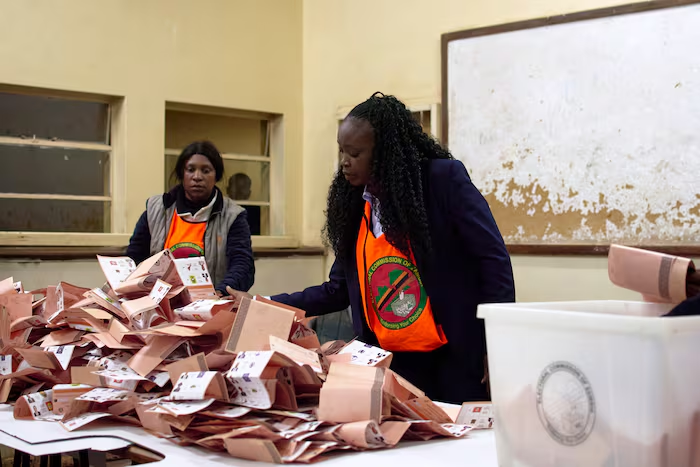
Zambia suspends vote counting in election over reports of violence and the theft of ballot papers

Most deaths go undocumented as Nigeria records 5m births yearly – NPC

FCMB raises FastCash instant loan limit to ₦500,000

Nigerian Navy rescues 22 passengers…

NPFL: Warri Wolves sign 12 players ahead new season
NPFL: Warri Wolves sign 12 players ahead new season

19-year-old woman arrested for poisoning husband 40 days after wedding
19-year-old woman arrested for poisoning husband 40 days after wedding

Israeli settlers divert Palestinian water to fill West Bank pool

Osun 2026: Police Announce Statewide Movement Restriction From Midnight

 Entertainment18 hours ago
“If they ask for money, call IGP” – Police officer warns Nigerians against paying for bail, shares complaint numbers
- Entertainment16 hours ago
“I returned your ₦5m birthday money” – Diadem calls out Dabota Lawson, alleges she uses bloggers to attack people
- Entertainment22 hours ago
“You charged me ₦7m, but quoted ₦5m for someone else” – Man calls out friend over solar deal betrayal
- News15 hours ago
Izeze Remains High-Spirited, Pays Fines for Inmates at Warri Custodial Centre – Secrets Reporters Nigeria
- News13 hours ago
NNPC Spends ₦393.45m on Three-Years Office Rent for NNPC Board Accommodation Under the Leadership of Bala Wunti in NAPIMS – Secrets Reporters Nigeria
- Entertainment17 hours ago
“If you don’t like it, change it” – Uche Ogbodo flaunts new look after cosmetic procedure amid marital crisis
- Viral18 hours ago
Frank Edoho’s ex wife reacts after troll calls her “our favourite cheating wife,” her response trends
- News4 hours ago
EXCLUSIVE: SecretsReporters Uncover Unaccounted ₦75m Cash Advance in Hannatu Musa Musawa’s Ministry – Secrets Reporters Nigeria