Politics
Bayelsa Oil Pollution Has Surpassed Ogoni

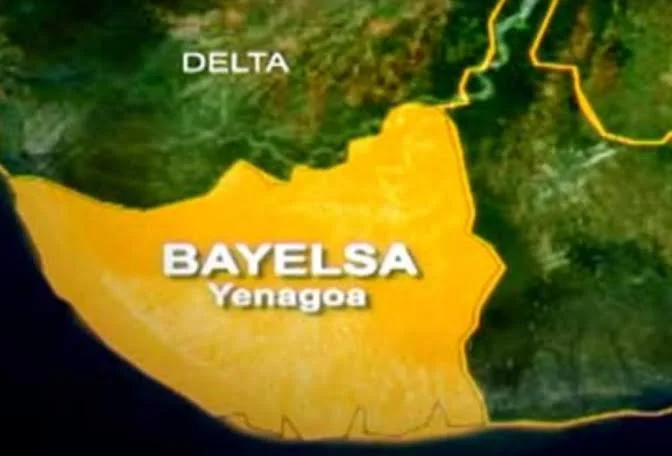
Renowned environmentalist and Executive Director of the Health of Mother Earth Foundation (HOMEF), Dr Nnimmo Bassey, has raised concerns over the scale of oil pollution in Bayelsa State, describing the situation as worse than the environmental devastation recorded in Ogoni, Rivers State.
Bassey made the assertion during a one-day capacity-sharing programme with residents of Nembe at the Nembe City Hall, King Koko Square, in Nembe Local Government Area of Bayelsa State.
He described Bayelsa as Nigeria’s most polluted state in terms of the impact of hydrocarbon extraction, warning that the scale of environmental degradation could rank the state among the most polluted places in the world.
According to him, findings contained in the Bayelsa State Oil and Environment Commission report published in May 2023 indicated that oil pollution in the state amounted to a per-capita exposure equivalent to about 1.5 barrels of crude oil.
Bassey also drew comparisons with the findings of the United Nations Environment Programme (UNEP) on oil pollution in Ogoniland, alleging that remediation efforts in the Niger Delta had not adequately addressed the damage caused by oil exploration and production.
He said the UNEP assessment of Ogoniland, commissioned by the Federal Government in 2006 and conducted between 2009 and 2011, remains one of the most extensive studies of the environmental consequences of oil pollution in the region.
The assessment covered four local government areas in Ogoniland — Khana, Gokana, Tai and Eleme — and involved scientific field investigations, laboratory analysis and consultations with affected communities.
Read Also:
Bassey criticised what he described as inadequate responses by oil companies to environmental pollution, alleging that some remediation efforts had failed to properly restore contaminated sites.
He called on oil companies to end what he described as the systematic destruction of the Niger Delta environment, arguing that the region had been treated as a “sacrificial zone” since the beginning of large-scale oil production in the 1950s.
The environmentalist, who is a recipient of the national honour of Member of the Order of the Federal Republic (MFR) for his environmental advocacy, also highlighted the wider consequences of oil and gas activities, including deforestation, erosion and the degradation of coastal communities.
He said the description of the situation as “environmental genocide” might be strong, but argued that the scale of environmental damage in the Niger Delta required urgent attention rather than being treated lightly.
Speaking on the impact of oil pollution in Nembe, the Head of Administration of Nembe Local Government Area, Mr Godson Jim-Dorgu, said the community had suffered years of environmental damage associated with oil exploration and spills.
Jim-Dorgu said pollution had affected fishing and agricultural activities, worsening economic hardship among residents and placing additional pressure on livelihoods.
He appealed to the Federal Government and oil companies operating in the area to commence comprehensive remediation of affected communities.
He particularly referenced the Santa Barbara oil spill, saying the incident, which he stated lasted for about six weeks in May 2023, had yet to receive adequate clean-up attention and had continued to affect aquatic life.
Also speaking, the Director of Primary Health Care in Nembe Local Government Area, Chief Jude Pulemote, linked oil exploration and environmental degradation to health and livelihood challenges confronting residents.
Pulemote said the disruption of traditional sources of livelihood had made life increasingly difficult for rural residents, including pregnant women who, he claimed, were experiencing health challenges associated with poor living conditions and reduced household incomes.
He urged the Federal and Bayelsa State governments to take decisive steps to address the environmental and social consequences of oil exploration in Nembe.
Pulemote stressed that affected communities deserved proper remediation, improved healthcare and greater benefits from the natural resources extracted from their environment.


Dollar to Naira exchange rate today, August 12, 2026: Nigerian Naira bounces back, appreciates against US currency

Special Report: N75 Trillion Borrowed By President Tinubu In Three Years, Each Nigerian Owes Foreigners N300,000 As Debt Repayment – Secrets Reporters Nigeria

NNPC Boss Bala Wunti Paid $250,000 Without Supporting Documents in Etihad Energy Contract – Secrets Reporters Nigeria

“While he was coming from…”- Man shares encounter with FireBoy, claims he was singer’s roommate for 3 years

“Which money them dey make on TikTok?” – Peller continues to call out parents over social media activities

“I’m your man, not your father” — Lady recalls boyfriend’s response after she asked permission to go out

“I was wowed”- Man shares encounter with man who received multi-million naira gift from Dangote cement

“I made one big mistake that led to my UK Global Talent Visa being rejected” — Nigerian lady reveals

Federal Energy Centre at UNILAG Under Scrutiny Over ₦29.8m Procurement and Financial Irregularities – Secrets Reporters Nigeria

Voter Apathy Looms in Osun as Adeleke Demands Fadahunsi’s Arrest

Musawa Receives Headies Founder, Hails Global Growth Of Afrobeats
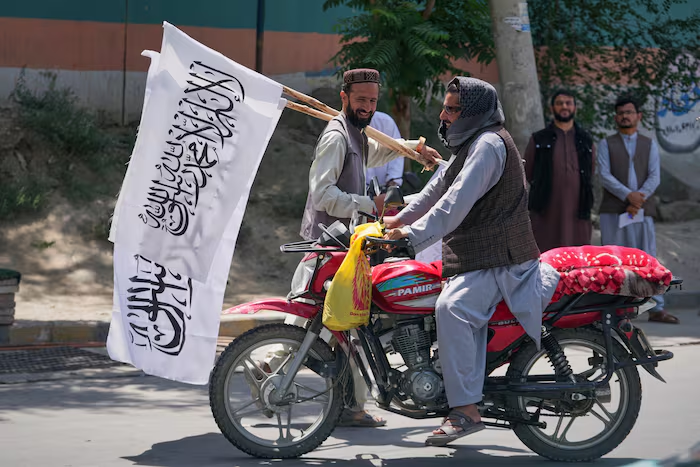
Afghanistan marks 5 years under the Taliban with safer streets but pleas for jobs and education
Afghanistan marks 5 years under the Taliban with safer streets but pleas for jobs and education

Passenger Train Derails and 11 People Injured After Carriages Overturn in Southern England

SEC Directs Market Operators To Freeze Assets Of 9 Terrorism Financiers
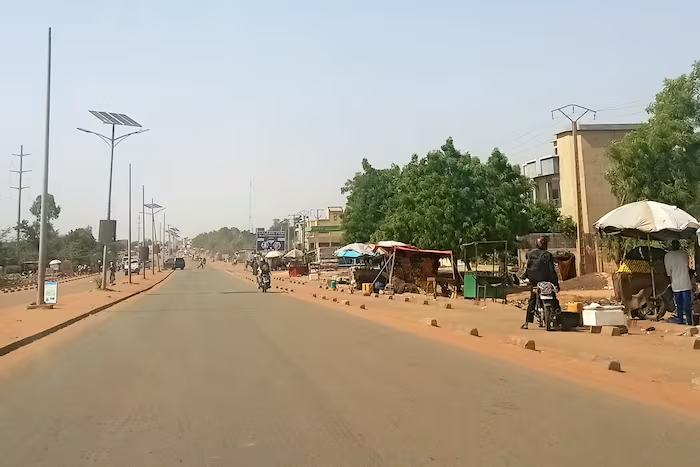
US missionary kidnapped in Niger is released after 9 months in captivity, his organization says
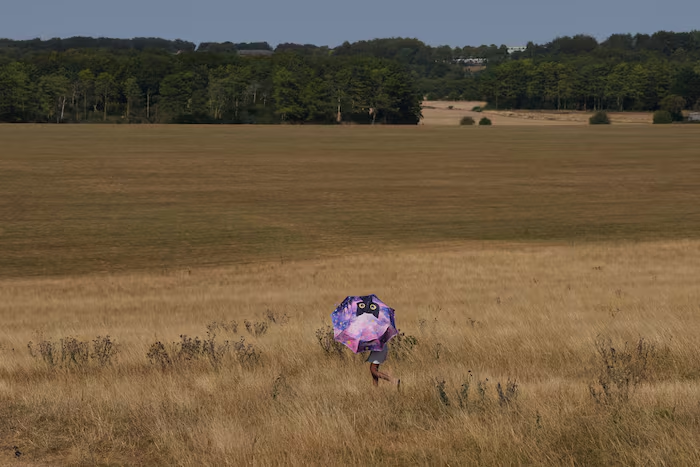
France and England battle multiple wildfires as record heat grips Europe

Osun Election: INEC begins distribution of sensitive electoral materials, explains delay

Italian Nato fighter jet shoots down drone in Latvian airspace
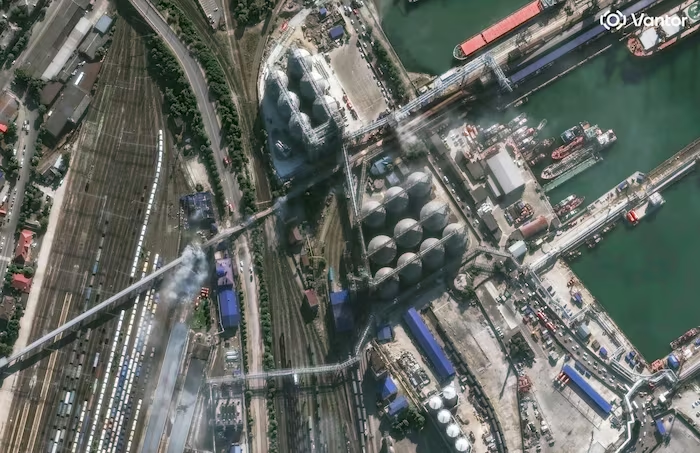
Russian drones kill a woman and 9-year-old son at home as Ukrainian civilian casualties rise

 Entertainment17 hours ago
“If they ask for money, call IGP” – Police officer warns Nigerians against paying for bail, shares complaint numbers
- Entertainment15 hours ago
“I returned your ₦5m birthday money” – Diadem calls out Dabota Lawson, alleges she uses bloggers to attack people
- Entertainment20 hours ago
“You charged me ₦7m, but quoted ₦5m for someone else” – Man calls out friend over solar deal betrayal
- News13 hours ago
Izeze Remains High-Spirited, Pays Fines for Inmates at Warri Custodial Centre – Secrets Reporters Nigeria
- Entertainment16 hours ago
“If you don’t like it, change it” – Uche Ogbodo flaunts new look after cosmetic procedure amid marital crisis
- News11 hours ago
NNPC Spends ₦393.45m on Three-Years Office Rent for NNPC Board Accommodation Under the Leadership of Bala Wunti in NAPIMS – Secrets Reporters Nigeria
- Viral17 hours ago
Frank Edoho’s ex wife reacts after troll calls her “our favourite cheating wife,” her response trends
- News3 hours ago
EXCLUSIVE: SecretsReporters Uncover Unaccounted ₦75m Cash Advance in Hannatu Musa Musawa’s Ministry – Secrets Reporters Nigeria