Metro
“The Nigeria Airways Mess Was Not Of Obasanjo’s Making” — Fani-Kayode Defends 2004 Liquidation, Says Airline Was Already Ruined By 1999

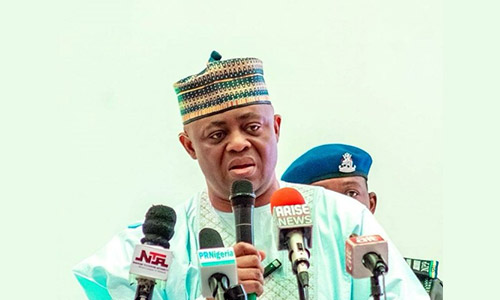
Former Minister of Aviation, Femi Fani-Kayode, has defended former President Olusegun Obasanjo over the 2004 liquidation of Nigeria Airways, arguing that the defunct national carrier had already been brought to the brink of collapse by years of alleged mismanagement, corruption, mounting debts and loss of assets before Obasanjo returned to power in 1999.
Fani-Kayode, who served as Aviation Minister during the Obasanjo administration, made the intervention on Thursday while responding to Aviation and Aerospace Development Minister Festus Keyamo’s criticism of former Vice-President Atiku Abubakar over the liquidation of the airline and the unpaid entitlements of its former workers.
Keyamo had on Wednesday accused Atiku of hypocrisy over his criticism of the current administration, arguing that the Obasanjo government, in which Atiku served as Vice-President, liquidated Nigeria Airways in September 2004 and left thousands of former employees without their pensions and gratuities. He also said President Bola Tinubu had approved and released ₦36 billion towards settling outstanding obligations to the former workers.
Fani-Kayode, however, said responsibility for the collapse of Nigeria Airways should not simply be placed on Obasanjo, maintaining that the airline was already in severe distress when the former President returned to office in 1999.
“In fairness to President Obasanjo the Nigeria Airways ‘mess’, as you have described it, was established before he came back to power in 1999.
“And it was indeed a mess but it was not of Obasanjo’s making!
“He met it there after he was sworn in and what he found broke his heart,” Fani-Kayode said.
According to him, the condition of the airline in 1999 was a sharp contrast to what Obasanjo had left behind when he relinquished power as military Head of State in 1979.
Fani-Kayode said Nigeria Airways had 32 functional aircraft in 1979, along with experienced pilots and crew members, competent management and an accountable board, describing the carrier at the time as “the pride of the nation.”
He claimed that by the time Obasanjo returned to power as civilian President two decades later, only one aircraft remained and it was not operational.
“By the time Obasanjo came back to power in 1999, 20 years later, there was only one plane left and it was not functional.
“The rest had vanished together with virtually all of the company’s assets,” he said.
Fani-Kayode attributed the airline’s deterioration between 1979 and 1999 to successive management teams and boards, which he accused of corruption and mismanagement.
He said the eventual liquidation followed years of insolvency and operational failure, as well as unsuccessful attempts to find a sustainable solution to the airline’s problems.
According to him, the Obasanjo administration ultimately decided that continuing to inject public funds into the carrier could no longer be justified.
“This is why Obasanjo liquidated it in 2004 and I believe that he had no choice,” Fani-Kayode said.
“There was nothing left to save even though it was a painful decision given the fact that he was one of those that had done so much for that company when he was Military Head of State.”
The former minister also revisited the long-running controversy over the unpaid pensions and gratuities of former Nigeria Airways workers.
He recalled that following the liquidation, a committee chaired by then Head of the Civil Service of the Federation, Yayale Ahmed, recommended the release of funds to settle the affected pensioners.
Fani-Kayode said that while serving as Aviation Minister in 2006, he presented a memorandum to the Federal Executive Council seeking approval for the payment of the outstanding entitlements.
According to him, the proposal did not receive sufficient support because some members of the council believed that persons who had served in the airline’s management and board shared responsibility for its collapse and should therefore not benefit from pension payments.
“I did not share that view but sadly I and those that supported me were in a minority and we lost the debate,” he said.
He said the matter was subsequently revisited by the administration of the late President Umaru Yar’Adua, which paid most of the pensioners, while further payments were made under former President Muhammadu Buhari.
Fani-Kayode consequently commended Keyamo for what he described as the settlement of the remaining pension obligations under the Tinubu administration.
“It is gratifying that under your leadership the remainder of the pensions have been paid. I only wish we had done that when we were in office,” he said.
“The pensioners suffered immensely over the years. I have always maintained that paying them was the right thing to do.”
Fani-Kayode also disclosed that he knew the position Atiku took during the Federal Executive Council debate over payment of the former workers’ entitlements but said he would not make it public because the decision eventually reached was a collective decision of the administration.
“As for His Excellency Waziri Atiku, I know what side of the divide he was during that debate in council but I will not share that publicly because whatever decision was finally taken was a collective one,” he said.
“We bore and still bear the consequences of that decision together as a Government.”
His intervention shifts the debate from who formally presided over the liquidation of Nigeria Airways to the circumstances that preceded the decision, while acknowledging that the failure to promptly settle the entitlements of former employees remained a painful consequence of the carrier’s closure.
The post “The Nigeria Airways Mess Was Not Of Obasanjo’s Making” — Fani-Kayode Defends 2004 Liquidation, Says Airline Was Already Ruined By 1999 appeared first on TheNigeriaLawyer.


Witness: Islamic Terror Group Threatened to Kill Oyo Schoolchildren Unless Government Freed 30 Members

Ossiomo Power institutes contempt proceedings against Chinese firm over alleged disobedience of court order

“If You See Something, Say Something” — NAFDAC Seizes Suspected Counterfeit Energy Drinks, Wine, Whisky, Equipment At Lagos Trade Fair Complex

“We Must Allow The Evidence To Establish What Happened” — Mbah Seeks Impartial Investigation Into Attack On NDC Supporters

APC names Wike, Soludo, Adeleke, Yobo in revised presidential campaign council list – The Witness Nigeria

Exclusive: Gov. Sheriff Oborevwori Raged Over an Inner-Page Advert, Insulted Uncle Sam Amuka and Got Delta State Banned From Vanguard

Exclusive: Job Racketeering, Misappropriation of ₦6 Billion Special Intervention Grant Under the Leadership of Professor Ahmed Umdagas Hamidu, and Barr. Buhari Zailani of ABUTH

“Membership Registers Are Constitutional And Mandatory” — INEC Cites Supreme Court, Gives Parties October 24 To Challenge Omitted Candidates

No Nigerian Counted By Nasir Kwarra National Population Commission Yet He Spent N12.5 Billion For Procurement

PAU Alumni conference brings over 400 leaders together for opportunities at Ecobank Pan African Centre

UCL: ‘I feel sorry for them’ – Thierry Henry sends message to Man City after 4-2 defeat to PSG

₦3.1 Billion Developed Wings FCE Gombe Records In The Name of Procurement

Ex-NPA Boss Aminu Dabo Dumps APC

Dino Melaye blasts Akpabio, Abbas over failure to hold Tinubu to account

‘He is suffering from dementia’ — President under fire over ‘Bring Governor Tinubu back’ comment [VIDEO]

Atiku Launches New Platform To Answer Nigerians’ Questions

‘Be very careful of state govs, so much hidden’ – Sambo advises Tinubu

Malabu Oil: Court acquits Aliyu Abubakar, seven others of money laundering – The Witness Nigeria

“The Nigeria Airways Mess Was Not Of Obasanjo’s Making” — Fani-Kayode Defends 2004 Liquidation, Says Airline Was Already Ruined By 1999

2027 election: Ogun CP warns against violence, steps up security at INEC office

 News4 days ago
EXCLUSIVE: Yayi’s $1.3 Million Secret USA Mansion…How APC Ogun State Governorship Candidate Senator Adeola Who Audited Nigeria’s Books Buried a Fortune Abroad
- News7 days ago
Academic Mafia: Federal Co-operative College Oji River Rector Jude Obidiegwu Paid 31 Companies N13.8 Billion for Roads, Hospitals and Markets While School Environment Rots Away
- News3 days ago
How David Umahi Awarded Road Contracts To Two Different Firms With Exact Same Amount of ₦350.6 Million Road Bids Despite Their Ineligibility
- News4 days ago
Usmanu Danfodiyo University Sokoto Fails to Account for Over ₦9.3 Billion, Investigators Denied Access to Records
- News4 days ago
Federal College of Education Yola Under Provost Mohammed Degereji Bleeds ₦1.4 Billion in Contracts Awarded to Unqualified Firms
- Politics4 days ago
All The Grammar By President Tinubu On His Achievements Have Not Reflected Positively On Nigerians – Okonkwo
- Politics3 days ago
THE WEEK: Fulani Militias Hack 12 Christians to Death in Benue, Five Others Die in Plateau, Niger Attacks
- News3 days ago
EXCLUSIVE: The AES Split Did Not Kill Nigeria’s Sahel Trade: 2025 Exports to Niger Rose to ₦131.77bn, Burkina Faso to ₦58.97bn, While Mali’s Collapsed to ₦8.05bn