Viral
EXCLUSIVE: Women Affairs Ministry Under Fire Over ₦71.2m Paid Into Private Accounts for 2027 Electoral Conference

TrackNews Online
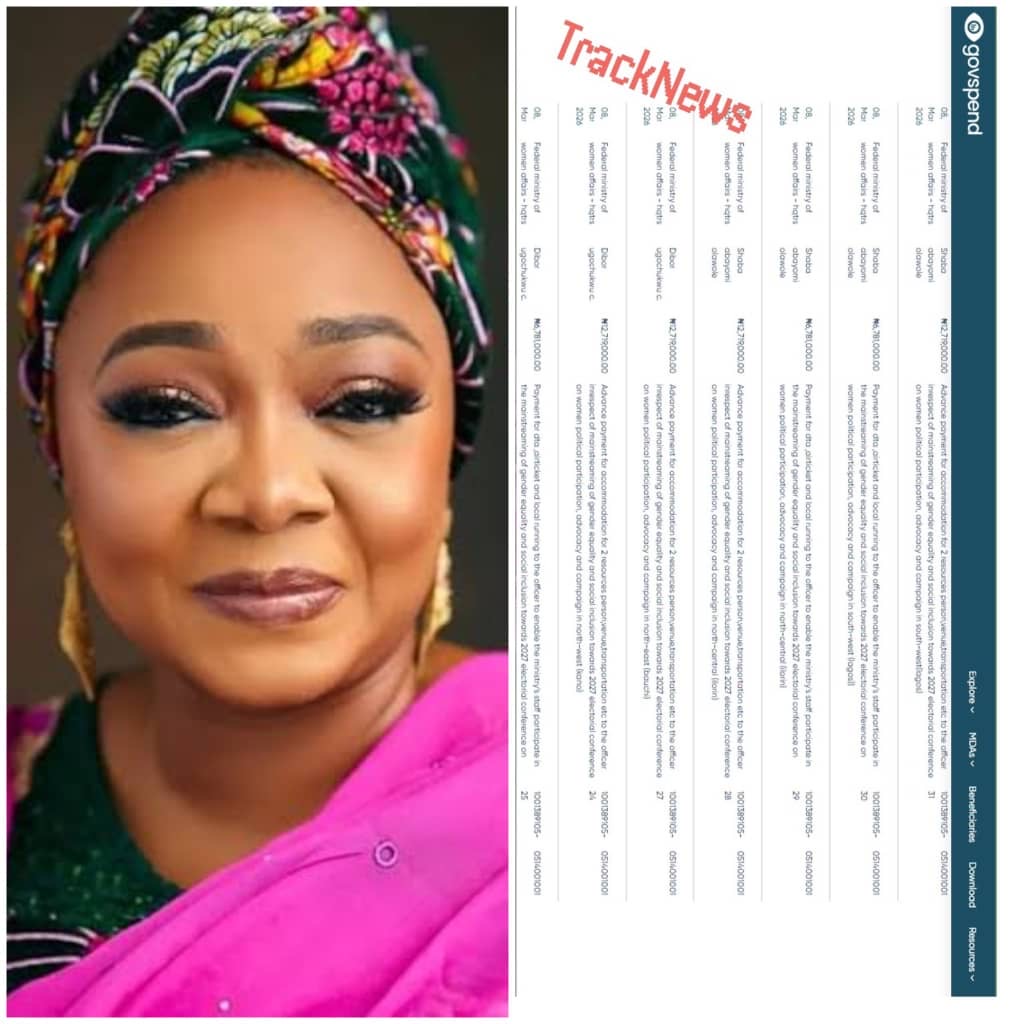
The Federal Ministry of Women Affairs has come under scrutiny following revelations that ₦71.219 million in public funds was paid into the personal bank accounts of two individuals for activities linked to a proposed 2027 electoral conference on women’s political participation.
The payments, reportedly made in seven separate transactions on March 8, have raised questions about compliance with Nigeria’s financial regulations, particularly provisions prohibiting the payment of public funds into private bank accounts.
Details published on BudgIT’s Govspend Portal indicate that the payments were made to Shaba Abayomi Olawole, who received four tranches, and Dibor Ugochukwu C., who received three.
The transactions were described as advance payments for the mobilisation of ministry staff and other conference-related expenses in Lagos, Ilorin in Kwara State, Kano and Bauchi.
BudgIT’s Govspend Portal provides public access to government expenditure information and mirrors data from Nigeria’s Open Treasury Portal.
₦71.2m Disbursed in Seven Transactions
According to the expenditure records, Olawole received two separate payments of ₦12.719 million each, reportedly covering accommodation for two resource persons, venue arrangements, transportation and related expenses for activities in Lagos and Ilorin.
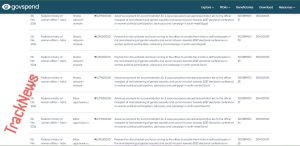
The descriptions attached to the transactions stated that the payments were intended to support the mainstreaming of gender equality and social inclusion ahead of the 2027 electoral conference on women’s participation, advocacy and campaigning.
Ugochukwu reportedly received corresponding payments of ₦12.719 million each for activities in Bauchi and Kano.
The records also listed additional payments of ₦6.781 million each to Olawole for activities in Lagos and Ilorin, as well as a similar payment to Ugochukwu for Kano.
These transactions were described as covering daily travel allowances, air tickets and local running expenses to enable ministry staff to participate in the proposed conference activities.
The seven payments totalled ₦71,219,000, according to the published expenditure records.
The disclosures have prompted questions about why the funds were transferred to individual accounts rather than being processed through the appropriate government payment channels.
Financial Regulations Prohibit Payments Into Private Accounts
Nigeria’s Financial Regulations 2009 contain explicit provisions governing the handling of public funds.
Chapter 7, Section 713, states: “Personal money shall in no circumstances be paid into a government bank account, nor shall any public money be paid into a private account.”
The provision further states that an officer who pays public money into a private account is deemed to have acted with fraudulent intention.
The regulation is designed to safeguard public funds, strengthen accountability and prevent the misuse of government resources.
However, whether the transactions in question breached the regulations would depend on the full circumstances of the payments, the status of the recipients and the applicable authorisations.
Limited Exceptions Under Financial Regulations
James Abalaka, Deputy Director of Fiscal Accounts in the Office of the Accountant-General of the Federation, has previously explained that exceptions exist under the financial regulations.
According to his explanation, Chapter 10, Section 1001, provides for imprests, which cover sums advanced to public officers to meet expenditure under approved estimates when supporting vouchers cannot immediately be presented to a sub-accounting officer for payment.
The regulations state that imprests are issued by the Accountant-General of the Federation and accounting officers of self-accounting ministries, extra-ministerial offices and other arms of government.
Such arrangements are intended to facilitate authorised government expenditure while maintaining the required financial controls and accountability mechanisms.
However, the available information indicates that the ₦71.219 million in question was not paid through the Office of the Accountant-General of the Federation.
This has raised further questions about the legal and administrative basis for the transfers, including whether the transactions qualified for any recognised exception under the regulations.
Questions Over Accountability and Public Funds
The reported payments have placed the ministry’s financial procedures under scrutiny, particularly regarding the use of personal bank accounts for expenditure connected to government programmes.
Key questions include the identities and official capacities of the recipients, the approvals authorising the transfers, the procurement and payment documentation supporting the transactions, and the procedures for accounting for the funds after disbursement.
It is also important to establish whether the stated conference activities were conducted as planned and whether the recipients submitted the necessary retirement documents, receipts and other supporting evidence.
These details would help determine whether the payments complied with the applicable financial regulations and whether the expenditure was properly accounted for.
Ministry’s Response Awaited
The expenditure records raise legitimate questions about transparency and compliance with public financial management rules. However, the transactions alone do not establish that the recipients or any ministry official committed fraud.
A response from the Federal Ministry of Women Affairs explaining the rationale for the transfers, the authorisations obtained and the accounting procedures followed would be important in clarifying the matter.
Until such explanations and supporting documents are available, the circumstances surrounding the ₦71.219 million disbursement remain a matter requiring further scrutiny.
TrackNews Online will continue to follow developments surrounding the payments and any official response from the ministry or relevant financial oversight authorities.


“The Legal Process Must Not Become A Source Of Intimidation” — NUJ Demands Probe Of Kaduna Journalist’s Conviction Over Facebook Post

Security Tightened In Kaduna Ahead Of Tinubu’s 2027 Campaign Flag-Off — Operatives Guard Posters, Billboards

Gov. Dauda Lawal Swears In Five New Permanent Secretaries, Calls For Compliance With Public Service Rules

Akwa Ibom Governor Umo Eno Spent N424.9 Billion In Six Months Unaccounted For Even When He Intends To Waste N10 Billion For Arise Palm Resort And N2.6 Billion For His Trip Round The World

‘President’s Job Is Not To Be High Jumper’ – Dele Momodu Reacts To Makinde’s Challenge To Presidential Candidates

“Some Ministers Pay Billions To Get Themselves Appointed” — Tinubu Campaign Spokesman Alleges Corruption In Appointment Process

EPL: Carragher predicts winners of Chelsea vs Tottenham, Man United vs Bournemouth, Arsenal, Liverpool, others

“No Indication To Alter Large Gatherings” — FG Rules Out Ebola Restrictions, Monitors 44 Contacts, Cuts Foreign Delegations

ECOMOG Veterans Association seeks Nigeria’s support for national memorial, repatriation of fallen heroes

“Voters Must Be Able To Make Decisions Based On Credible Information” — EU Warns Against AI-Driven Electoral Disinformation

NDC Fixes Date to Unveil Campaign Council for 2027 Elections

EPL: Conte in talks over Man United job, lays down conditions

2027: North-West Has Chosen Tinubu, Says APC Campaign Council Member

Asiwaju Is The Northern Candidate, We Will Deliver Him In 2027 – Musa Kwankwaso

Bandits attack Zamfara community, kill seven residents, abduct several others

Stakeholders Call For Inclusive Policies To Promote Gender Equality In Nigeria

EPL: Rooney tells Carrick to give Fernandes Ferguson-Ronaldo treatment after latest comments

Kaduna Government Debunks N2.3tn APC Rally Spending Claim

Barcelona react as Lionel Messi wins new award

Two Nigerians Wanted In US Over $3.1m Medicare Fraud, Marijuana Conspiracy

 Politics6 days ago
Boko Haram Reportedly Destroys Half of Graha Community as Neighbouring Adamawa Villages Brace for Possible Further Attacks
- News7 days ago
Gov. Uzodimma Waste N400 Million To Rehabilitate Lagos Lodge, N250 Million For Just One-Storey Building In Government House, N175 Million For Chalet And Many More
- News7 days ago
Rascal In Power: In 90 Days, Delta Governor Sheriff Oborevwori Spent N310 Million For Treatment Abroad And Moves To Waste N500 Million To Build New Government House
- Politics5 days ago
THE WEEK: Islamist Jihadists Burn Evangelist Alive in Adamawa, Kidnap Catholic Priest in Benue, Strike Bases
- News7 days ago
Gov. Seyi Makinde Doubled Oyo’s Borrowings To N368.2 Billion In One Year And Drew Three Quarters Of His 2026 Loans In Three Months
- Metro7 days ago
“They Told Me To Resign And Leave The Country” — Okonjo-Iweala Says $2.4bn Subsidy Fraud Probe Led To Mother’s Kidnap
- News7 days ago
Gov. Bala Mohammed Drove Bauchi Into N441.7 Billion Of Debt And Smashed His Own Borrowing Ceiling In Six Months
- Metro3 days ago
“Millions Allegedly Collected For Undelivered Projects” — EFCC Arrests Innocent Ezuma Over $120m Ukrainian Investor Fraud