Headlines
Defence Minister urges investment in local technology to boost Nigeria’s security

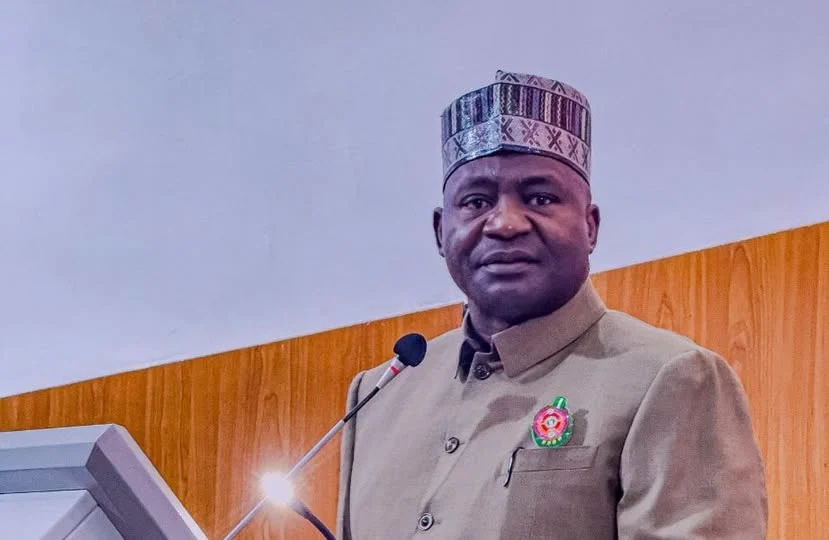
The Minister of Defence, General Christopher Gwabin Musa (retd.), has stressed the need for increased investment in indigenous defence technology, local manufacturing, artificial intelligence and strategic partnerships to strengthen Nigeria’s national security and reduce dependence on foreign sources for critical defence capabilities.
He made the call at the maiden edition of the Defence Futures Summit 2026, themed “Sovereign Digital Backbone and Defence Innovation”, held on October 14, 2026, at the Armed Forces Event and Multipurpose Centre in Asokoro, Abuja.
In a statement, Enderline Chukwu, Deputy Director of Information and Public Relations at the ministry, said Musa described the initiative as a landmark platform for advancing defence innovation, strengthening technological sovereignty and transforming Nigeria’s defence architecture. He urged Nigerians to continue making deliberate sacrifices to unite the country and improve its technological capabilities.
Musa said that although information and communication technology, artificial intelligence and other emerging technologies were still developing within Nigeria’s defence ecosystem, the country possessed the intellectual capacity, human resources and innovative potential to compete in the evolving global defence environment.
He said the initiative aligned with President Bola Ahmed Tinubu’s Renewed Hope Agenda, which seeks to ensure that Nigeria does not merely adopt emerging defence technologies but actively contributes to shaping the future of defence capabilities. He added that it reflected the administration’s commitment to strengthening national security, innovation and self-reliance.
The minister said “the summit was conceived as one of the initiatives aimed at transforming Nigeria’s security architecture and positioning the country to anticipate emerging threats rather than merely react to changes in the character of modern warfare”.
He explained, “Nigeria’s strategy must therefore extend beyond conventional military hardware to encompass the knowledge system and technological infrastructure required to support modern military operations.”
He reiterated that Nigeria could not afford to remain perpetually dependent on external sources for critical defence technologies, calling for sustained investment in human capacity development, local innovators, defence industries and research institutions.
Musa said collaboration with the private sector was essential to building a resilient defence industrial base capable of translating Nigerian ingenuity into operational capabilities for the armed forces.
He expressed confidence that Nigeria possessed the talent, ambition and professional know-how required to drive defence innovation in line with international standards.
He pledged the ministry’s commitment to supporting initiatives that strengthen indigenous capacity, encourage technological innovation and advance efforts towards a more resilient and self-reliant defence sector.
Earlier, in his opening remarks, the founder and convener of the Defence Futures Summit, retired Colonel Felix Alaita, said the summit underscored the need for a comprehensive Defence Renewal Architecture linking the nation’s security priorities with industrial development, research institutions, private-sector expertise and the creative potential of young Nigerians.
“The initiative is designed to improve operational readiness, strengthen institutional accountability and promote the responsible adoption of technology in addressing Nigeria’s evolving security challenges” he added.
Alaita further stated that the Defence Renewal Architecture was anchored on four pillars: enhancing operational readiness and security response; strengthening the indigenous defence industry; investing in human capital and youth development; and strengthening social understanding and the creative economy.
He called for stronger collaboration among the government, industry, academia and international partners to promote indigenous technology in manufacturing, energy, battery development and aircraft production, leveraging the expertise of the Air Force Institute of Technology.
Alaita also stressed the need for youth empowerment, skills development, job creation and knowledge-sharing. He urged participants to propose practical solutions to Nigeria’s challenges and ensure that discussions translated into concrete actions and measurable outcomes.


“Bring Formal Complaints Over Omitted Candidates” — INEC To Announce Position On Supreme Court Electoral Act Judgment Today

Witness: Islamic Terror Group Threatened to Kill Oyo Schoolchildren Unless Government Freed 30 Members

Ossiomo Power institutes contempt proceedings against Chinese firm over alleged disobedience of court order

APC names Wike, Soludo, Adeleke, Yobo in revised presidential campaign council list – The Witness Nigeria

“If You See Something, Say Something” — NAFDAC Seizes Suspected Counterfeit Energy Drinks, Wine, Whisky, Equipment At Lagos Trade Fair Complex

“We Must Allow The Evidence To Establish What Happened” — Mbah Seeks Impartial Investigation Into Attack On NDC Supporters

Nigeria’s Minister of Agriculture Abubakar Kyari Paid N300 Million to Company That Does Not Exist on the Corporate Register

Exclusive: How Premium Trust Bank MD Emefienim And Wife Priscilla Secretly Grabbed 38% of The Bank Through Their Marginal Energy SPV

“It wasn’t Snapchat, TikTok or WhatsApp” – T Classic reveals shocking apps he caught his ex-girlfriend cheating on

“You are not moving…” – Father’s emotional message to 28-year-old daughter after divorce melts hearts

‘We Are More Prepared’ – APC Fires At Atiku, Peter Obi Ahead Of 2027

Tinubu has done worse than Abacha – Dele Momodu

Refinery IPO: Dangote pledges priority allocation for investors applying for N50,000 or less – The Witness Nigeria

UCL: Why Man City lost 4-2 to PSG – Maresca

Lagos govt sets date to demolish distressed 25-storey GNI House

I Am Your Errand Man – Tinubu Declares After APC Presidential Campaign Council Inauguration

UCL: Mourinho speaks on Vinicius’ angry reaction to being substituted against Roma

2027: ‘Master Of Bogus Statistics’ – Shettima Mocks Peter Obi’s Economic Statistics

Champions League: Mourinho snubs Real Madrid, PSG, names best team

Defence Minister urges investment in local technology to boost Nigeria’s security

 News4 days ago
EXCLUSIVE: Yayi’s $1.3 Million Secret USA Mansion…How APC Ogun State Governorship Candidate Senator Adeola Who Audited Nigeria’s Books Buried a Fortune Abroad
- News7 days ago
Academic Mafia: Federal Co-operative College Oji River Rector Jude Obidiegwu Paid 31 Companies N13.8 Billion for Roads, Hospitals and Markets While School Environment Rots Away
- News4 days ago
Usmanu Danfodiyo University Sokoto Fails to Account for Over ₦9.3 Billion, Investigators Denied Access to Records
- News4 days ago
Federal College of Education Yola Under Provost Mohammed Degereji Bleeds ₦1.4 Billion in Contracts Awarded to Unqualified Firms
- Politics4 days ago
All The Grammar By President Tinubu On His Achievements Have Not Reflected Positively On Nigerians – Okonkwo
- News3 days ago
How David Umahi Awarded Road Contracts To Two Different Firms With Exact Same Amount of ₦350.6 Million Road Bids Despite Their Ineligibility
- Politics2 days ago
THE WEEK: Fulani Militias Hack 12 Christians to Death in Benue, Five Others Die in Plateau, Niger Attacks
 News7 days ago
Investigation: SEEPCO and Chairman Anthony Chukwueke Run an Illegal Oil Terminal in the Nigerian Creeks and Have Not Paid a Kobo in Petroleum Profit Tax Since 2011 – Part Three