Headlines
Anger, condemnation trail FG’s move to introduce fuel tax

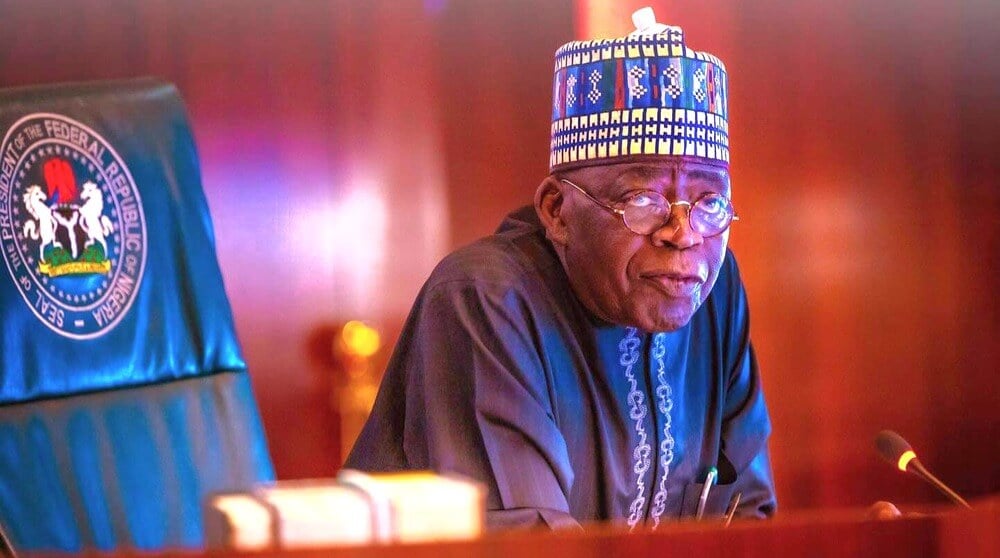
The recent revelation by the Minister of Finance and Coordinating Minister of the Economy, Taiwo Oyedele that the Federal Government plans to introduce a fuel tax in Nigeria has stirred controversy.
Nigerians are describing it as callous and insensitive to their suffering.
Although the minister clarified that the tax would only be imposed when the Federal Government was satisfied that the economy had stabilised and Nigerians’ incomes had improved sufficiently to accommodate the additional cost, Nigerians have rejected his explanation, with many describing it as another ploy to deceive them and inflict more pain on them.
Oyedele had, during an interview on the sidelines of the 2026 International Monetary Fund and World Bank annual meetings in Bangkok, Thailand, disclosed that the Federal Government would introduce a fuel tax when the economy stabilised and Nigerians’ incomes improved sufficiently to accommodate the additional cost.
He said revenue from the levy would support road infrastructure and the development of a fuel reserve to cushion the effects of future price shocks, stressing that its implementation would require a ministerial order published in the Official Gazette.
His comments came against the backdrop of previous resistance by organised labour and business groups to the five per cent surcharge on chargeable fossil fuel products provided for in Nigeria’s tax framework. Its commencement remains subject to an order by the finance minister.
He said introducing the tax while petrol was subsidised would have been counterproductive because the government would effectively have paid the charge itself. Imposing it immediately after the removal of the subsidy, he added, would have placed additional pressure on Nigerians.
“The objective should be that instead of trying to suppress prices, which hasn’t worked for us or for any country in the world, not one, and instead of trying to suppress prices, we should think about how to grow income faster than prices rise.
“That’s how you bring prosperity and grow the middle class, and that is exactly what we are doing, as led by Mr President himself.
“At the appropriate time, when the economy is stabilised and income levels are able to accommodate it, those taxes will come. Not because we want to impose taxes,” Oyedele said.
This latest development has reopened old wounds over the removal of the fuel subsidy, as Nigerians, particularly those who run their businesses on generators, have expressed anger and frustration with the All Progressives Congress, APC-led government and its policies.
Explaining the proposed use of the revenue, Oyedele said the fuel reserve would “help moderate prices of fuel products if anything happens.”
He added that the government could temporarily waive the tax during future price shocks to ease pressure on consumers.
“The good thing is that the law says that tax cannot come into effect until there is a gazette. There has to be an order published in the gazette by the finance minister, which means we can’t do it in secret. Plus, we have no intention of doing stuff in secret.
“At the appropriate time, it will be clear to everyone why it needed to be done, and the benefits will be clear also to every Nigerian,” he said.
The existing surcharge framework exempts household kerosene, cooking gas, compressed natural gas and clean or renewable energy products.
As recently as June 16, 2026, the government dismissed reports that it was introducing fresh taxes on petroleum products following recommendations in the IMF’s Article IV consultation report. It said the VAT waiver on petroleum products remained in place and that no process to activate the fuel surcharge was then under consideration.
Comparing Nigeria’s position with that of other countries, Oyedele said taxes accounted for between 20 and 80 per cent of pump prices in some jurisdictions, while several African countries imposed between six and 10 different charges on petroleum products.
He also explained the sequencing of the petrol subsidy removal and foreign exchange reforms, saying the government initially removed support for petrol prices before allowing the naira to adjust gradually.
According to him, exchange-rate movements significantly influenced petrol prices, requiring the government to manage the transition while considering its impact on Nigerians.
“That is the reason why there was still a bit of subsidy in 2023. It was to manage that process because you need to be mindful of the impact on the people.”
Oyedele said the petrol subsidy was completely removed in October 2023, when government support for both petrol prices and foreign exchange was no longer in place.
However, fuel pricing has remained a contentious issue since President Bola Tinubu declared that “fuel subsidy is gone” during his inaugural address on May 29, 2023.
With the proposed fuel tax looming, Nigerians are saying that the government should be considering measures to cushion the harsh effects of the subsidy removal rather than inflicting more hardship on the people.
A tailor, Niyi Osundare, argued that another levy would deepen the hardship faced by citizens already struggling with the removal of the subsidy, rising living costs and naira depreciation.
“Why is this government so wicked? How can anybody be thinking of putting a tax on fuel when we are complaining that a litre of fuel is selling for N1,400?
“Do you know that businesses are folding up because their owners can no longer cope with the situation?
“For instance, there is hardly any electricity for small businesses to operate, so most of us rely on generators. And then, you ask yourself, how much fuel at N1,400 per litre are you prepared to buy every day?
“We are running at a great loss, and that’s why most businesses are closing down. And somebody is talking about a fuel tax, which will automatically push up the price of fuel again.
“What is wrong with the APC government? What sort of thing is this? How can people decide that the only thing they will do to their citizens is inflict pain and more pain on them?
“This is wickedness, and Nigerians should rise up. This cannot be like the announcement that ‘subsidy is gone’, which was what brought us to where we are today.
“We are crying that we can’t afford the price of fuel as it is currently sold, and somebody is telling us that the government wants to introduce a fuel tax when the economy stabilises and people’s incomes improve. When will that be?
“Can this government ever do that? It is not possible. Since 2023, when this government came in, it has been one promise after another, and all of them have ended up bringing agony and sorrow to Nigerians.
“So, this time around, they can tell their story to the marine because we will not accept any fuel tax; it won’t happen,” he stated.
On the promise that the proceeds would fund road infrastructure and cushion the effects of price shocks, a lawyer and public affairs analyst, Kunle Onatade, dismissed it as a false promise.
He said the government had promised Nigerians that it would use the proceeds from the removal of the fuel subsidy for infrastructure development, but that had not happened.
Instead, he argued, the government had borrowed more in three years than the administration of late former President Muhammadu Buhari had borrowed in eight years.
“Who is deceiving who? Where is all the money made from the fuel subsidy removal? Has this government, in three years, not borrowed more than Buhari in eight years? What are we talking about?
“This fuel tax move is just another avenue for making more money available for them to steal. They don’t care about the citizens as long as they keep amassing wealth for themselves.
“These are a bunch of heartless and corrupt politicians masquerading as political leaders; they don’t care about anybody. Nigerians should not listen to them. The fuel tax will bring about more hardship for Nigerians,” he said.
Business groups have also expressed concern about the implications for production, transportation and consumer prices.
The Association of Small Business Owners of Nigeria urged the government to prioritise relief for businesses and households, warning that an additional fuel charge would worsen their financial burden.


THE WEEK: Islamist Jihadists Burn Evangelist Alive in Adamawa, Kidnap Catholic Priest in Benue, Strike Bases

“With Hearts Weighed Down By Immeasurable Grief” — Former Delta Governor Emmanuel Uduaghan Dies At 71, Family Announces

EXCLUSIVE: NCDMB Under Felix Ogbe Faces ₦221m Diesel Procurement Scandal as ₦42.5m Contract Goes to Company Registered Three Weeks Later

Singer Davido’s Uncle Adeleke Stuffed Government House With N50 Billion, Spent N9.5 Billion To Travel In Nine Months, Including N4.6 Billion For His Refreshments And Meals

Court Hands UBA Major Victory in Landmark N156 Billion Debt Recovery Judgment Against The VASWANI Brothers and Stallion Group

Politics 57 minutes ago ‘If Buhari As A Retired General Couldn’t End Nigeria’s Insecurity, What Do You Expect Of Tinubu?’ – Yari The Director-General of the All Progressives Congress (APC) Presidential Campaign Council (PCC), Senator Abdulaziz Yari, has defended the performance of President Bola…

Wicked Kayode Egbetokun Paid N1.21 Billion For Police Poor Feeding To A Company With No Registration Record And Ran N4.78 Billion Of Feeding On Emergency Vouchers As IGP

“She Is A Level 17 Officer, Not A Political Appointee” — Showunmi Rejects Claims Wife’s INEC Posting Was Reward For Supporting Tinubu

EXCLUSIVE: ₦1.37bn Ingawa Dam Payment Raises Questions as Newly Registered Business Name Receives Final Contract Funds Under Minister Utsev

JUST IN: Rivers State House of Assembly Rescinds Decision to Declare Seats of Three Pro-Fubara Lawmakers Vacant

Police arrest four suspected robbers, recover six fire arms in Rivers

“Your Lordship Is Not Above The Law” — Awka Anglican Chancellor Nwofor, SAN, Demands ₦5bn From Bishop Ezeofor Over Purported Removal

Fuel tax: FG has no plan to tax petrol – Oyedele clarifies amid controversy

Full List: Adeleke Names Akande, Oyetola, Omisore, Others In Tinubu’s Osun Campaign Council

Anger, condemnation trail FG’s move to introduce fuel tax

Messi missing as Morgan names top 3 greatest Ballon d’Or winners of all time

Police arrest suspected Aiye cult member, recover pistol in Ogun

2027 Election: Sowore’s AAC Writes Tinubu, Demands Aso Rock Venue, Food, Drinks For Campaign Council

National Research Institute for Chemical Technology Faces Government Query For Wasting N617 Million of Public Funds

Ogun approves N50,000 welfare palliative for corps members, donates mattresses to orientation camp

 Metro6 days ago
“The Nigeria Airways Mess Was Not Of Obasanjo’s Making” — Fani-Kayode Defends 2004 Liquidation, Says Airline Was Already Ruined By 1999
- Entertainment6 days ago
“We’ll stab, shoot him, then tell everyone he killed our friend” — Lady recounts how armed robbers attacked her brother
- News7 days ago
Umo Eno’s 2025 Books Exposed N78.5 million Naira Farmers’ Loans Trapped in a Dead Bank While Ibom Air Filed No Accounts Since Inception
- News7 days ago
Ondo Gov Aiyedatiwa Enjoys Hotel accommodation For N1.6 Billion, Pays N405 Million As Two Years Rent For Abuja Governor’s Lodge And N3.9 Billion To Fly Round Nigeria
- Metro7 days ago
“Establish A National School Of Government For Leadership Development” — Tinubu Asks Senate To Repeal ASCON Act
- Metro7 days ago
“Visa Application Fees Are Non-Refundable Whether Approved Or Refused” — U.S. Mission Clarifies Policy For Nigerian Applicants
- Metro6 days ago
“The Two-Week Suspension Is To Allow Government Honour Its Commitments” — Nasarawa JUSUN Temporarily Ends One-Month Strike
- Special Report6 days ago
Refinery IPO: Dangote pledges priority allocation for investors applying for N50,000 or less – The Witness Nigeria