Politics
Nigeria Schools Reopened, While Some Christian Schools Stayed Closed Over Terror Fears

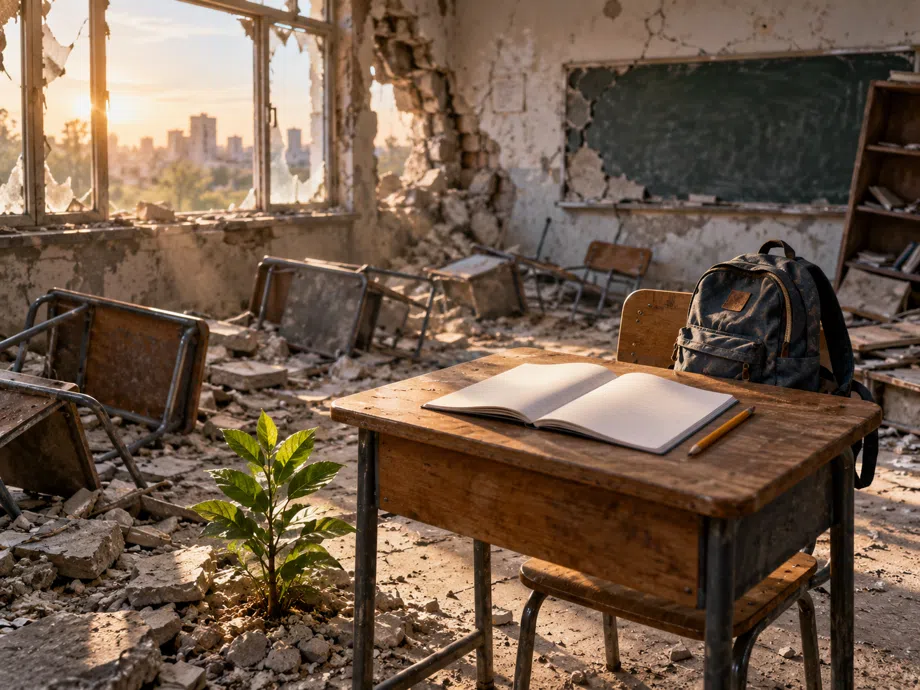
Federal authorities promised a safe September 14 reopening, but attacks near northern schools forced Christian leaders to delay classes
By Mary Kiara
(Lagos) – Nigeria’s schools reopened September 14 under federal assurances of safety, but some Christian schools delayed classes after attacks near their communities heightened fears of kidnapping.
The Federal Ministry of Education said all Federal Unity Colleges would resume the academic session as scheduled, saying security agencies had been alerted and heightened vigilance would protect students and staff.
But in Kaduna State, Rev. Joseph Hayab, chairman of the Northern Christian Association of Nigeria, told TruthNigeria that some church-run schools postponed reopening because of repeated attacks.
“The surrounding environment where one of our church schools is located was attacked multiple times in the last three weeks by terrorists. We had to take a decision to defer resumption by a week,” Rev. Hayab told TruthNigeria.
“Realistically speaking, there’s so much anxiety and doubt in the minds of many parents to send their children to school.”
Independent Defense Measures in Conflict Zones
In Nigeria’s Northern and Middle-belt region, church leaders overseeing private academic institutions report that returning children to classrooms without physical security guarantees represents an unacceptable risk.
“I had to call the State Security Service (SSS) to discuss the fears and seek professional advice before we open. Terrorists are still on the rampage, kidnapping people, and no parent wants a situation where their child is taken for ransom.”
“Every parent in communities experiencing terror attacks faces a twofold challenge: the fear of having your child not educated, and the fear of having your child going to school and getting kidnapped,” Rev. Hayab said.
His comments point to a problem that extends beyond school gates. A family may have the means to choose a safer school, while another family living in an attacked community may have no realistic alternative.
That leaves parents making decisions that government security policy is supposed to make less difficult.
The Breakdown of the Safe Schools Mandate
The anxiety is rooted in a long record of attacks on Nigerian schools. Official audit data reveals that 78 percent of public schools nationwide operate without perimeter fencing, while 65 percent lack trained security guards.
At least 758 students, teachers, and academic staff have been abducted in targeted raids across the country, since President Bola Tinubu took office in May 2023.
The pattern continued in 2026.
On May 15, Fulani terrorists abducted 45 students and staff from three schools in Oyo State, while another 78 children were taken from two schools in Borno State the same day.
Despite a $90 million National Plan on Financing Safe Schools designed to secure vulnerable learning environments, direct federal capital releases dropped by nearly 68 percent in recent budget cycles.
National Safe Schools coordinators confirmed to lawmakers that the program received zero capital allocations across consecutive fiscal years.
“The police do not have the manpower to cover all the schools in the country,” Dennis Amachree, former Assistant Director of Nigeria’s Department of State Services (DSS), told TruthNigeria.
“The most exposed institutions are typically those in rural communities, where law enforcement presence is thin or entirely absent.”
The expansion of mass abductions beyond the far north into southwestern states like Oyo demonstrates that armed networks are systematically exploiting unprotected educational corridors nationwide.
A Parallel Crisis of Faith in Education
The physical destruction of educational sanctuaries in West Africa reflects a broader global erosion of institutional trust.
While Nigerian parents confront literal survival against militant violence, families in North America face a parallel civilizational crisis as classrooms become battlegrounds over social alienation, ideological polarization, and rising campus disruption.
International educational analysts point out that when adult political failures and ideological warfare breach the school gate, the fundamental definition of the classroom as a safe haven for civic growth and objective truth is compromised.
“Schools should offer children safety, friendship, and the chance to imagine a future,” Khaled El-Enany, Director-General of UNESCO, said in an official statement on school protection, noting a 33 percent global rise in verified attacks on educational facilities.
“Yet classrooms in many conflict zones are becoming targets of violence, military activity, and destruction.”
Whether manifesting as physical terror in West Africa or acute social fracturing in Western nations, the underlying diagnosis remains identical: a society that surrenders its classrooms actively sabotages its own future.
“There is an education crisis hiding inside the security crisis,” Ismail Adekunle, a public affairs analyst, said in a statement.
“Every school closure caused by violence potentially pushes another generation further away from economic opportunity and civic stability.”
As millions of children return to classrooms under the shadow of persistent violence, parents are left to rely on hope and private security while state authorities offer empty assurances.
The central contradiction of the crisis remains unaddressed, captured in a single question posed by Rev. Joseph Hayab as church leaders weigh the risks of opening their doors.
“Are these terrorists’ spirits?” Rev. Hayab asked.
“Why should they continue to hold the whole nation to ransom while the government has not done enough?”
Mary Kiara reports on Terrorism for TruthNigeria.
Related


“We Will Not Shield Anyone Found Culpable” — NSCDC CG Assures Families Over Deaths Of Miners, Others In Niger Custody

“Why Should Tinubu Fly To UNGA For A 15-Minute Speech?” — Jimoh Ibrahim Defends President’s Absence, Says Nigeria Still On Front Row

“Account For ₦29bn Scholarship Funds” — Rivers Assembly Orders Arrest Of PAMO University VC, Prof.Smith Jaja

“Obi Has The Right To Support Others, But Soludo Must Be Crucified For Doing Same?” — Anambra Govt Alleges Double Standards

To Empty National Account Before New Year, NASENI DG Khalil Halilu Pushed N10.6 Billion to a Chinese Builder in the Christmas Week Rush for a N35.5 Billion Campus

“Those Who Fought Jonathan Are Ganging Up Again Against Tinubu” — Okpebholo Says ‘No Vacancy’ In Aso Rock

“Some Public Officers Enter With Less Than ₦100,000, Leave With Millions Of Dollars” — Olukoyede Says Nigeria Cannot Develop With Such Corruption

“The Claim, As Presented, Is False” — Soludo’s Wife Says Margaret Obi, Not Peter Obi, Is Godparent To One Of Their Daughters

Thief in Uniform: How Police Detained Zone 17 IPO, Inspector Tolani Over ₦620,000 Extortion During Police Investigation

Dangerous Crime: Nigeria’s Work Minister David Umahi Pays N8.3 Billion To Non Existing Companies And No BPP Approval

Aggrieved APC Govs Meet Tinubu Over Campaign Council

ADC to Release Fresh Campaign List to Include Aregbesola, Others

Security personnel avert possible religious crisis in Jalingo

Shettima Returns to Nigeria as Presidency Gives Update on Tinubu

FCT Police link woman, guest house workers to disposal of man’s body

APC Sweeps All 17 Chairmanship Seats In Yobe LG Polls

Nigeria Schools Reopened, While Some Christian Schools Stayed Closed Over Terror Fears

“Minimum wage in Nigeria is ₦70k” – Isaac Fayose tackles Okpebholo over UK petrol comparison

Abia: Police recover stolen vehicles in criminal hideout

APC Chairmen Demand Wike’s Defection to Party

 News19 hours ago
How Nigeria’s Diaspora Commission CEO Abike Dabire Awarded Contracts To Companies With Expired Documents And Never Submitted Its Financial Statements
 News18 hours ago
Institute for Peace and Conflict Resolution Kept Paying Salary To Staff Who Were Due For Retirement And Left Them On The Payroll
 Politics16 hours ago
What Suffering Are You Bringing To Nigeria? – Yilwatda Tackles Atiku Over Proposed Fuel Subsidy Return
- News14 hours ago
Modibbo Adama University Under Professor Abdullahi Liman Tukur Asked To Account For Over ₦650 Million IGR Deficit And Unretired Advances
- Viral24 hours ago
“I was sentenced to Kirikiri prison for 15 months” – Man recounts guest’s mysterious death in his house
- News15 hours ago
NIETI, Geological Agency, Orthopedic Hospital Igbobi And Four Others Runs FG Street In Financial Recklessness
- News12 hours ago
Azaman: How Abdullahi As Energy Commission DG Handed Four Different Companies N1.2 Billion Each for the Same Streetlights on One Day
- Viral17 hours ago
“At this point, we have two fathers in this house” – Mother shares how son disciplines his toy rabbit like dad