News
I lost two teeth after vehicle knocked me down – Retired Ogun traffic warden, Bello

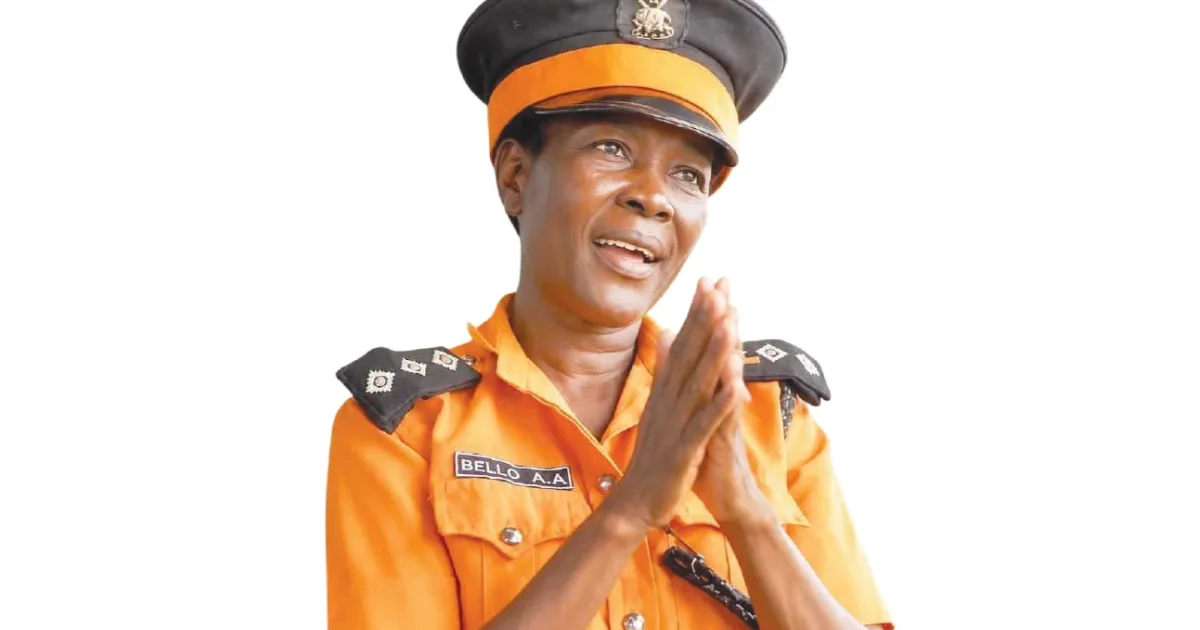
Popular traffic warden in Ogun State, Anifat Bello, who recently retired after 35 years in service, tells AYOOLA OLASUPO about her memories of danger, discrimination, unexpected friendships and a career she never initially planned to pursue
Congratulations on your retirement as a traffic warden. What inspired you to join the service?
Firstly, I’m from Idowa in Ijebu-Ode, Ogun State, and I worked as a traffic warden at NNPC Junction, Ibara, in Abeokuta, Ogun State. What happened initially was that I wanted to further my education and obtained a form, but my uncle told me that there was a police school and that I should come and obtain their form.
I stopped at Army Children’s School and followed him to Abeokuta to obtain the form so I could write the examination. When I finished the examination, I passed, but I was told that my height didn’t meet the requirement.
So, they asked me to come back. Later, they called me back after two months, saying that I had been admitted through the second list. It was when I got to the training school that I realised it was a traffic warden job.
I didn’t have a choice because admission for the Secretarial Studies programme in Ibadan had closed. I’m an SSCE (Senior School Certificate Examination) holder, and I wanted to further my studies in Business Administration at a school in Ibadan.
It was when I was told to do the second training, which was a six-week course, and got to the training school that I knew it was a traffic warden job. Because I didn’t have any other option, I had to stay. After the training, I was posted to Ilaro Division. That was how I started my journey.
What do you remember about your first day on duty?
I remember that I moved to Ilaro, and I met one man, my DCO, SUPOL Adebesin, who is late now. He treated all of us posted there as his daughters and sons. He treated us like a father. The way he related to us on my first day was like that of a father and his children, and we were so happy.
When did you join the service precisely?
I joined the service in September 1991, and I’m currently 56 years old.
What was the biggest challenge you faced while in service?
At the 1st Division in Ilaro, that period was the time of Shina Rambo (a daredevil armed robber). He used to pass through New Garage. At that time, he was not known as Shina Rambo. People used to call him Senior Boy, and whenever we heard that he was coming, everyone would run to hide and scamper for safety.
We could only come out when he had passed. Another thing is that between 1997 and 1998, when I was posted to Iyana Mortuary, a vehicle knocked me down. I was rushed to the Federal Medical Centre. It was then that we noticed that two of my teeth had been knocked out. I replaced them with artificial teeth, but I thank God that I’m still here today.
How did that road accident happen?
I was controlling traffic when it happened. I didn’t even know what happened until I opened my eyes in the hospital. When I opened my eyes, I saw all my bosses and colleagues from our office standing by my side.
I asked what had happened, and they told me the man said he didn’t know I was there. Although he didn’t abscond after hitting me, he even paid all my medical bills.
Traffic wardens were popularly called ‘Yellow Fever’ at a time in Nigeria. What did that nickname mean to you and your colleagues at the time?
It didn’t mean anything special to us because soldiers were called zombies, and we were called Yellow Fever. In fact, people used to call me that name, but it didn’t mean anything to me because it’s the job, I have loved doing all these years.
What was traffic control like in Nigeria when you started compared with what you experienced in your final years of service?
When I joined the service, there were not many vehicles on the roads. Back then, when we were controlling traffic, we could direct one vehicle and would have to wait another 20 minutes before another vehicle passed. But nowadays, many vehicles pass at the same time.
People often shy away from being traffic wardens. What do you think causes that?
Many people think being a traffic warden is a dirty job, whereas it is not. When people move closer to us, they will realise that most of the people in the job are educated. We have those who attended polytechnics and even universities among us.
In fact, more than half of us are educated, and there is no stress in the job, especially when one is active. One should see it as a career, and it will not be difficult for such a person.
People commended you for being a diligent officer. Have you ever panicked on the road while on duty?
Our job did not even permit us to be scared because if you’re scared, something might happen to you. Someone who wants to control traffic has to be bold.
For instance, around 9am at NNPC Junction, there are often many trucks because that is the time they come out.
If you panic and other vehicles are coming, are you going to run away? That is why one has to be bold to be a traffic warden.
Did you ever have an encounter with a road user whose experience you can never forget?
I didn’t usually have issues, but the one I can remember now happened at Iyana Mortuary here in Abeokuta. In fact, the person came back to apologise, and we are friends now. That day, he wasn’t the one driving, but I stopped the vehicle while controlling traffic.
The man then came out of the vehicle and yelled at the driver, asking why he stopped, and said that if he had been the one driving, he would have knocked me out of his way. But the other man, who was the driver, also came down from the vehicle to calm him down.
The driver told me that it was the alcohol he drank that intoxicated him. So, when the man was harassing us, people around the area surrounded and restrained him. At that time, the Commissioner of Police was passing through the route, so the man was arrested.
He later apologised, and we settled everything. But he was charged in court, where the magistrate asked if I wanted to pursue the case. I said no because his wife had come to apologise to me.
I wasn’t scared when he said he would have knocked me down because I was only focused on controlling traffic. One has to concentrate while controlling traffic. So, it was the people around him who held him back. Although I knew he was under the influence of alcohol.
How were you able to balance the demands of the job with your responsibilities and life outside work?
It was by God’s grace because He gave me the strength to do it. If anyone wants to do this job, such a person needs God and should be passionate about it. One should not allow the pressure of the job to override one’s responsibilities to one’s family. You have to be focused and plan properly.
For me, I had already planned how I was going to cope. I often set my alarm, and by either 4 am or 4:20 am, I would wake up to prepare food for my children, bathe, pray for them and let them sleep a bit more. By the time they were sleeping, I would pack their food into their lunch boxes.
In the morning, I would also give them breakfast and take them to school before heading to my station. That was how I programmed myself. One just has to sit down and plan properly because the method I used might not be convenient for another person.
How did you feel when you realised that your final day on duty had arrived?
I was very happy because some of my mates have died, while some are in the hospital. Six months before retirement, they call us to start preparing for retirement at the headquarters.
Some of my colleagues with whom we started the retirement process in March this year are even dead now. Some are calling for help because they are sick. That is why I am very happy, and I give glory to God for allowing me to witness that day.
Your last-day video has attracted considerable attention online, and people are touched by your departure. How does that make you feel?
Everything is by God’s power. I was happy. My belief is that there is nothing I can do without God because He is the beginning and the end, and there’s nothing humans can do without God’s intervention.
Recently, many retired policemen have come out to complain that the gratuities they received were as low as N2m or N3.5m. Will you be bothered if you eventually receive such an amount?
There is nothing we can do about that since that was what those before us were receiving. We don’t have any other option than to plan on any amount I receive as gratuity. I just want to appeal to the government to have mercy on us. Some of us have spoken out, so they should also be merciful to us.
Looking back over 35 years, what are you proud of the most as a traffic warden?
I really appreciate God because a lot of people have made me their mentor, even though some of my colleagues are TRACE (Ogun State Traffic Compliance and Enforcement Agency) officers. That makes me so proud of the job.




Kano APC rally: Ahmed Bala hails TSG, Faleke, says four years not enough to consolidate Tinubu’s reforms

EPL: ‘No longer sharp, quick’ – Carragher names who to blame for Arsenal’s first goal against Chelsea

’15 Northern States Will Collapse Within Three Months’ – Ogunyemi Hits Atiku Over Subsidy Return Promise

“He married three wives so they wouldn’t conspire against him” – Pete Edochie shares uncle’s unusual strategy

“I feel like my life is under threat” – Sarah Martins calls out dispatch rider she once helped over alleged harassment

Fed Min Of Industry, Trade & Investment Records N3.07bn in Questioned Transactions as Funds Are Misapplied, Payments Bypass Controls – Secrets Reporters Nigeria

“If Peter Obi becomes President, insecurity will become a thing of the past” – Ex-military officer declares

Exclusive: No National Population Census Since 2006, Yet Agency Chairman Nasir Isa Kwarra Said He Spent ₦240 Billion To Count Nigerians – Secrets Reporters Nigeria

2027: If You Had The Guts To Challenge Sitting President, Why Didn’t You Come Out? – Sambo Fires Datti

“Even if you have been with fifty, it’s two” – Lady advises women on ‘lies’ to tell men who want to marry them

2027: Aiyedatiwa denies backing opposition candidates against APC

Fuel imports gulp nearly N1tn amid Dangote-importers feud

INEC, Police, Judiciary Promise Neutrality In Kebbi Ahead 2027

2027 polls: Voter register nears 100m

Egyptian TV Presenter Sarah Khalifa, 11 Others Sentenced to Death Over Drug Charges
Fuel price hits businesses in Zamfara, Niger border communities

Court jails BDC operators over unlicensed forex activities

N4.66tn liquidity surplus eases funding pressure across banks

Enugu community lifts banishment on mob attack survivor, six arraigned

Ekiti varsity pensioners demand unpaid pensions, gratuities

 Headlines23 hours ago
EPL: ‘No longer sharp, quick’ – Carragher names who to blame for Arsenal’s first goal against Chelsea
- Politics16 hours ago
2027: If You Had The Guts To Challenge Sitting President, Why Didn’t You Come Out? – Sambo Fires Datti
- News15 hours ago
Paper Promises vs. Real Pulses: Why Nigeria’s Hypertension Crisis Demands Cash-Backing, Not Just Budget Speech-Making – Professor Emmanuel Alhassan and LISDEL
- News15 hours ago
Stolen funds? ₦76 Billion Paid Out To Non Existing Poor Nigerians By Bola Tinubu Government Through Nigeria’s Cash Transfer Programme – Secrets Reporters Nigeria
- Entertainment19 hours ago
“The lady fell from her seat and started crying” — Man recounts dramatic moment after ₦5 million donation in church
- News5 hours ago
Evening recap: FG to give Nigerian shipowners $25m, Drivers, cooks, traders can own refinery shares, other top stories
- Viral18 hours ago
Nigeria Returns Ex-Pres. Koroma To Sierra Leone After Over 2 Years
- News22 hours ago
RCICA Lagos: ₦303 Million Assets Uninsured, ₦7.7m Payments Tied to Regulatory Breaches Under the Leadership Of Wilfred Ikatari – Secrets Reporters Nigeria