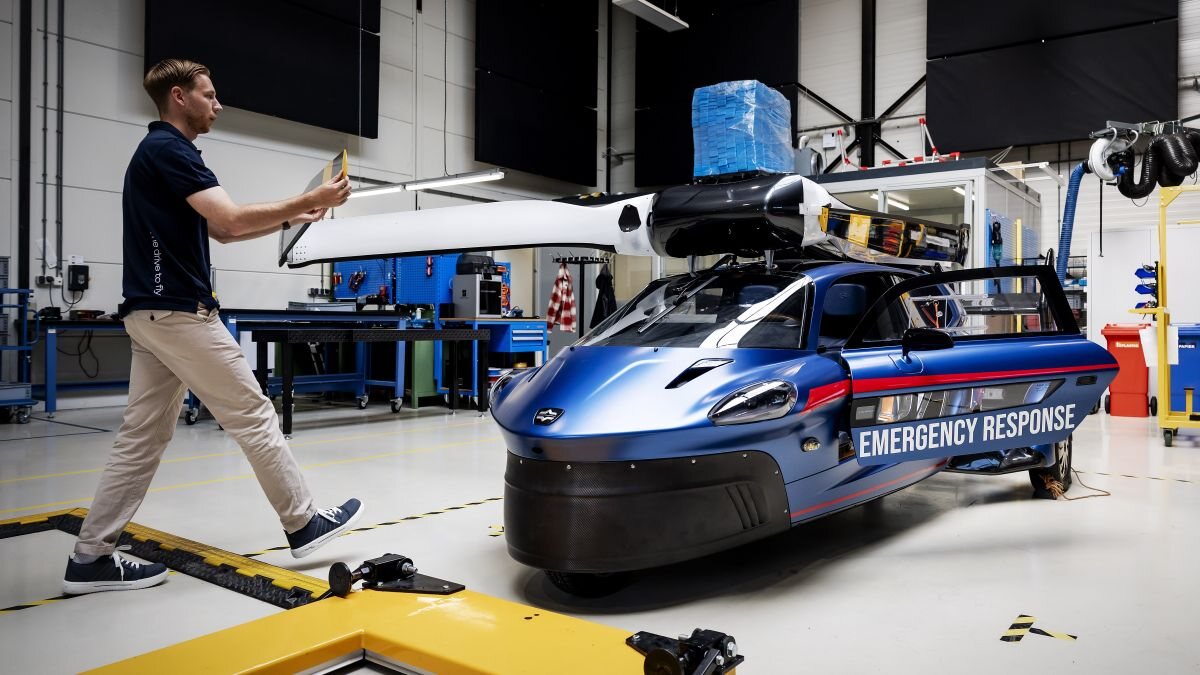
Dutch flying car manufacturer PAL-V has received approval to begin producing aviation products in Europe.
The European Union Aviation Safety Agency granted the company Production Organisation Approval.
The approval confirms that PAL-V has the facilities, staff and quality-control systems needed to manufacture airworthy products.
However, the PAL-V Liberty has not yet received full certification for commercial flight. The company must complete more tests before delivering it to customers.
Chief executive Robert Dingemanse expects the testing and certification process to take about 18 months.
“Now that EASA approval is in, we will really start producing the first cars soon,” Dingemanse said.
The company expects to make its first deliveries in 2028.
PAL-V began developing the vehicle nearly two decades ago. The Liberty received approval for road use in Europe in 2020, but its planned commercial launch faced several delays.
The company previously targeted 2021, followed by 2025 and 2026.
The Liberty combines a three-wheeled road vehicle with a two-seat gyroplane. Its rotor blades fold away when the owner wants to drive it on public roads.
The vehicle can reach 160 kilometres per hour on the road. In the air, it has a maximum speed of 180 kilometres per hour and a range of about 500 kilometres.
Prices range from €299,000 to €499,000.
PAL-V says it has enough reservations to fill its first three years of production. Reports indicate that the first 250 vehicles have already attracted buyers.
Emergency services, police forces and military organisations account for about half of the early customers. Maintenance specialists and private buyers have also placed orders.
The Liberty will follow the same aviation rules as other aircraft. Owners cannot take off from ordinary roads or use the vehicle to escape traffic jams.
In the Netherlands, it will only be able to take off and land at approved airfields. The country currently has about 20 suitable locations.
Drivers will need the correct road licence. Anyone flying the vehicle will also need a gyroplane pilot licence.
The approval allows PAL-V to begin manufacturing. Final flight certification will determine whether customer deliveries can start in 2028.