News
China rejects Taiwan independence claim, defends UN resolution

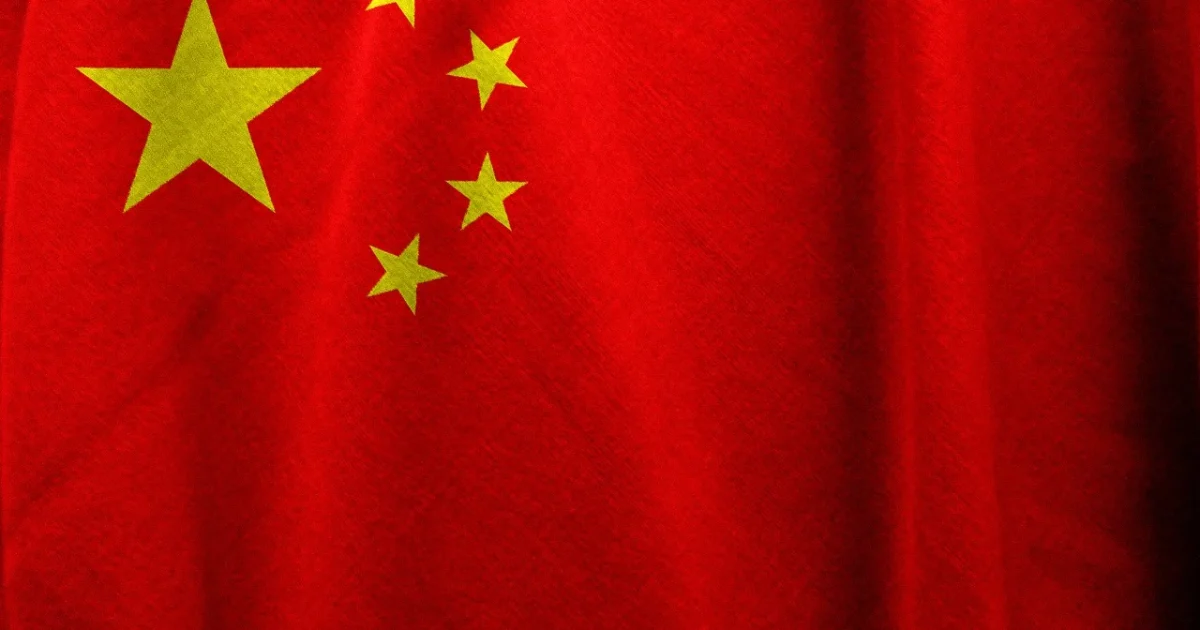
China has rejected Taiwanese President Lai Ching-te’s claim that Taiwan is a sovereign independent nation, insisting that the island remains an “inalienable part of China’s territory”.
Chinese Foreign Ministry spokesperson, Mao Ning, made the position known on Tuesday during a regular press conference in Beijing while responding to questions on Lai’s remarks concerning United Nations General Assembly Resolution 2758.
According to a copy of the press conference speech made available to our correspondent in Abuja by the Chinese Embassy in Nigeria, Lai had reportedly accused China of distorting the meaning of the resolution, arguing that it only concerns the representation of the People’s Republic of China at the United Nations and does not address Taiwan.
But Mao dismissed the claim, saying China’s position on Taiwan was supported by historical and legal instruments, including the 1943 Cairo Declaration and the 1945 Potsdam Proclamation.
“There is but one China in the world, and Taiwan is an inalienable part of China’s territory. This is an unshakable fact grounded in both history and law,” Mao said.
She said the Cairo Declaration, issued by China, the United States and the United Kingdom in 1943, explicitly stated that Taiwan, which had been taken by Japan, would be restored to China.
According to her, the Potsdam Proclamation of 1945 reaffirmed that the terms of the Cairo Declaration would be implemented.
“This series of instruments with legal effect under international law has all clearly affirmed China’s sovereignty over Taiwan,” she said.
Mao also cited UNGA Resolution 2758, adopted in 1971, arguing that it reaffirmed the one-China principle and settled the question of China’s representation at the United Nations.
She quoted the resolution as saying it “decides to restore all its rights to the People’s Republic of China and to recognize the representatives of its Government as the only legitimate representatives of China to the United Nations.”
Mao argued that the resolution settled the representation of the whole of China, including Taiwan, at the UN.
“From political, legal and procedural aspects, the resolution resolved once and for all the question of the representation of the whole of China, including Taiwan, in the UN,” she said.
“It made clear that there is only one seat of China in the United Nations, and there is no such thing as ‘two Chinas’ or ‘one China, one Taiwan.’”
The spokesperson further rejected the possibility of Taiwan becoming an independent country, accusing the Lai administration of deliberately distorting the UN resolution in pursuit of what she described as “Taiwan independence”.
“Taiwan has never been a country and will never be a country.
“The Lai Ching-te authorities’ deliberate distortion of UNGA Resolution 2758 once again revealed their separatist nature for ‘Taiwan independence,’ ” she said.
She added that statements from the Taiwanese authorities would not alter what Beijing described as the historical and legal status of Taiwan.
“Their rhetoric will not change the historical and legal fact that the two sides of the Taiwan Strait belong to one and the same China, nor will it undermine the international community’s steadfast commitment to one China,” Mao said.
The Taiwan question remains one of the most sensitive issues in China’s foreign relations, with Beijing maintaining that Taiwan is part of China and opposing any move towards formal independence.
The Chinese Foreign Ministry in its briefing, also touched on China’s relations with Japan, Qatar and Nepal, as well as its efforts to expand artificial intelligence capacity-building in developing countries.
On Japan’s recent comments regarding the removal of a monument commemorating victory over Japanese militarism and its position on the “Enemy State Clauses” in the UN Charter, Mao said Japan should address its wartime history appropriately.
“To view and treat history correctly is a key gauge of Japan’s commitment to peaceful development,” she said.
Mao maintained that the clauses, which concern states defeated in the Second World War, remained valid, despite Japan’s argument that they were obsolete.
“The Japanese side should use history as a mirror, make a clean break with militarism, and earn trust from its Asian neighbors and the rest of the world with concrete actions,” she said.
On Qatar, Mao described the country as a strategic partner and said China attached great importance to bilateral relations.
She said Qatari Prime Minister and Minister of Foreign Affairs Sheikh Mohammed bin Abdulrahman Al Thani was visiting China from September 7 to 8 and had held talks with Chinese Premier Li Qiang.
Mao said Beijing viewed the visit as an opportunity to advance bilateral relations, adding that further details would be released through official readouts.
On artificial intelligence, Mao said China was implementing an initiative announced by President Xi Jinping to provide developing countries with 5,000 opportunities for AI training and seminar programmes over the next five years.
She said China was hosting a Workshop on AI Capacity-Building at Peking University from September 7 to 12 as part of efforts to implement its AI Capacity-Building Action Plan for Good and for All.





EPL: ‘No longer sharp, quick’ – Carragher names who to blame for Arsenal’s first goal against Chelsea

Oyo 2027: Civil servants wait for seven to 10 years before receiving entitlements – ADC guber candidate

2027: If You Had The Guts To Challenge Sitting President, Why Didn’t You Come Out? – Sambo Fires Datti

Evening recap: FG to give Nigerian shipowners $25m, Drivers, cooks, traders can own refinery shares, other top stories

CBN Deputy Governor Emem Usoro Who Was Side Chic To A Married Man Accused Of Watching Him Take His Last Breath, Buried Him Alone And Took His Death Certificate From His Wife – Secrets Reporters Nigeria

Paper Promises vs. Real Pulses: Why Nigeria’s Hypertension Crisis Demands Cash-Backing, Not Just Budget Speech-Making – Professor Emmanuel Alhassan and LISDEL

‘After Working With Peter Obi, You Risk Suffering Post-political Identity Crisis’ – Kenneth Okonkwo Defends Datti

Exclusive: Niger Delta Suffers While MDGIF Director Oluwole Adama Hides N12.9 Billion Natural Gas Fund – Secrets Reporters Nigeria

APC challenges Adeleke’s August win as Osun tribunal posts petitions

Ibiyeomie Rejects Offerings From Internet Fraudsters, Tells Them To Leave » Apples Bite Int’l Magazine

Tinubu demands affordable credit for businesses after bank recapitalisation

Putin assures Trump that Moscow doesn't have aggressive plans toward Europe, Kremlin says

Nicaragua hands gold concession to sister firm of US-sanctioned Chinese miner

Alausa Commends NYSC Digital Innovations to Curb Fraud

Tinubu Celebrates PFN President Wale Oke On 70th Birthday

CBN tightens surveillance on banks over terrorism financing

A wind-fueled wildfire forces hundreds from homes in Turkey as firefighters battle flames

Evening recap: Peter Obi’s convoy blocked in Benue, Tinubu mourns media aide, other top stories

More than 400 flights disrupted by UK tech glitch

LIV Golf files for Chapter 11 bankruptcy, seeks new player-first ownership structure

 Headlines15 hours ago
Oyo 2027: Civil servants wait for seven to 10 years before receiving entitlements – ADC guber candidate
- News23 hours ago
Evening recap: FG to give Nigerian shipowners $25m, Drivers, cooks, traders can own refinery shares, other top stories
 News21 hours ago
CBN Deputy Governor Emem Usoro Who Was Side Chic To A Married Man Accused Of Watching Him Take His Last Breath, Buried Him Alone And Took His Death Certificate From His Wife – Secrets Reporters Nigeria
- Politics13 hours ago
‘After Working With Peter Obi, You Risk Suffering Post-political Identity Crisis’ – Kenneth Okonkwo Defends Datti
 News20 hours ago
Exclusive: Niger Delta Suffers While MDGIF Director Oluwole Adama Hides N12.9 Billion Natural Gas Fund – Secrets Reporters Nigeria
- News18 hours ago
Ibiyeomie Rejects Offerings From Internet Fraudsters, Tells Them To Leave » Apples Bite Int’l Magazine
- News14 hours ago
Shettima Tasks Transporters on Peaceful Mobilisation for Tinubu’s 2027 Re-election Bid » Apples Bite Int’l Magazine
- News15 hours ago
Investigation: SEEPCO’s Anthony Chukwueke Was the FG Regulator Sacked in 2007 for Improperly Awarding Oil Licenses and Is Now Chairman of the Company That Walked Away With Nigeria’s Richest Well – Part One – Secrets Reporters Nigeria