World
Trump floats renaming Lake Ontario as Lake America

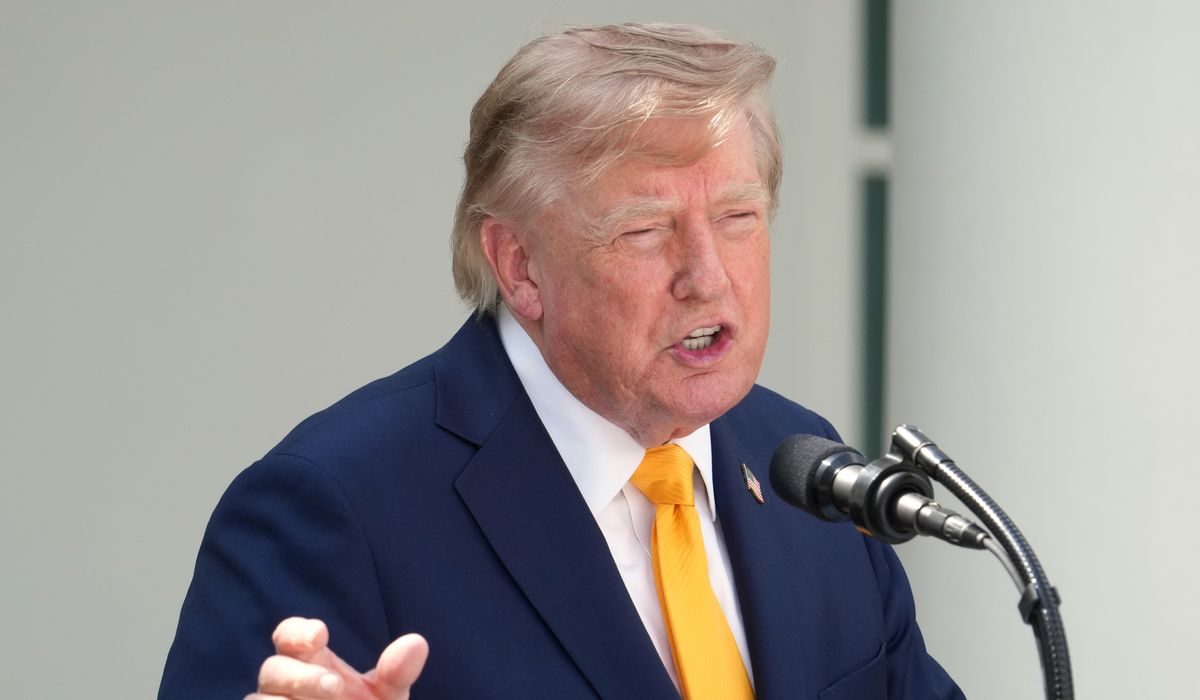
President Trump said Tuesday that he wants to rename Lake Ontario as “Lake America,” opening a new front in the trade war with Canada as Ottawa dropped the gloves and retaliated against U.S. tariffs.
Mr. Trump’s proposal deepened his war of words with Canadian Prime Minister Mark Carney. If carried out, it would mirror his contentious renaming of the Gulf of Mexico as the Gulf of America at the start of his second term.
“The United States is giving serious consideration to changing the name of Lake Ontario to Lake America in that we don’t expect to [be] doing much business with Ontario any longer,” Mr. Trump said on social media.
White House and Republican social media accounts reposted the message, suggesting it was no mere fancy and could be under consideration.
Lake Ontario, one of the five Great Lakes, lies between the state of New York and the Canadian province that shares its name, with 47% of its area in U.S. territory and the rest in Canada. Cities such as Toronto and Rochester sit along the large body of water.
For those requiring a visual aid, Mr. Trump posted a map of the lake with “Lake Ontario” crossed out and “Lake America” written in big gold letters.
SEE ALSO: ‘We don’t need Canada’: Trump threatens northern neighbor with more tariffs on cars, trucks
Democrats said Mr. Trump’s idea amounted to a distraction from real issues facing Americans.
“If Donald Trump spent half as much time trying to make life more affordable as he does trying to rename bodies of water, working families might actually be able to afford their rent, utility bills and food costs,” said Rep. Timothy M. Kennedy, a New York Democrat whose district includes Buffalo and Niagara Falls. “His pathetic proposal to rename Lake Ontario to ’Lake America’ proves what we already know him to be: a petty, vindictive, failed president.”
Mr. Trump proposed the name change after imposing 50% tariffs on about $20 billion worth of Canadian goods on Saturday. He carried out his tariff threat after trade talks with Canada collapsed.
Mr. Carney said the U.S. made unacceptable demands, so his government on Tuesday retaliated with “dollar-for-dollar” tariffs on American products, effective Sept. 8.
The counter-tariffs of 15% to 50% were tailored to match the product categories Mr. Trump targeted over the weekend.
The Canadian levies will hit U.S. dairy, fish, appliances, agricultural equipment, pulp and paper, plastics and electronics, among other items.
SEE ALSO: ‘Freudian slip’: Vance calls Canada a state when criticizing its trade relations with the U.S.
Canada will ramp up existing tariffs on select sectors, such as steel and aluminum, from 25% to 50% to match U.S. rates.
Also Tuesday, Canadian officials said they would roll out a $7.5 billion package of support for businesses hit by Mr. Trump’s tariffs.
“We stand united in our response, we stand united in our resolve, we stand united in fighting for Canada,” said Francois-Philippe Champagne, minister of finance and national revenue for Canada. “When Canadians stand together, nothing can stop us.”
Mr. Carney said talks broke down partly because the U.S. side threatened French-language protections, including a streaming-content rule that would require American platforms such as Netflix to promote French and Canadian content.
U.S. Trade Representative Jamieson Greer rejected the claim, calling it a “funny fake story.”
The Trump administration often balks at attempts by other countries to impose taxes on U.S. tech companies or to enact laws requiring the companies to behave in a certain way.
“I would never interfere with Canadians speaking French! In fact, I have never even thought of doing such a stupid thing,” Mr. Trump posted on Truth Social. “This lie was made up by a weak and ineffective Prime Minister in an attempt to gain political support, which he has totally lost, from the people of Quebec. I love French Canadians!”
Trade tensions between the U.S. and Canada have simmered since the start of Mr. Trump’s second term.
Canadian Prime Minister Justin Trudeau, who gave way to Mr. Carney in March 2025, paid a special visit to Mr. Trump’s Mar-a-Lago resort in South Florida after Mr. Trump’s election in late 2024 to thwart a tariff threat.
Mr. Trump still levied threats against Canada over fentanyl trafficking and immigration and threatened to make Canada the 51st state.
Many Canadian provinces played hardball by refusing to sell U.S. liquor, angering the Trump administration.
Although the Supreme Court struck down Mr. Trump’s use of the International Emergency Economic Powers Act to impose tariffs on other nations in February, the ruling did not affect U.S. tariffs on Canadian steel and aluminum imposed under separate authority, leaving trade tensions simmering.
Those tensions boiled over when Mr. Trump threatened 50% tariffs on various Canadian goods, including cars, hockey sticks and cement, in response to Canadian treatment of U.S. products such as alcohol, autos and dairy that the administration considered discriminatory and unfair.
He is using Section 338 of the Tariff Act of 1930, which empowers the president to impose tariffs to punish a country over trade practices the U.S. views as discriminatory.
Mr. Trump went forward with the tariffs after weekend talks fell apart at the eleventh hour. The Canadians pointed to “unacceptable” demands from the U.S. side.
“They asked too much of Canada, and offered little in return,” Mr. Champagne said.
Tariffs, which are duties on foreign goods brought to U.S. markets, are Mr. Trump’s preferred tool for economic leverage.
He says too many countries take advantage of the rich U.S. by selling products to Americans while refusing to buy U.S.-made products.
The U.S. trade deficit with Canada was approximately $48 billion in 2025, according to the U.S. trade representative.
Mr. Greer said the Canadian side started the friction by restricting sales of American alcohol and other products, and then demanded too much in negotiations.
“I don’t know if it was political for them. It certainly doesn’t make economic sense, but perhaps for political reasons,” Mr. Greer told CNBC this week.
Some economists warn that tariffs, while useful in limited cases to protect key industries, can raise consumer prices when wielded too broadly. Importers who must pay tariffs to customs officers sometimes pass along the costs to consumers.
“Canadian Prime Minister Carney’s retaliatory tariffs come from understandable feelings of frustration and betrayal but will not change Trump’s behavior. Restraint is difficult in the face of such taunting but is probably the right thing to do,” said Ryan Young, a senior economist at the free market Competitive Enterprise Institute, adding that Congress and the courts should rein in Mr. Trump’s trade actions. “In the meantime, American and Canadian consumers and businesses will pay more for cars, energy, food and other products.”
Canadian officials took pains Tuesday to say they see Americans as friendly neighbors, despite tensions at the political level.
Ontario Premier Doug Ford, who recently told Mr. Trump to “kiss his a—,” said the U.S. is better off cooperating with Canada than imposing tariffs, which could lead to higher consumer costs and layoffs while forcing vendors to seek inputs from places such as China.
“I want to buy more products, I want to ship more products to the U.S. and create more jobs,” Mr. Ford said on Fox Business’ “Varney & Co.” “Canadians love Americans. We’re your No. 1 customer.”
Mr. Trump said Mr. Ford was full of bluster and that Canadian officials were the ones to blame for the impasse.
“Canada has been ’Ripping Off’ the U.S.A. for decades. They have been charging our Farmers 400% Tariffs, and more,” Mr. Trump said Tuesday on social media. “I deal with many countries, and Canada is easily the most difficult and unreasonable. They feel entitled, but they are not a State, and will be entitled no longer!”
Mr. Trump’s threat to rename one of the Great Lakes mirrors his Inauguration Day directive to the Department of the Interior to update maps and databases to rename the Gulf of Mexico as the Gulf of America.
Other countries still use the old name, and The Associated Press’ refusal to use the updated name in its reporting led to a legal standoff with the White House over press access, which a federal judge resolved in April 2025 by ordering the White House to restore the AP’s access.


How Obasanjo Considered Abandoning Second-Term Bid After South African President Got Wind Of Coup Plot – Donald Duke

‘It Is A Disgrace Tinubu Doesn’t Trust Anyone’ – Melaye Slams President’s Self-Appointment As Campaign Chairman

“A governor once gave Wizkid a bag full of dollars” – Kizz Daniel’s bouncer reveals what singer allegedly did next

“My brother Davido, I love you” — Gov. Okpebholo’s aide who banned Davido from entering Edo apologises

“I spent months praying for God to take my husband’s money away” — Woman opens up on painful marriage

Atiku slams Oyedele, demands details of $5bn Abu Dhabi loan

Morning recap: KWAM1 breaks down in tears over Ogogo’s death, govs face questions as FAAC payouts hit N47tn, other top stories

Economic Impact of Extracted Precious Metals from Electronic Waste in South Western, Nigeria; Review of Extraction Methods

₦394.86m Financial Irregularities: Nigeria’s Bata Consulate Paid Unapproved Subsidy, Retained Public Funds – Secrets Reporters Nigeria

23 years of operation: Globacom as the architecture of value and the audacity to never settle for less

2027: ‘We’re Putting Proposal For Peter Obi, Atiku To Consider Single-Candidate’ – Lukman

Oyebanji reappoints retired Ekiti Accountant-General

Africa knows who its true friends are – and they’re not in Washington

Atiku’ll restore petrol subsidy, phase it out later — Spokesman

Man United’s Bruno Fernandes wins 2026 PFA Players’ Player of the Year award
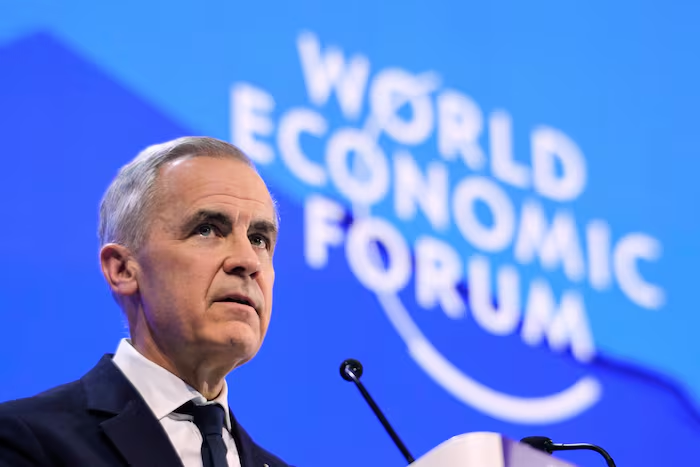
Canada targets steel, fish and hundreds of other goods as Trump trade war escalates

Tinubu Issues Fresh Order Following Mass Abduction in Niger State

Build local tech solutions, NASENI urges youths

Trump floats renaming Lake Ontario as Lake America

US Secret Service aware of Iranian video threat to assassinate Barron Trump

 Special Report18 hours ago
23 years of operation: Globacom as the architecture of value and the audacity to never settle for less
- News21 hours ago
₦394.86m Financial Irregularities: Nigeria’s Bata Consulate Paid Unapproved Subsidy, Retained Public Funds – Secrets Reporters Nigeria
- News12 hours ago
BAECC Reaffirms Commitment to the Timely Delivery of the Benin-Asaba Expressway Project Following Recent Protest
- Viral12 hours ago
“And this guy collected my 1k” — Man discovers ‘young boy’ he gave transport money was actually the groom
- Viral11 hours ago
“Something no clear here” — Lady recounts how friend ended relationship with millionaire ex after strange setbacks
- Headlines7 hours ago
Ogun community raises alarm over alleged destruction of farmlands by land grabbers, begs Gov Abiodun to intervene
- Politics6 hours ago
Fuel Subsidy: They Don’t Have Patience To Study What Atiku Is Proposing – Ologbondiyan Knocks Tinubu’s Govt
- Special Report19 hours ago
Niger mosque attacks: 30 worshippers killed, over 60 abducted