World
Pakistan, Iran signal progress on reviving Islamabad memorandum after high-level talks

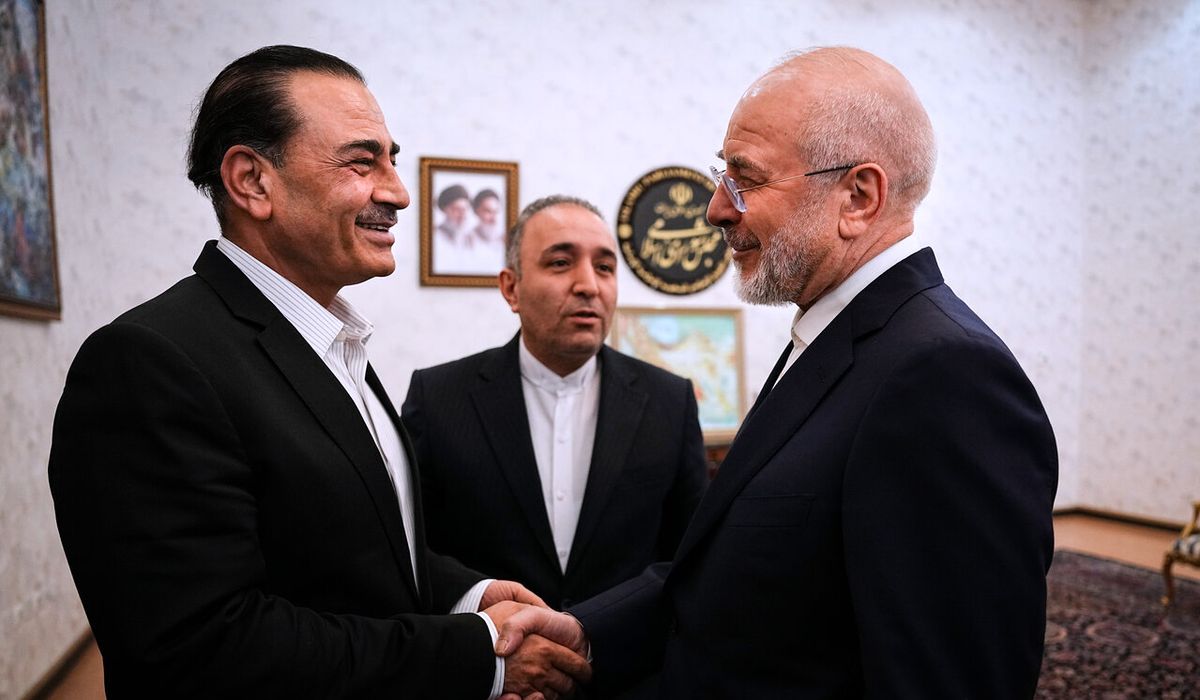
Key Pakistani officials on Tuesday cited significant progress toward reviving the Islamabad memorandum of understanding after meeting with several top Iranian officials, even as public diplomacy between the U.S. and Iran stalls.
Pakistani army chief, Field Marshal Asim Munir, and Interior Minister Mohsin Naqvi traveled to Iran on Monday for a whirlwind visit that saw them meeting with Iranian President Masoud Pezeshkian, parliament Speaker Mohammad Bagher Ghalibaf and Foreign Minister Abbas Araghchi.
Notably, Mr. Munir also met with Mohsen Rezaei, a member of the Supreme National Security Council and a top adviser to Supreme Leader Mojtaba Khamenei, who ultimately has the final say on Iranian diplomatic policy.
Mr. Naqvi said the meeting with Mr. Pezeshkian was particularly important and could be a step toward restoring regional stability.
“We remain hopeful that this momentum will help pave the way for further progress and lasting peace in the region,” he wrote on X.
Esmaeil Baghaei, spokesperson for Iran’s Foreign Ministry, said Tuesday that the meetings were focused on bilateral relations and had reached “one of their strongest stages.”
The trip by the Pakistani delegation is the second of its kind this month after Mr. Munir traveled to Tehran in early August to revive peace talks and push for a return to the Islamabad memorandum of understanding.
Mr. Munir and Mr. Araghchi have also held at least two phone calls in the lead-up to this week’s meetings.
Still, despite the diplomatic overtures from each side, it’s unlikely that the meeting will move the needle on U.S.-Iran relations as Washington advances its efforts to economically isolate Tehran, and the Islamic regime vows retaliation.
Treasury Secretary Scott Bessent announced an expansion of secondary sanctions on Monday, hoping to warn countries that trade with Iran to cut off all economic ties or face serious consequences.
“Our objective is to sever every economic lifeline that sustains this tyrannical regime until Tehran stands alone,” he said. “Iran now faces a very clear choice with only two paths before them: complete global isolation and a subsistence economy, or a path back to normalcy with an opportunity to rejoin the global economy.”


How Obasanjo Considered Abandoning Second-Term Bid After South African President Got Wind Of Coup Plot – Donald Duke

‘It Is A Disgrace Tinubu Doesn’t Trust Anyone’ – Melaye Slams President’s Self-Appointment As Campaign Chairman

“A governor once gave Wizkid a bag full of dollars” – Kizz Daniel’s bouncer reveals what singer allegedly did next

“I spent months praying for God to take my husband’s money away” — Woman opens up on painful marriage

“My brother Davido, I love you” — Gov. Okpebholo’s aide who banned Davido from entering Edo apologises

Atiku slams Oyedele, demands details of $5bn Abu Dhabi loan

Economic Impact of Extracted Precious Metals from Electronic Waste in South Western, Nigeria; Review of Extraction Methods

Morning recap: KWAM1 breaks down in tears over Ogogo’s death, govs face questions as FAAC payouts hit N47tn, other top stories

₦394.86m Financial Irregularities: Nigeria’s Bata Consulate Paid Unapproved Subsidy, Retained Public Funds – Secrets Reporters Nigeria

23 years of operation: Globacom as the architecture of value and the audacity to never settle for less

FULL LIST: CAF unveils draw for 2027 U-23 AFCON qualifiers

THROWBACK: How Ogogo, Ireti navigated 90s Nollywood stardom

DSS Alert: Sokoto Universities Face New Terror Threat from Kidnappers

Canada hits US goods with tariffs of up to 50 per cent as trade war escalates

Sokoto gov’s aide urges North-West unity to fight banditry

“If you see me endorsing any politician, just know that I’m hustling”

VIDEO: Umahi inspects Benin-Agbor-Asaba expressway, apologises to commuters

NBA Confab: NDDC boss advocates diversification of Niger Delta economy

Osinbajo advocates people-centred reforms at NBA conference

Judge rejects Epstein ex-girlfriend Ghislaine Maxwell’s bid for prison release

 News23 hours ago
Economic Impact of Extracted Precious Metals from Electronic Waste in South Western, Nigeria; Review of Extraction Methods
- News19 hours ago
₦394.86m Financial Irregularities: Nigeria’s Bata Consulate Paid Unapproved Subsidy, Retained Public Funds – Secrets Reporters Nigeria
- Special Report16 hours ago
23 years of operation: Globacom as the architecture of value and the audacity to never settle for less
- News9 hours ago
BAECC Reaffirms Commitment to the Timely Delivery of the Benin-Asaba Expressway Project Following Recent Protest
- Viral10 hours ago
“And this guy collected my 1k” — Man discovers ‘young boy’ he gave transport money was actually the groom
- Viral8 hours ago
“Something no clear here” — Lady recounts how friend ended relationship with millionaire ex after strange setbacks
- Headlines4 hours ago
Ogun community raises alarm over alleged destruction of farmlands by land grabbers, begs Gov Abiodun to intervene
- Politics4 hours ago
Fuel Subsidy: They Don’t Have Patience To Study What Atiku Is Proposing – Ologbondiyan Knocks Tinubu’s Govt