Viral
Mary Habila Laid to Rest in Kaduna as Autopsy Controversy Remains Unresolved

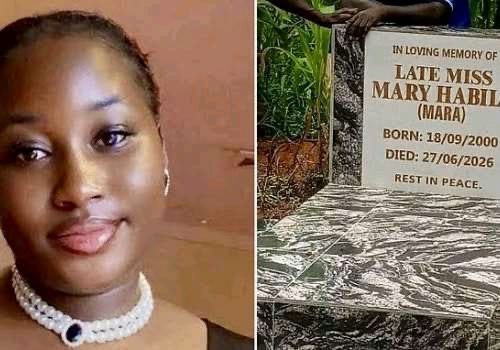
KADUNA: Mary Habila, the 26-year-old woman whose death at the Ebonyi State residence of Minister of Works, Senator Dave Umahi, sparked controversy and calls for an independent forensic investigation, has been buried in Nok, Kaduna State.
Habila was laid to rest quietly on Friday, August 21, almost two months after her death on June 27 at the minister’s residence in Uburu, Ohaozara Local Government Area of Ebonyi State.
Her death triggered a dispute involving her family, the police, the minister and other stakeholders over the circumstances surrounding her death and whether her remains should undergo an autopsy.
The controversy also attracted the attention of civil society organisations and the Southern Kaduna Peoples Union, which called for an independent forensic examination to establish the cause and manner of her death.
The burial followed an affidavit filed by Habila’s father, Tanko Habila Wisdom, in which he withdrew from the legal proceedings and opposed the proposed autopsy.
His decision effectively removed the family’s support for the forensic examination, despite earlier efforts by the police to have the procedure conducted.
Senator Umahi had confirmed that Habila died at his residence but denied any wrongdoing in connection with her death.
The minister initially described Habila as a physiotherapist who had reportedly been seconded from David Umahi Federal University of Health Sciences to the Federal Ministry of Works.
Questions were later raised over her professional status after the Nigeria Society of Physiotherapy reportedly said her name was not on its register of licensed physiotherapists. She was subsequently identified as a Community Health Extension Worker.
The controversy intensified following reports from police and medical sources that Habila’s body showed signs consistent with blunt force trauma.
The Ebonyi State Police Command had maintained that a forensic autopsy was necessary before the remains could be released for burial. The position was reportedly supported by legal advice from the Ebonyi State Director of Public Prosecutions, J.U. Chukwu.
The DPP reportedly stated that available evidence indicated that Habila had been found “laid lifeless on the floor of her apartment naked with blood stain on her nose and mouth.”
According to the legal advice, a post-mortem examination could provide important evidence to establish the cause of her sudden and unexplained death.
The disagreement over the autopsy subsequently delayed the burial.
Habila’s family initially opposed the examination and demanded the release of her remains. It later agreed to the procedure on the condition that the investigation be transferred from Ebonyi State to the Nigeria Police Force Headquarters in Abuja.
The police subsequently took over the investigation, while the remains were transferred to the National Hospital, Abuja, where a forensic examination was expected to take place.
However, following the family’s subsequent withdrawal from the legal proceedings and renewed opposition to the autopsy, Habila was eventually buried without the publicly demanded forensic examination being resolved.
Her burial has therefore brought an end to the prolonged wait for her remains, but questions surrounding the circumstances of her death remain unresolved.


EPL: ‘It showed today’ – Owen Hargreaves pinpoints major issue with Man United after Hull City defeat

Financial Mismanagement Rocks Federal College of Education, Yola, as SecretsReporters Uncovers ₦38.07m Worth of Financial Irregularities – Secrets Reporters Nigeria

JUST IN: Bello, They Should Ask Him What Was He Trying To Achieve Burning Cap With Symbol Of President _ Jibrin

“The bullet struck exactly where she was sleeping” – Nigerian doctor recalls sister’s miraculous escape from death

“Tinubu Names Yari DG, Uzodimma Secretary Of 2027 APC Presidential Campaign Council” — Akpabio, Gbajabiamila, Oshiomhole Get Key Roles

“Stop Making False, Defamatory Statements About Me And My Family” — Sheggz Reportedly Serves Bella Okagbue Cease-And-Desist Notice Amid Messy Breakup

“Is This What Lagos Housing Crisis Has Become?” — Viral Video Of People Living Under Flyover Sparks Outrage, Disbelief

Tinubu unveils APC 2027 presidential campaign council, appoints Yari DG

“I hope she won’t end up paying” – Phyna reacts to Sheggz’s legal action, asks fans to pray for Bella

Death toll rises to 65 in Sokoto boat mishap

Musawa mourns Ogogo, hails his contribution to Yoruba cinema

US, Nigerian Forces Strengthen Security Partnership Through UAS Training In Bauchi

NBET Exposed: ₦259m Unrecovered, $69.3m Power Debt, Missing Vehicles as Agency Operated Without Audited Accounts – Secrets Reporters Nigeria

ICYMI: Kwankwaso urges Yari to reconsider Tinubu campaign council role

‘Mere Lies’— Sheik Jingir Denies Hate Speech Against Christians

Trump Vows Economic War As Iran Threatens To Halt All Oil Exports

Fresh Details Emerge as Atiku, Obi Make Moves on Campaign Councils

New Zealand moves to ban social media for under-16s

“I have been chilling with my girls since morning” — Woman shows off impressive eggs from her poultry farm

Religion must unite, not divide Nigerians — Fashola

 News15 hours ago
Financial Mismanagement Rocks Federal College of Education, Yola, as SecretsReporters Uncovers ₦38.07m Worth of Financial Irregularities – Secrets Reporters Nigeria
- Entertainment23 hours ago
“The bullet struck exactly where she was sleeping” – Nigerian doctor recalls sister’s miraculous escape from death
- Metro17 hours ago
“Tinubu Names Yari DG, Uzodimma Secretary Of 2027 APC Presidential Campaign Council” — Akpabio, Gbajabiamila, Oshiomhole Get Key Roles
- Metro16 hours ago
“Stop Making False, Defamatory Statements About Me And My Family” — Sheggz Reportedly Serves Bella Okagbue Cease-And-Desist Notice Amid Messy Breakup
- Metro17 hours ago
“Is This What Lagos Housing Crisis Has Become?” — Viral Video Of People Living Under Flyover Sparks Outrage, Disbelief
- Entertainment14 hours ago
“I hope she won’t end up paying” – Phyna reacts to Sheggz’s legal action, asks fans to pray for Bella
- Metro17 hours ago
“Protect Your Sources And Methods, But Do Not Protect The Truth From Nigerians” — Atiku Tells FBI Over Tinubu Records
- Metro13 hours ago
“NDLEA Asks Court To Deny Bail To Three Mexicans, Seven Nigerians In ₦480bn Meth Lab Case” — Alleges Flight Risk