Special Report
Dangote Refinery halts sale of petrol to importers over quality concerns

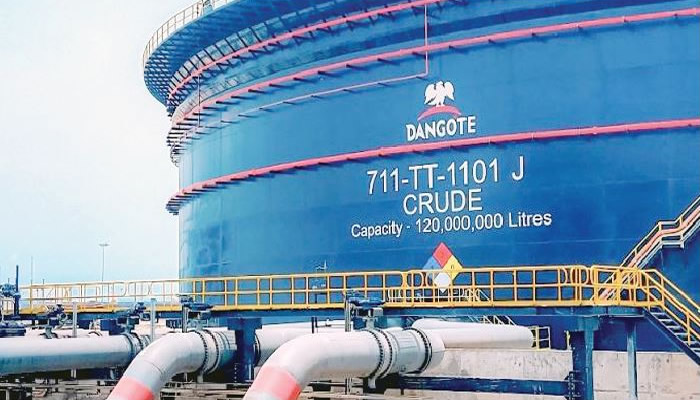
The Dangote Petroleum Refinery and Petrochemicals has restricted the sale of Premium Motor Spirit (PMS) to major marketers that continue to import petrol into Nigeria, amid concerns over product quality, market transparency and the integrity of products supplied under the Dangote brand.
The measure, which took effect late last week, reflects growing concerns over the continued entry of imported PMS into a market where substantial domestic refining capacity is now available.
Sources familiar with the refinery’s position said the immediate concern was that some marketers were allegedly blending imported PMS with products purchased from the Dangote Refinery before distributing the blended product to the market.
A source noted that the refinery is concerned that such practices could make it difficult to distinguish between products supplied directly by the refinery and those subsequently blended or handled by third parties.
“It is difficult to understand why we would invest heavily in producing high-quality petroleum products for Nigerians, only for those products to be mixed with imported products of uncertain quality and the resulting product to be associated with the refinery,” a source familiar with the refinery’s position said.
The refinery has also raised concerns over the absence of adequate laboratory and quality-control infrastructure for independently verifying and certifying the specifications of imported petroleum products entering the Nigerian market.
The development comes as Nigeria’s downstream petroleum sector undergoes a structural transition from longstanding dependence on imported refined products to greater reliance on domestic refining.
With a capacity of 700,000 barrels per day, the Dangote Petroleum Refinery has emerged as a major supplier of refined petroleum products to both the Nigerian and international markets.
The refinery says its products meet internationally recognised quality specifications.
The United States Energy Information Administration recently identified the Dangote refinery as a major factor behind the sharp increase in Nigeria’s seaborne petroleum product exports.
According to the EIA, Nigeria’s seaborne petroleum product shipments averaged 561,000 barrels per day in the second quarter of 2026, compared with an annual average of 79,000 barrels per day in 2023.
Meanwhile, Dangote Petroleum Refinery’s jet fuel has gained traction in international markets, including the United States and Europe.
The refinery has also emerged as a major external supplier of jet fuel to Europe, surpassing traditional exporters from the United States and the Middle East in recent months.
The latest restriction highlights the growing competition between locally refined products and imported petroleum products as Nigeria’s downstream sector adjusts to increased domestic refining capacity.


DSS Directs Counsel To Seek Adjournment In Sowore’s Cybercrime Trial Until After 2027 Presidential Election

2027: Massive crowd storms Kaduna as ‘Relax, Tinubu Is Fixing Nigeria’ mobilises Northwest for Tinubu [PHOTOS]

“We Will Examine The Records And Investigate Any Credible Misconduct” : INEC Responds To NDC’s Allegation Of Smuggled Candidates

NIS announces dates, venues for UK passport intervention exercise – The Witness Nigeria

Kidnappers demand N20m ransom for abducted NYSC members

IPOB Gives Nigerian Government 14-Day Ultimatum Over Nnamdi Kanu’s Appeal, Threatens Election Boycott

Embattled ex-Bayelsa gov, Timipre Sylva dumps APC, slams party’s leadership

At least eight dead after ferry capsizes off northern Cyprus

DELTA @35: EREYITOMI HAILS OBOREVWORI, DALTANS, URGES UNITY FOR GREATER DEVELOPMENT

Access Holdings board approves H1 2026 financial statements

Schools reopen in Congo’s Ebola epicenter despite concerns from parents and teachers

Drones helped find people after Nepal floods but the search inside hydropower tunnels is a challenge

Schools reopen across Cuba as fuel, water and power shortages persist

7 Things To Know About JAMB-WAEC’s New One-Off O’Level Result Verification

Hired Lagos Crowd Calls Out APC Over ₦1,500 Payment After a Hard Day’s Job Dancing and Campaigning for Party

Falconets held by Korea in pre-World Cup friendly

North Central insecurity threatens food security of 200m Nigerians – Alia

JAMB, WAEC Introduce One-Off ₦4,000 WASSCE Verification For Admissions

Show No Mercy to Opposition Parties, Governor Nwifuru Charges New LG Chairmen

Peter Obi Meets Canadian High Commissioner Over Nigeria’s 2027 Elections

 Politics21 hours ago
NFF Presidential Race: Who Qualifies to Lead Nigerian Football?
- Viral22 hours ago
Ita Enang Questions Itu Council Spending Over Poor Roads, N9.45bn FAAC Allocation
- Politics5 hours ago
Ex-IYC President Advises Tinubu To Channel Subsidy Removal Savings Into Rehabilitating Refineries, Strengthening LG Autonomy
- Politics22 hours ago
Tinubu Has No Criminal Record, FBI Files Don’t Prove Otherwise
- Metro22 hours ago
‘End Of An Era’, Fans Mourn Messi’s International Football Retirement
- Society18 hours ago
Adeleke happy with UNIOSUN’s meteoric rise, extends VC’s tenure by two years, inaugurates new governing council
- Politics22 hours ago
Military Rescues 21 Kidnap Victims, 15 NYSC Members, in Kogi
- Politics24 hours ago
NFF Charges Falconets To Defeat Korea Republic As