Politics
Another Fulani Kingpin Plays the Victim in ‘Peace’ Negotiations in Katsina State

‘There Are Terrorists Who Want Peace,’ Says National Security Advisor
By Suleman Ayuba and Onibiyo Segun
(Kankara, Katsina State) – A wanted Fulani bandit-terrorist linked to years of killings and kidnappings has returned to the negotiating table in Katsina State, exposing the pattern of bad-faith talks that allow armed groups to regroup after defeats while communities absorb the cost.
These are not genuine peace processes. They are propagandistic negotiations that treat mass killers as aggrieved parties, grant them breathing space, and rarely demand surrender or justice, according to security experts interviewed by TruthNigeria.
National Security Adviser Nuhu Ribadu, chief of the Nigerian team that is engaging with the White House’s U.S. Nigeria Working Group, has publicly defended dialogue and engagement with armed bandit leaders. In remarks in early 2026, Ribadu described some terrorists as “our brothers,” stating: “Whether we like it or not, there are terrorists in Nigeria who want peace. They are our brothers. We must seek dialogue and understanding.”
Unreported by mainstream U.S, media is the fact that Fulani-dominated criminal gangs kill far more Christian residents annually than the formal insurgencies. The Observatory for Religious Freedom in Africa (ORFA) documented that Fulani Terror Groups accounted for 44 percent of civilian deaths from late 2019 to 2025—four times the combined toll of Boko Haram and ISWAP (12 percent). Christians died at roughly 4.4 times the rate of Muslims when adjusted for population in affected states.
The Nigerian Federal Government’s special relationship with Fulani criminal networks dates back to the Buhari administrations (2015-2023). Nigerian media repeatedly have noted Abuja’s preference for so-called non-kinetic approaches with so-called Fulani bandits even as kinetic pressure – including deadly air strikes – is the fate of jihadist groups. The difference between the two groups is chiefly ethnic: virtually all bandit-terrorists are Fulani tribe; Boko Haram and Islamic State of West Africa are predominantly Kanuri ethnicity, associated with Borno State.
Security Expert: “This Is Surrender by Negotiation”
Colonel Akah Ujah (rtd.), a former Nigerian Army counterinsurgency commander, told TruthNigeria that negotiating with Aleru encourages endless amnesties for criminals.
“Let’s call it what it is. This is not peace. This is surrender by negotiation,” Ujah said. “Every time we do this, we tell every other gunman: kill, kidnap, then negotiate your way back in.”
Earlier agreements across Zamfara and Katsina collapsed, because they were temporary ceasefires. Communities granted grazing and market access; armed groups released some captives; attacks later resumed. Arrests, verified disarmament, and justice were missing.
“The question should not be whether Aleru can bring peace. The question should be why the state is negotiating with someone the police declared wanted in 2020,” Ujah said. “Peace without accountability is a scam.”
Ujah insists future efforts must begin with accountability: Remove wanted men from the list only after trial, demand weapons surrender and verification—“No guns, no deal”—and target suppliers, financiers, and support networks. Security agencies must restore state authority in places such as Yankuzo, Tsafe, and Kankara rather than outsourcing it to traditional rulers and warlords.
Communities remain desperate. Dr. Samuel Joshua, a medical doctor working in Zamfara, and farmer Musa Usman both told TruthNigeria that residents want protection and justice, not agreements that collapse after months and allow networks to rebuild.
Experts in Washington speaking on background only tell TruthNigeria that Fulani criminal networks have already infiltrated the federal government which plays a dual role: enforcing the law against insurgents and less preferred bandit-terrorists, while giving a free pass to protected Fulani ethnic kingpins.
Estimates put the number of bandit gangs in the Northwest at around 100, with 10,000 to 30,000 fighters—numbers that rival or exceed those of the formal insurgencies. Yet, to the surprise of many Nigeria conflict specialists, The White House’s Nigeria Working Group has focused exclusively on Boko Haram, ISWAP, and other caliphate-seeking jihadists while stopping short of labeling Fulani bandits as terrorists, thereby perpetuating a false diagnosis that treats the deadliest civilian killers as garden-variety thieves who can be bought out by amnesties or government subsidies, according to the Centre for Democracy and Development.
Aleru Evades a Surrender through ‘Negotiation’
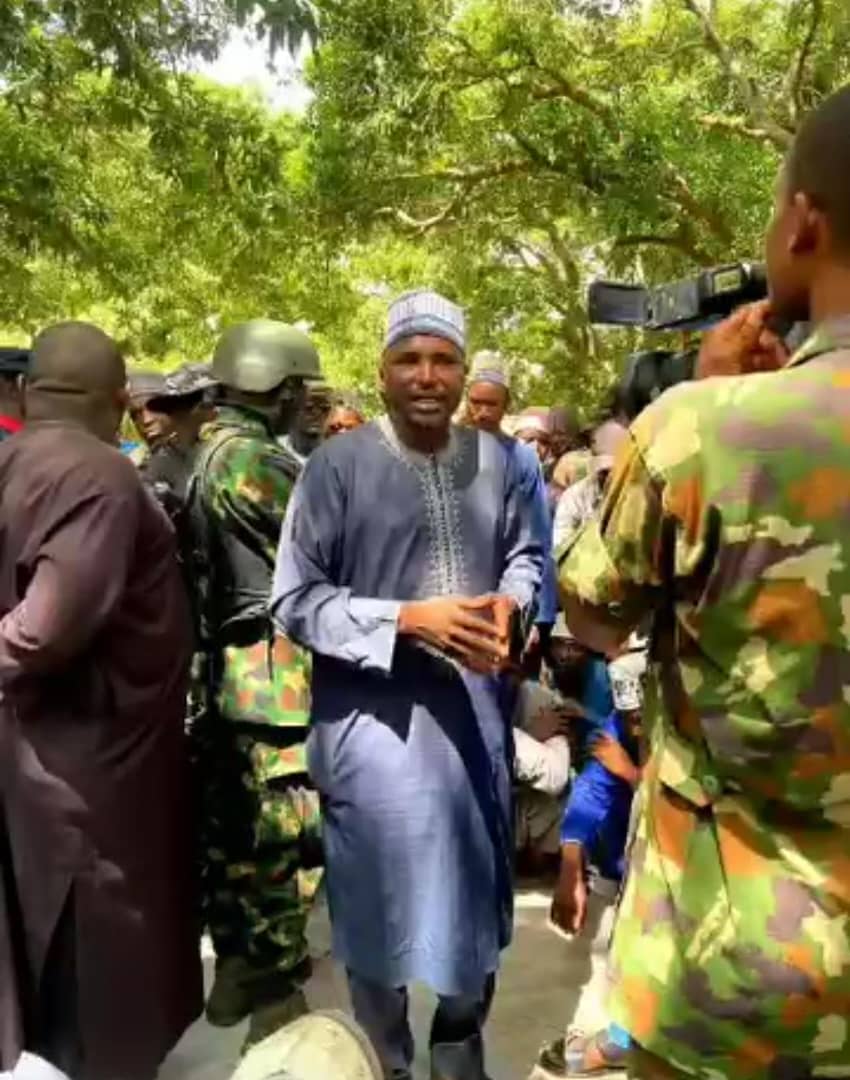
On August 15, 2026, landowners of Kankara in Katsina State held another negotiating meeting with Ado Aleru (also known as Adamu Yankuzo), a wanted Fulani murder-and-kidnap boss whose operations span the Zamfara-Katsina border. Aleru’s group had recently been devastated in a clash at Doma village, losing an estimated 30 motorcycles and, according to security sources, between 60 and 90 fighters, including family members. He appeared to be negotiating primarily with local property owners, traditional leaders, and community representatives rather than senior Katsina state officials. The fact that Katsina officials did not demand and get his unconditional surrender is telling, security analysts tell TruthNigeria.
In a video obtained by TruthNigeria, Aleru framed previous failures to arrange a so-called peace agreement as the result of bad faith by local community leaders and security forces, continuing the long-standing Fulani bandit tactic of posing as victims with grievances.
Who Is Ado Aleru?
Aleru is one of the most recognised commanders in Fulani-dominated armed criminal networks along the Zamfara-Katsina axis. Security officials and analysts link his network to ransom kidnappings, killings, cattle rustling, and rural attacks. He rose to prominence amid the expansion of armed groups across remote Zamfara and Katsina areas roughly from the mid-2010s onward.
In 2020 the Katsina State Police Command declared him wanted and placed a ₦5 million bounty on information leading to his arrest, linking him to the deadly Kadisau village attack in Faskari Local Government Area that June, which killed up to 50 people, according to Daily Trust.
The latest Kankara meeting again places a wanted commander at the center of talks. Without arrests, disarmament, and an end to the special treatment that distinguishes Fulani networks from other insurgents, communities will continue counting victims while the local government chalks up another win for peace talks and endless obfuscation.
Suleman Ayuba and Onibiyo Segun report on conflict for TruthNigeria.
Related


Scammers Hijack Car Dealer’s Identity, Forge CAC Certificate Photo, and Open Fraudulent Moniepoint Account, Exposing Deep Flaws in Fintech KYC – Secrets Reporters Nigeria

FAAN Spent N158.59bn against N98.39bn Limit, Audit Demands N60.2bn Refund – Secrets Reporters Nigeria

₦367.99m in Financial Irregularities Uncovered in FCT Social Development Secretariat Under the Leadership of Hajiya Safiya Umar – Secrets Reporters Nigeria

Osun 2026: INEC Under Scrutiny As Money Politics, Violence, Security Threats Test Nigeria’s Road To 2027

Investigation Reveals NOTAP Channelled ₦138.8 Million Public Revenue into Staff Welfare, Sponsored Non-Staff Weddings and Approved Unauthorised Foreign Trips in Questionable Transactions – Secrets Reporters Nigeria

Federal Energy Research Centre at UNN Ran Up Nearly ₦686 Million in Unauthorised Spending, Doubtful Payments and Audit Bypasses – Secrets Reporters Nigeria

₦35.46m Financial Irregularities Mars Dr. Aishatu Abubakar-Baju (AIG), Veterinary Council of Nigeria Leadership – Secrets Reporters Nigeria

“The most powerful person in a house is the housemaid” — Man questions billionaire’s maid’s ₦180K salary

“I paid for his visa, flight, hotel, rent, but he broke up with me 4 months after arriving UK” — Woman reveals

Ministers, Governors, Lawmakers You Rely On Are Not Working In Your Best Interest – Jonathan Vatsa Warns Tinubu

U.S. and Canada hold last-minute talks to stop Trump's 50% tariffs

US Judge Sets August 21 Deadline for Release of Tinubu

Kebbi begins financial control, treasury training for MDA staff

Oborevwori to Inaugurate Permanent Secretaries’ Quarters

Another Fulani Kingpin Plays the Victim in ‘Peace’ Negotiations in Katsina State

Police recover vandalised railway sleepers, arrest suspect in Bauchi

Three people from same family die after getting into trouble off Sussex coast

Satellite Town Development Department Abuja: Secrets Reporters Uncover ₦15.29m Financial Irregularities as Retired Officer Keeps Government Hilux – Secrets Reporters Nigeria

Police nab 3 suspected kidnappers, rescue victim in Edo

Nigeria Women Beat Benin, Men Lose to Algeria at 2026 African

 Politics13 hours ago
Ministers, Governors, Lawmakers You Rely On Are Not Working In Your Best Interest – Jonathan Vatsa Warns Tinubu
- News15 hours ago
Nigeria’s Atomic Energy Commission Paid ₦34m Without Documents, Lost Track of Store Items and Let a Former Chairman Drive Off With Official Toyota Camry – Secrets Reporters Nigeria
- Entertainment13 hours ago
“If you can’t pay for your flight ticket and don’t have a job, don’t marry” — Female pastor advises ladies

 World21 hours ago
Iranian Army Chief Offers $30,000 Bounty for Killing or Capturing US Soldiers, Doubles Reward for Women
- Entertainment11 hours ago
“Your prayer point is different from mine” – Businessman says as he proudly flaunts his thriving business
- Entertainment10 hours ago
“He tried to lure me into having sex with him, but I refused” — Funke Etti recounts alleged ordeal with movie director
- Entertainment12 hours ago
“She stole his clothes and ran” — Lady recounts how student exposed lecturer after he demanded an affair for better grades
- Entertainment11 hours ago
“Omo! She no turn back o” — Lady shares friend’s shocking decision after father died before flight to Canada