Politics
Nigeria’s Christian Leaders Reconsider Washington Strategy after Sea Change Election

Republican Loss Impacts Congressional pressure and Future of Religious-freedom Advocacy
By Mary Kiara
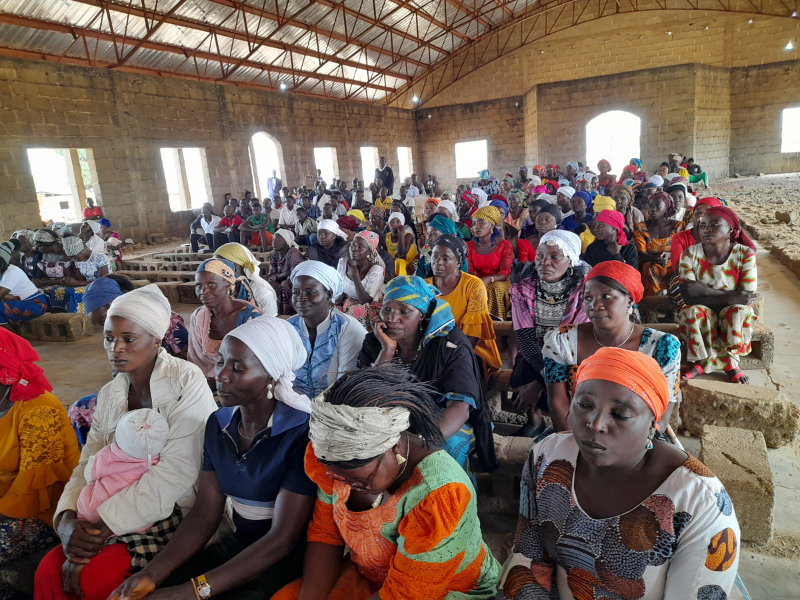
(LAGOS) – When U.S. voters swept Democrats into control of Congress on November 3, Christian leaders and religious-freedom advocates in Nigeria suddenly lost their strongest Washington allies, forcing a scramble to protect persecuted communities.
The sweeping “blue wave” handing control of both the House of Representatives and the Senate to the Democratic Party fundamentally fractured the legislative landscape supporting Christian defense.
The Republican lawmakers who championed the Country of Particular Concern (CPC) redesignation and pushed for hardline accountability measures have lost their gavels, leaving local leaders to navigate an uncertain transatlantic shift.
The sea change creates a new political environment for an issue that gained renewed prominence after President Trump restored Nigeria’s CPC designation in October 2025.
“The CPC designation is likely to continue, but it may change direction depending on who holds the gavel,” Dr. Sylvester Okere, a Nigerian Christian advocate who has attended congressional hearings on religious violence, told TruthNigeria.
“Under a Democratic-led committee, expect quieter and more diplomatic pressure.”
Navigating the Shift in Oversight
While the CPC designation itself rests under the executive authority of the president and the secretary of state via the International Religious Freedom Act, party control of congressional committees dictates the nature of public hearings, investigations, and legislative pressure.
Okere noted that incoming Democratic leaders are likely to reframe the debate away from the specific framing of targeted religious persecution.
“Instead of calling it genocide, they’re going to generalize it, like ‘insecurity affecting Nigerian Christians and Muslims, farmer herder violence, terrorism, and government failure.’”
That approach is already visible in the public record.
On November 3, 2025, U.S. Representative Gregory Meeks of New York and Representative Sara Jacobs of California issued a joint statement downplaying the sectarian nature of the violence.
Both won re-election in 2026, with Meeks positioned to chair the House Foreign Affairs Committee and Jacobs leading its Africa subcommittee.
“Clashes between farmers, many but not all of whom are Christian, and herders are driven by resource scarcity and land competition, not religion alone,” Meeks and Jacob stated.
“Terrorist groups have killed both Christians and Muslims, and devastated communities, especially in the predominantly Muslim north which is increasingly plagued by violent criminal gangs often referred to as bandits.”
Empirical Reality Versus Political Framing
Against official U.S. and Nigerian terminology, independent monitoring data underscores the disproportionate toll on Christian communities.
Data compiled by Open Doors International and the Observatory for Religious Freedom in Africa (ORFA) places the scale of violence in stark relief.
As of late 2025, Open Doors recorded that Nigeria accounted for more than 70 percent of all Christians killed for their faith worldwide. In Benue State alone , there were 1,310 Christians killed against 29 Muslims; in Plateau State, 546 against 48; and in Kaduna state, 1,116 Christians kidnapped against 101 Muslims.
ORFA’s “countering the myth of religious indifference in Nigerian terror,” report further corroborates these disparities. Among 30,880 civilians killed across a four-year reporting period, ORFA documented 16,769 Christian victims compared to 6,235 Muslim victims.
“Every life is precious, but when there is a pattern of a certain religious group with more casualties, then the truth cannot be ignored, nor swept under the rug. It has been staring us right in our faces that there’s been an ongoing persecution. The numbers don’t lie,” Aba Anuhe, retired Journalist told TruthNigeria.
Divisive Reactions among Nigerian Leaders
The political realignment in Washington has triggered fierce debate among Nigerian intellectuals and clergy. Not all Christian voices view the Democratic congressional majority strictly through the lens of committee arithmetic.
Pastor Chris Oyakhilome, founding president of LoveWorld Incorporated, issued a stark warning regarding the ideological shift in the United States, describing the incoming leadership in uncompromising terms.
“The Democrat Party is no longer a normal political party. It’s a cult hijacked by the insane globalists,” Oyakhilome said.
Beyond the political forecast, he warned: “preparation is being made for an unprecedented global persecution against the church… a kind [of persecution] that has not been witnessed before.”
Other commentators directed their critique inward, targeting Nigerian hypocrisy over the American election results. Thought leader Tony Onyima lambasted local analysts who celebrated voter backlash against incumbent U.S. leaders while defending similar economic hardships at home.
“The commentaries of some Nigerian pseudo-intellectuals on the American election become particularly troubling,” Onyima stated.
“Some of these commentators who routinely rationalize, defend or minimize Nigeria’s harsh economic realities are suddenly celebrating the American electorate’s rejection of an administration over remarkably similar conditions. The irony is difficult to miss.”
The Path to Institutional Maturity
As Republican allies such as Rep. Riley Moore and Representative Chris Smith step aside into minority status, and Democrats such as Meeks and Sen. Chris Coons assume committee gavels in January 2027, public policy experts argue that Abuja and local advocates must adapt their engagement strategy.
“Democratic members of Congress, particularly those with strong human rights constituencies and close ties to faith-based advocacy groups, are more likely to press Nigeria on religious freedom, and on the protection of minorities. They are more likely to demand reports, to invite witnesses, to hold hearings, and to link future assistance to demonstrable progress,” Folawiyo Olajoku, a public policy expert said in a statement.
Olajoku emphasized that the midterms offer a vital opportunity for institutional growth rather than a diplomatic setback.
“It is not a setback. It is a maturation,” Olajoku said. “If Nigeria navigates it well, if it engages early, if it tells its story honestly, if it conducts its own elections credibly, the result could be a Nigeria–United States relationship anchored in shared interests, in shared laws, and in shared democratic accountability.”
Mary Kiara reports on Religious Freedom Policy for TruthNigeria.
Related


JUST IN: Nigeria beat Japan to become first African nation to win U-17 Women’s World Cup – The Witness Nigeria

“Political Violence Has No Place In Democracy” — Peter Obi Condemns Attacks On NDC Supporters In Delta As Oborevwori Orders Investigation, Prosecution

“Flamingos Are World Champions” — Nigeria Defeat Japan 2-1 To Win Historic First FIFA U-17 Women’s World Cup

‘Take Responsibility For Your Choices Rather Than Blaming Buhari’ – Ex-presidential Aide Blasts Amaechi

They Will Go From House To House, Check Under Your Bed – Kwankwaso Raises Alarm Over Tinubu’s Tax Policies

“Some Politicians Talk As If They Own The World” — Jonathan Warns 2027 Aspirants Against Desperation, Violence And Abuse Of Power

“Adeboye Ordered Refund Of Billions In Crime Proceeds Within 24 Hours” — EFCC Chairman Olukoyede Reveals, Warns Churches Against Suspicious Donations

“I Am Cleaning The Mess They Created, Atiku Was One Of Them” — Tinubu Blames Former Leaders For Hunger, Questions Atiku’s University

“Nigerians Have A Right To Know How NERSI Funds Are Spent” — SERAP Demands Disclosure Of ₦50,000 Relief Payments, Threatens Legal Action

“You Acted As A True Statesman During Rivers Crisis” — Fubara Hails Tinubu’s Intervention, Pledges 3m Votes Under APC-PDP Rainbow Coalition

Two fire outbreaks destroy shops in Ibadan

2027: Why T.Y Danjuma Endorsed Tinubu – Sambo

U.S. Charity Equipping The Persecuted Snatches 35 Snake-Bitten Displaced from Death

“I Gave Funsho Williams’ Team Tinubu’s Academic Information” — Ex-Chicago State Lecturer Pearse Insists President Never Attended University

Nigeria’s Christian Leaders Reconsider Washington Strategy after Sea Change Election

INEC removes 1.6 million voter registrations

Wamakko Gets Appointment As APC Unveils 37-Member Campaign Council In Sokoto

“We Paid, Yet The Judgment Remains Out Of Reach” — ADC Campaign Council Questions Justice Lifu’s Delay In Releasing Atiku Ruling

Babcock University confirms student in viral hostel incident is alive

Unlocking enterprise value: Korede Oluwamola unveils definitive guide to business analysis in Muscat

 Metro7 days ago
“Nigeria Cannot Afford To Fail In 2027” — UNOWAS Urges Peaceful Elections As NHRC Warns Against Electoral Offences
- Special Report7 days ago
Cocaine: KC Luxury asks judge to withdraw from his trial over missing affidavit – The Witness Nigeria
- Special Report4 days ago
Namibia President hails Dangote’s $2.5bn investment as historic milestone for African industrialisation – The Witness Nigeria
- Headlines4 days ago
‘Politics is expensive everywhere’ – Wike replies critics over high billboard cost in Abuja
- Metro4 days ago
“Any Algorithm Can Calculate, But It Cannot Care” — NMCN Registrar Warns Nurses Against Overreliance On AI
- Headlines7 days ago
Inaccurate information, algorithmic bias undermine justice – Kaduna Attorney-General warns young lawyers
- Headlines6 days ago
Kayode Akinmade: Abiodun’s road revolution – From forgotten communities to connected economic corridors
- Special Report5 days ago
Police invite late singer, Toluwanisings’s wife, father, as parties sign peace deal – The Witness Nigeria