Metro
“Adeboye Ordered Refund Of Billions In Crime Proceeds Within 24 Hours” — EFCC Chairman Olukoyede Reveals, Warns Churches Against Suspicious Donations

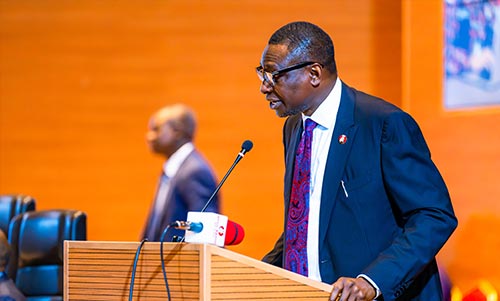
The Executive Chairman of the Economic and Financial Crimes Commission (EFCC), Ola Olukoyede, has revealed how the General Overseer of the Redeemed Christian Church of God (RCCG), Pastor Enoch Adeboye, ordered the refund of billions of naira donated towards a church project after investigations linked the funds to proceeds of financial crime.
Olukoyede disclosed that Adeboye directed the immediate return of the money within 24 hours after the church was informed that the donation originated from an unlawful source.
The EFCC chairman made the revelation while addressing RCCG workers in the early hours of Saturday, November 7, 2026, during a meeting organised by the church ahead of its annual Holy Ghost Congress.
According to Church Times Nigeria, Adeboye invited Olukoyede to address church workers on financial propriety, accountability and the importance of maintaining transparent financial records in religious institutions.
Recounting the incident, the EFCC chairman explained that a member of the church had donated billions of naira towards an RCCG project before investigations subsequently revealed that the money was connected to financial crime.
He said the church was alerted to the findings, prompting Adeboye to order that the money be refunded without delay.
Olukoyede commended the RCCG General Overseer for taking the decision shortly after receiving information about the source of the funds.
According to him, the refund was ordered within 24 hours of the church becoming aware that the donation had been traced to criminal proceeds.
The EFCC chairman did not disclose the identity of the donor, the specific church project involved or the exact amount donated, beyond stating that the funds ran into billions of naira.
He also did not provide further details about the underlying financial crime or the status of any investigation involving the donor.
Using the incident to illustrate the importance of financial accountability, Olukoyede warned religious institutions against accepting donations without making reasonable efforts to establish their sources.
He urged pastors and church administrators to exercise caution when dealing with substantial financial contributions, particularly where the origin of the money raised concerns.
The anti-graft agency’s chairman, who is also an ordained pastor, expressed worry over the increasing number of cases involving religious leaders allegedly implicated in financial crimes.
He also raised concerns about allegations of irregularities surrounding contracts awarded for church projects, warning that religious institutions could become exposed to corrupt practices where financial transactions were not properly scrutinised.
According to him, church leaders must not allow the pursuit of money or the desire to complete projects to override the need for honesty, accountability and compliance with the law.
Olukoyede consequently cautioned church workers against accepting suspicious donations or pursuing financial resources through questionable means.
He maintained that religious organisations must ensure that money contributed towards their projects does not originate from criminal activities.
The EFCC chairman also recalled another case involving a different church allegedly implicated in a Ponzi scheme.
According to him, the leader of the church initially resisted the Commission’s intervention despite concerns surrounding the financial arrangement.
He explained that the church leader eventually refunded a substantial amount of money after the EFCC threatened to initiate legal proceedings.
Olukoyede cited the incident as another example of the financial misconduct that could arise where religious organisations became involved in questionable transactions.
He warned that the Commission would not spare individuals implicated in financial crimes because of their religious positions, leadership status or affiliations.
The EFCC chairman stressed that religious office should not be regarded as protection against investigation or accountability for financial wrongdoing.
Beyond questionable donations and financial transactions, Olukoyede also warned RCCG workers against materialism, unhealthy competition and struggles for leadership positions within the church.
He expressed concern that excessive attachment to wealth and status could encourage misconduct among religious leaders and expose institutions to reputational and financial risks.
The EFCC chairman further raised concerns about reports that some individuals were allegedly offering bribes to secure leadership positions within the RCCG.
He cautioned against practices that could compromise the integrity of religious administration and undermine the principles expected of church workers.
According to him, competition for leadership positions and material benefits should not encourage conduct inconsistent with the ethical standards of religious institutions.
Olukoyede urged pastors to take the responsibility of financial oversight seriously, stressing that donations intended for religious projects should be subjected to appropriate scrutiny.
He also emphasised the importance of accurate financial records and transparent administration in preventing religious organisations from becoming channels for the movement of proceeds of crime.
Responding to the EFCC chairman’s remarks, Pastor Adeboye assured that the Redeemed Christian Church of God would not shield any member or official found to have engaged in financial wrongdoing.
The RCCG General Overseer maintained that the church would not protect individuals implicated in corruption or other financial misconduct.
He also urged pastors under the church to maintain clean financial records and ensure that their activities were conducted without corruption.
Adeboye’s response reinforced the position that church leadership and membership should not be used to excuse financial impropriety.
The engagement consequently highlighted the responsibility of religious institutions to scrutinise substantial donations, maintain transparent financial records and ensure that church projects are not financed with proceeds of unlawful activities.
Olukoyede’s disclosure about the refunded donation also underscored the potential financial and reputational consequences for churches that receive funds later discovered to have originated from criminal conduct.
While commending Adeboye for ordering the return of the billions of naira, the EFCC chairman maintained that accountability must extend to all religious institutions and their leaders, irrespective of status or affiliation.
He reiterated that the Commission would continue to take action against financial crimes and urged church workers to conduct their financial affairs with integrity.
The meeting ended with a renewed emphasis on financial transparency, proper scrutiny of donations and the need for religious leaders to uphold ethical standards in the management of church resources.
The post “Adeboye Ordered Refund Of Billions In Crime Proceeds Within 24 Hours” — EFCC Chairman Olukoyede Reveals, Warns Churches Against Suspicious Donations appeared first on TheNigeriaLawyer.


‘Politics is expensive everywhere’ – Wike replies critics over high billboard cost in Abuja

2027: ‘Peter Obi’s Logic Is Short-Term Turnover Unlike Tinubu Who Thinks Of Next Generation’ – Oshiomhole

“Courts Must Guard Their Independence, Impartiality And Integrity” — NDC Warns After Atiku’s Candidacy Is Nullified

“Not To Own It, But To Give It Another Chance At Life” — Foreigner Rescues Sea Turtle From Lagos Sellers As NESREA Faces Enforcement Questions

‘He’s closest to Lionel Messi’ – Rashford names player to win more Ballons d’Or than Cristiano Ronaldo

Power Outage: Tegbe assures Nigerians of swift restoration as electricity disruptions hit Lagos, Abuja

Jesus de Miguel’s death: ‘He’d never intentionally hurt anyone’ – Owono’s team-mate defends goalkeeper

Investigate hijab controversy in Nigerian law schools immediately- MURIC to Council of Legal Education

“Leadership Must Emerge Through Lawful Process, Not Imposition” — Bala Gombe Commends Justice Lifu Over ADC Judgment

“Every Item Has Been Recovered” — Viral CCTV Helps Trace Lagos Photographer’s Stolen Equipment As Wedding Files Remain At Risk

EPL table: Man City suffer shock 3-1 defeat at Nottingham, Arsenal now 6pts clear
EPL table: Man City suffer shock 3-1 defeat at Nottingham, Arsenal now 6pts clear

“Adeboye Ordered Refund Of Billions In Crime Proceeds Within 24 Hours” — EFCC Chairman Olukoyede Reveals, Warns Churches Against Suspicious Donations

Jigawa, IsDB budget $110m to improve schools, teachers’ development

2027 U-23 AFCONQ: DR Congo coach Bukasa unveils squad for Olympic Eagles clash

Turkey: Orban, Sor on target in Amedspor’s defeat to Galatasaray

Atiku was in charge of economy when he built university – Tinubu

Navy uncovers 117,000 litres of suspected stolen crude oil in Rivers

You Are A Disaster, You Created Poverty– Atiku’s Camp Fires Back At Tinubu

2027: Peace will deliver Rivers for Tinubu – Akpabio

 Metro7 days ago
“Publishing His Name Is Subject To The Final Outcome Of A Court Order” — INEC Leaves Gwarzo Off Updated Kano Governorship List
- Metro7 days ago
“The Election Must Hold As Scheduled” — INEC Chairman Rules Out Postponement Of 2027 General Elections
- Metro7 days ago
“Ebola Outbreak Is Not Yet Under Control” — Africa CDC Warns As Confirmed Cases Exceed 10,200, Death Toll Surpasses 5,000
- Metro7 days ago
“Sowore’s Whereabouts Remain Unknown” — Armed Men Allegedly Abduct AAC Presidential Candidate In Ado-Ekiti, Damage Vehicles And Restaurant
- Metro7 days ago
“They Beat Me Like A Criminal” — Sowore Recounts Ekiti Attack As Govt Denies Involvement, Calls For Police Investigation
- Metro7 days ago
“21 Exotic Vehicles Affected, No Life Lost” — LASEMA Confirms Lagos Mechanic Workshop Fire, Averts Disaster At Nearby Filling Station
- Viral6 days ago
FLUTTERWAVE’S CYPRUS EXIT: BANK OF CYPRUS OBJECTION TRIGGERS TOTAL WRITE-OFF OF 100% SUBSIDIARY, AUDITED ACCOUNTS REVEAL
- Metro7 days ago
“November 7 Local Government Elections Will No Longer Hold” — Imo Electoral Commission Postpones Poll Indefinitely