News
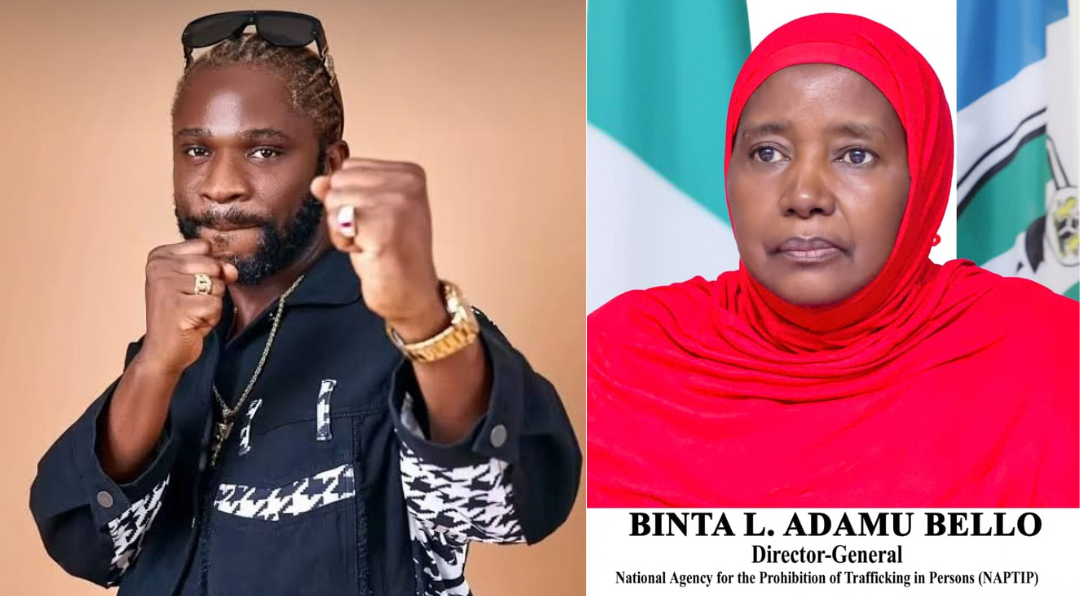
Speed Darlington: Is NAPTIP Under Binta Adamu Bello, A Joke Of An Agency, A Toothless Bulldog Making Noises But Can’t Bite?

PAUL UTEBOR
On June 27, 2025, the National Agency for the Prohibition of Trafficking in Persons, NAPTIP, published a wanted notice for Nigerian entertainer Darlington Okoye, popularly known as Speed Darlington, in connection with alleged offences including rape, cyberbullying, and cyberstalking.
More than one year later, Speed Darlington has continued to make public appearances in Nigeria, with his latest appearance taking place in Lagos on October 1, 2026, where he participated in a celebrity boxing event against entertainer Carter Efe.
The development is stunning, most especially in relation to the enforcement of the wanted declaration and the steps taken by NAPTIP and other relevant security agencies after the notice was issued.
The matter began in May 2025 after Speed Darlington made statements during an Instagram Live session concerning a sexual encounter involving a 15-year-old girl.
Following the circulation of the video, the Lagos State Domestic and Sexual Violence Agency referred the matter to NAPTIP for investigation. NAPTIP subsequently invited Speed Darlington to appear at its headquarters in Abuja on May 30, 2025.
Speed Darlington later proposed June 26 as the date he would appear before the agency. NAPTIP rejected the proposed date and directed him to appear on June 2, 2025.
On June 26, the date he had proposed for his appearance, he also did not show up at the NAPTIP headquarters. The following day, June 27, NAPTIP declared him wanted.
The agency’s notice stated that he was wanted in connection with alleged offences including rape, cyberbullying and cyberstalking and appealed to anyone with credible information about his whereabouts to contact the agency.
NAPTIP’s legal basis
In its earlier invitation, NAPTIP referred to the Trafficking in Persons (Prohibition) Enforcement and Administration Act, 2015, and the Cybercrime (Prohibition, Prevention, etc.) Act, 2015, stating that the conduct under investigation, if substantiated, could constitute offences under the laws.
The Trafficking in Persons (Prohibition) Enforcement and Administration Act establishes NAPTIP as an enforcement agency with investigative responsibilities.
The statutory framework gives the agency powers relating to the investigation of offences under the Act, while its investigation department is required to liaise with the Police and work with the Immigration Service and other relevant security agencies.
Consequently, the June 27 wanted declaration was not presented by NAPTIP as a mere request for the public to identify Speed Darlington. It was issued in the course of an investigation in which the agency had already summoned him for questioning.
Speed Darlington goes to court
Rather than appear before NAPTIP, Speed Darlington challenged the agency’s action in court. On July 9, 2025, he filed a suit at the Federal High Court in Abuja against NAPTIP. Among other reliefs, he sought ₦3 billion in damages and an order permanently restraining NAPTIP from acting on the June 27 wanted declaration.
His legal argument included a challenge to the legality and constitutionality of the wanted declaration. The filing of the suit introduced a judicial dimension into the matter.
However, the critical question that followed was whether the institution of the suit itself prevented NAPTIP from enforcing its wanted notice.
That question became particularly relevant in February 2026. In response to an inquiry by the Foundation for Investigative Journalism, FIJ, NAPTIP confirmed that Speed Darlington remained on its wanted list.
In a February 13, 2026, response, the agency said the public declaration was “still in action” but added that Speed Darlington had instituted a fundamental-rights enforcement suit against it and that the agency was waiting for the court’s determination before taking further action. It is important to note that, as of February 2026, NAPTIP had not announced the withdrawal of its June 27 wanted declaration.
Also, the available report on the agency’s response did not identify a court order restraining NAPTIP from arresting Speed Darlington. What NAPTIP stated was that it was waiting for the determination of the court case before taking further action.
Speed Darlington appears in Lagos
Despite the continuing status of the wanted declaration reported by NAPTIP in February, Speed Darlington subsequently appeared publicly in Nigeria. On September 30, 2026, he appeared at a press conference in Lagos ahead of his scheduled celebrity boxing bout with Carter Efe.
The following day, October 1, he participated in the “Chaos in the Ring” Independence Edition at Balmoral Hall, Federal Palace Hotel, Victoria Island, Lagos. The event was publicly advertised and attracted media coverage.
On October 2, reports confirmed that Carter Efe defeated Speed Darlington by technical knockout after the referee stopped their four-round contest.
This leaves one to wonder, if NAPTIP’s wanted declaration was still in force and the agency had previously said that other security agencies had been notified, why was Speed Darlington able to appear publicly at a major event in Lagos without being arrested?
Moreover, a wanted declaration involving a person who is moving within Nigeria potentially engages the responsibilities of other law-enforcement and border-control institutions, depending on the nature of the notice and the legal steps taken.
The statutory framework governing NAPTIP specifically contemplates collaboration between its investigation department, the police, the immigration service and other relevant security agencies.
Months later, the same person appeared openly in Lagos for a highly publicised event, which begs the question: Is NAPTIP under the leadership of Binta Adamu Bello, a joke of an agency? a toothless bulldog that makes a lot of noise but cannot bite?
Note that the allegations against Speed Darlington remain allegations unless and until established through the appropriate legal process. Similarly, the filing of a fundamental-rights suit does not, by itself, establish that the allegations against him are true or false. The relevant legal issue is therefore the status and enforcement of the wanted declaration.






“I was forced to post my boss on WhatsApp or risk salary deduction” – Lady recounts alleged workplace experience

Elected To Enjoy: Bayelsa State Governor Douye Diri Burned N14.3 Billion of His Governor’s Office Allocated N32 Billion in Just Six Months

OAU Under Vice-Chancellor Simeon Bamire Fails to Remit ₦623 Million in Revenue, Skips Required Financial Statements

“One Registry, Fewer Fees And Less Bureaucracy” — Akwa Ibom Assembly Advances Bill To Harmonise CSO Registration

“Decline In Sharia-Learned Justices Is Delaying Appeals” — MULAN Urges Court Of Appeal, Supreme Court To Address Panel Shortage

“130 Freed In Plateau, 94 In Kogi, 24 In Taraba, Nine In Adamawa” — Governors Grant Independence Day Clemency To Inmates

“My $800 rent covers electricity, water, gas” – Abroad-based Nigerian man compares bills in Nigeria, Canada

Exclusive: Wema Bank Under MD Moruf Oseni Handed 91% of Its Rights Issue to Two Shareholders and Named No One in Its N50bn Placement

“We Are Reaching Out To The Left Out” — Tinubu Orders Quarterly Government-CSO Dialogue, Seeks Collaboration On Accountability And 2027 Elections

“We carried TV, Freezer…” — Friends reclaim wedding gifts after groom quits club two weeks after marriage

2026 Ballon d’Or: Yamal reveals six players that could win instead of him

Nigerian-Born U.S. Correctional Officer Arrested Over Alleged Attempt to Smuggle Drugs Into Prison

‘What have you ever done’ – Rio Ferdinand questions Portugal over Ronaldo

Speed Darlington: Is NAPTIP Under Binta Adamu Bello, A Joke Of An Agency, A Toothless Bulldog Making Noises But Can’t Bite?

Insecurity Cannot Be Wished Away – Atiku’s Aide Sends Warning To Tinubu

Tinubu meets Dangote, Rabiu, Akpabio, Mutfwang in Lagos

EFCC gets presidential approval to investigate FAAC releases, spending

The Economist Says Tinubu Could Retain Presidency Despite Public Discontent

Lagos varsity workers declare indefinite strike over unpaid nine-month arrears

Exclusive: Works Minister David Umahi Conspired With Perm Sec Rafiu Adeladan To Wire N9.3 Billion To An Advertising Agency For Road Contract

 News23 hours ago
OAU Under Vice-Chancellor Simeon Bamire Fails to Remit ₦623 Million in Revenue, Skips Required Financial Statements
- News20 hours ago
Exclusive: Wema Bank Under MD Moruf Oseni Handed 91% of Its Rights Issue to Two Shareholders and Named No One in Its N50bn Placement
- Metro21 hours ago
“We Are Reaching Out To The Left Out” — Tinubu Orders Quarterly Government-CSO Dialogue, Seeks Collaboration On Accountability And 2027 Elections
- Viral20 hours ago
“She was going to NYSC camp” – Mother cries out as daughter reportedly gets kidnapped along Imo-Abia route
- Entertainment19 hours ago
“Dem run am street”- Concerns as fashion police calls out Ochacho over alleged fake ‘luxurious’ shirt’
- News9 hours ago
Nigerians Die of Cancer But There Is Ganduje’s Kano Built Cancer Centre Built With Borrowed N18.425 Billion Centre That Nigerians Are Unaware of to Use
- Viral20 hours ago
Nigeria Must Rebuild Agricultural Extension System, Says Kyari
- Politics21 hours ago
‘AK-47 Fire’ Prayer: Edo APC Chairman, Tenebe, Faces Backlash Over Threatening Remarks