Metro
“Decline In Sharia-Learned Justices Is Delaying Appeals” — MULAN Urges Court Of Appeal, Supreme Court To Address Panel Shortage

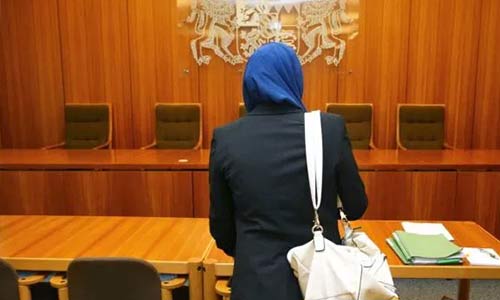
The Muslim Lawyers’ Association of Nigeria has raised concern over what it described as a decline in the number of justices with specialised knowledge of Islamic personal law available to hear Sharia-related appeals at the Court of Appeal and the Supreme Court.
The association said the situation was slowing down the hearing and determination of appeals arising from Sharia matters and called on the leadership of the appellate courts to ensure that enough qualified justices are available to constitute panels for such cases.
MULAN stated its position in a communiqué issued at the end of its National Executive Committee meeting held in Lafia, Nasarawa State. The communiqué was signed by the association’s President, Alhaji Hassan Taiwo Fajimite, and Secretary-General, Aminu Umar Kalgo.
According to the association, the reduction in the number of Muslim justices adequately learned in Sharia law has made it more difficult to constitute panels to hear appeals involving Islamic personal law, thereby contributing to delays for litigants whose cases reach the higher courts.
MULAN urged the leadership of the Court of Appeal and Supreme Court to pay closer attention to the composition of panels handling such appeals, arguing that Muslims whose cases involve Sharia questions should have their disputes heard by justices possessing the required knowledge and qualification in Islamic law.
The concern comes against the backdrop of constitutional provisions dealing with Islamic personal law expertise in Nigeria’s appellate judiciary.
Section 237(2) of the 1999 Constitution provides that the Court of Appeal must include not fewer than three justices learned in Islamic personal law, alongside not fewer than three justices learned in customary law.
The Constitution also goes beyond the numerical requirement at the Court of Appeal. Section 288 directs that, when appointments are being made to both the Supreme Court and Court of Appeal, regard should be given to the need to have among the justices persons learned in Islamic personal law as well as customary law.
For Supreme Court appointments, a person is regarded for this purpose as learned in Islamic personal law if the person has been qualified as a legal practitioner for at least 15 years and possesses a recognised qualification in Islamic law acceptable to the National Judicial Council. For the Court of Appeal, the corresponding legal-practice requirement is at least 12 years.
MULAN’s complaint, however, is not merely about the number written into the Constitution. Its concern is the practical ability of the courts to regularly constitute panels with the expertise necessary to deal with appeals arising from Islamic personal law.
Such cases may involve questions touching on matters including marriage, family relations, inheritance, gifts, wills and succession where Islamic personal law is applicable.
The courts have over the years also drawn boundaries around the jurisdiction of Sharia courts, holding that not every dispute involving Muslims automatically becomes a Sharia matter. In earlier appellate decisions, the courts have stressed that the relevant question must fall within the areas of Islamic personal law recognised by the Constitution before the specialised jurisdiction is engaged.
Against that legal background, MULAN said delays resulting from difficulty in constituting appropriate appellate panels affect the ability of litigants to have their cases heard promptly.
The association therefore wants the concern taken into account by those responsible for judicial appointments and the management of appellate courts.
Beyond the judiciary, the lawyers also used their Lafia meeting to comment on Nigeria’s economic situation.
MULAN acknowledged what it described as efforts by the Federal Government to stabilise the economy through policies aimed at addressing long-running economic difficulties. It nevertheless said many Nigerians were becoming impatient for those policies to produce tangible relief in their daily lives.
The association said Nigerians “can no longer wait” for the widely promised benefits of the government’s economic measures to become visible, reflecting continuing concern over the gap between economic policy announcements and the experience of households.
The economic comments came as the Federal Government continues to defend reforms introduced over the past three years, with President Bola Tinubu saying in his October 1 Independence Day address that the country had moved from what he called an era of emergency economic reforms into a new phase focused on prosperity and reducing the cost of living.
MULAN’s position, however, was that whatever improvements government points to must increasingly be felt by ordinary Nigerians.
The post “Decline In Sharia-Learned Justices Is Delaying Appeals” — MULAN Urges Court Of Appeal, Supreme Court To Address Panel Shortage appeared first on TheNigeriaLawyer.


Nigerian Embassy In Ankara Moved ₦503 Million Between Budget Lines Without Approval, Federal Review Finds

University of Calabar Under Former Vice-Chancellor Florence Obi Fails to Remit ₦264 Million, Cannot Account for ₦47.7 Million in Cash Advances

Exclusive: How Taraba State Governor Agbu Kefas Borrowed N15 Billion To Build Roads But Secretly Turned The Loan Into Paying WAEC Fees and NUC Accreditation

AFCON qualifiers: ‘You can’t step up’ – Ikpeba slams 3 Super Eagles’ stars after Guinea-Bissau defeat

Stanel Group’s Uzochukwu congratulates Flutterwave founder Agboola on recognition among world’s top 100 fintech leaders

Former Lagos Socialite Mandy Kiss Returns to Family Home in Ijebu Ode, Says She Is Learning From Her Mistakes

Indian Hospital Features Ex-head of state Abdulsalami Abubakar in Promotional Video After Knee Surgery

“One man can sleep with 30-40 women and still…” – Chiwetalu Agu shares deep advice on life and consequences

How Federal Teaching Hospital Gombe Skipped Procurement Rules on ₦139.83 Million Under Prof. Yusuf.M. Abdullahi Administration

Nigerian Export Promotion Council Boss Ezra Yakusak Spent Unapproved N342 Million Jetting Round The World

PRP: Nigeria must not treat citizens as hostages over political expression

Amnesty urges probe into Minna stampede that killed three

I Cannot Do That – Mailantarki Denies Declaring Himself Winner Of Gombe PDP Primary

Guilty verdict: Paul Merson reveals how he wants Man City punished

“Decline In Sharia-Learned Justices Is Delaying Appeals” — MULAN Urges Court Of Appeal, Supreme Court To Address Panel Shortage

Get another job, Abuja, Rivers for Peter Obi – Isaac Fayose on Wike’s vow to resign

‘The Spin Is That Tinubu Has Been Rejected’ – Keyamo Reacts As Thug Destroys APC Posters

Peter Obi Kicks Over Arrest Of Obidient Movement Members In Akwa Ibom

Insecurity: Nigeria needs infrastructure to harness technology – Ex-CDS, Irabor

Mbah pardons, commutes sentences of 13 inmates to mark Independence anniversary

 News24 hours ago
How Federal Teaching Hospital Gombe Skipped Procurement Rules on ₦139.83 Million Under Prof. Yusuf.M. Abdullahi Administration
 News22 hours ago
Contract Fraud: Nigerian Nuclear Regulatory Authority DG Yau Usman Idris Misappropriated N6.69 Billion
- Viral16 hours ago
“I was forced to post my boss on WhatsApp or risk salary deduction” – Lady recounts alleged workplace experience
- Metro13 hours ago
“One Registry, Fewer Fees And Less Bureaucracy” — Akwa Ibom Assembly Advances Bill To Harmonise CSO Registration
- Viral11 hours ago
“We carried TV, Freezer…” — Friends reclaim wedding gifts after groom quits club two weeks after marriage
- News20 hours ago
Urgent2K Launches in Abuja to Provide ₦2,000 Emergency Support to Nigerians
- Viral22 hours ago
Independence Day: Ex-Agitators Celebrate Peace, Jobs in Niger Delta, Back Tinubu
- News19 hours ago
FCE Okene: ₦112.9m Financial Irregularities Found in 2022 Accounts