Metro
“Introducing AI Into A System Yet To Account For Existing Failures Is Not Electoral Reform” — Obidient Movement Rejects INEC’s 2027 Plan

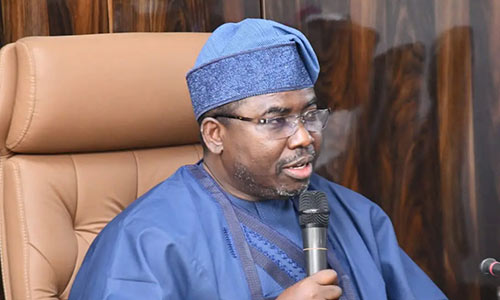
The Obidient Movement has rejected the Independent National Electoral Commission’s planned deployment of Artificial Intelligence tools ahead of the 2027 general elections, demanding that the electoral body first address concerns over transparency, electronic result transmission and public confidence in its existing technology.
The Movement’s National Coordinator, Dr. Yunusa Tanko, made the position known in Abuja while reacting to recent disclosures by INEC Chairman, Prof. Joash Amupitan, SAN, that the Commission had begun deploying AI tools to detect discrepancies and administrative errors in election records ahead of final human verification.
Amupitan has also said INEC is strengthening its defences against AI-generated electoral disinformation, including deepfake videos, cloned voices of election officials, forged official documents and fabricated result sheets. Reports of his presentation indicate that the Commission has established an AI division within its ICT structure and developed an AI roadmap and governance framework built around human oversight, transparency, accountability, data protection, cybersecurity and public trust.
Tanko, however, argued that deploying another layer of technology without first resolving questions surrounding the Commission’s existing electoral systems could deepen rather than address public distrust.
“The same INEC that has failed to address the most basic issues surrounding electoral transparency, result transmission, and the credibility of its processes is now announcing plans to deploy Artificial Intelligence in the 2027 elections,” Tanko said.
“We reject this proposal in its entirety, particularly as the Commission has failed to explain how this technology will work, what problems it is intended to solve, and what safeguards will prevent its abuse.”
The Movement maintained that technological innovation could not, by itself, guarantee credible elections where questions of institutional independence, transparency and accountability remained contested.
“Introducing AI into a system that has yet to account for its existing failures is not electoral reform. It is an attempt to distract Nigerians from the fundamental questions of institutional independence, transparency, and accountability,” Tanko said.
The dispute comes against the background of INEC’s preparations for the 2027 elections and an increasingly technology-driven electoral process in which the Bimodal Voter Accreditation System, the INEC Result Viewing Portal and other digital systems already play significant roles.
Amupitan’s stated position is that AI is intended, among other uses, to help identify discrepancies and administrative errors before final validation rather than replace human decision-making in the electoral process. He has also warned that generative AI presents a separate threat because increasingly convincing synthetic videos, voices, documents and result sheets could be deployed to spread false information and undermine confidence even in genuine electoral materials.
According to reports of the INEC Chairman’s remarks, the concern is no longer limited to citizens being deceived by a particular fake document or video; a flood of sophisticated fabrications could also create an environment in which authentic electoral materials are themselves dismissed as fake.
Tanko nevertheless insisted that INEC should disclose precisely what its proposed AI systems would do, how they would interact with existing election technologies, who would exercise control over them and what safeguards would exist against manipulation.
The Movement consequently demanded the publication of a comprehensive roadmap for the 2027 general elections, detailing the technologies, procedures and safeguards INEC proposes to deploy.
It also demanded an independent audit of INEC’s existing electoral technology, accompanied by public disclosure of the findings and any corrective measures arising from the exercise.
The group further called for a result transmission system that it said must be transparent, verifiable and capable of ensuring that votes recorded at polling units are accurately reflected throughout the collation process.
Tanko also demanded that any AI tools proposed for use in the election be subjected to rigorous independent testing and public scrutiny before deployment.
In advancing its concerns, the Obidient Movement referred to a recent analysis by Mundx Analytics examining metadata contained in polling-unit result documents from the 2023 presidential election.
Tanko characterised the findings as showing that results from more than 50,000 polling units were uploaded from people’s phones. The underlying Mundx report, however, is more limited in what it establishes.
Mundx said it inspected 164,659 accessible polling-unit result records and found the EMP2920 model associated with INEC’s BVAS in 52,947 records, another identifiable camera model in 50,452 records, while 61,260 records contained no recoverable camera-model information.
Crucially, the analytics organisation cautioned that its findings concern the camera metadata embedded in the published result images and do not by themselves establish who owned the devices or even that the identified camera was the device that transmitted the file to IReV.
It described the 50,452 non-EMP2920 figure as an upper bound for phones, noting that the category also includes some tablets and unresolved device labels. Mundx further stated that EXIF metadata can be altered or removed and that a different camera model could indicate either the original photograph or a later rephotograph of the document.
The report therefore does not, by itself, establish that 50,452 results were transmitted to INEC through personal mobile phones, although it raises questions concerning the provenance of a substantial number of the published result images.
Mundx also noted that INEC’s 2022 Regulations and Guidelines prescribed the use of BVAS to upload scanned copies of polling-unit Form EC8A to the INEC Result Viewing Portal.
Against that background, Tanko maintained that INEC should address existing concerns over its technological infrastructure before introducing AI.
He said the Commission should make public the architecture of the proposed system and allow independent experts and stakeholders to scrutinise its operation before it is incorporated into election management.
The Obidient Movement’s objection does not come against a backdrop in which INEC has said AI would autonomously determine election results. Rather, the Commission’s publicly reported explanation is that AI tools are being considered for detecting discrepancies, administrative errors and synthetic disinformation, with human verification remaining part of the process.
The disagreement therefore centres significantly on transparency, oversight and public trust: INEC presents AI as an additional tool for error detection and defence against increasingly sophisticated disinformation, while the Obidient Movement argues that the Commission must first demonstrate the credibility of its existing systems and publicly establish safeguards governing any new technology.
Tanko said Amupitan still had time before the 2027 polls to reconsider the Commission’s approach and address the concerns being raised.
“The INEC Chairman, Mr Josh Amupitan, still has enough time to retrace his steps before it is too late. The people’s mandate is not negotiable,” he said.
The post “Introducing AI Into A System Yet To Account For Existing Failures Is Not Electoral Reform” — Obidient Movement Rejects INEC’s 2027 Plan appeared first on TheNigeriaLawyer.


Court Sets Date To Deliver Judgement On Suit Seeking To Disqualify Yahaya Bello As APC Senatorial Candidate

Escaping Execution: A Priest’s 2022 Jihadist Captivity Foretold Nigeria’s Rising Christian Death Toll

“Islamize or Perish”: Over 100 Christian Women and Children Still Held After 132 Days in Boko Haram Captivity

NASENI UNDER KHALIL HALILU: ₦10.65BN CHRISTMAS-WEEK PAYMENT TO CGC RAISES QUESTIONS OVER ₦35.5BN ABUJA CAMPUS CONTRACT

Investigation: SEEPCO and Chairman Anthony Chukwueke Told Nigeria They Were Pumping 25,000 Barrels a Day While Secretly Draining Ten Times That Amount – Part Two

Exclusive: How N75 Billion of Nameless Money Under Sterling Bank MD Abubakar Suleiman Bought 13.3 Billion Shares in the Chairman Yemi Adeola’s Name Without Proof

Sterling Holdings Faces Questions Over ₦75bn Fund, ₦24bn–₦43bn Shareholding Trail Linked to Chairman Yemi Adeola

N1.35 Billion Moved Through NEPAD Nigeria Staff Personal Bank Accounts With No Accounting For Where It Went Under CEO Princess Gloria Akobundu

ZITDA Deploys Internet Connectivity at Gusau International Airport Ahead of October 1 Commercial Operations

Rascal Academician: Federal Co-Operative College Oji River Provost Jude Obidiegwu Turns School Into a N38 Billion Constituency Project Warehouse

2027 AFCONQ: 4 things we learnt as Guinea-Bissau thrash Super Eagles

‘Wike Is Supporting Tinubu, Not APC’ – Oshiomhole

Exclusive: NASENI DG Khalil Halilu Pays N8 Billion To A Company That Was Registered Five Weeks After His Appointment By Tinubu

“Introducing AI Into A System Yet To Account For Existing Failures Is Not Electoral Reform” — Obidient Movement Rejects INEC’s 2027 Plan

You Protested Against Jonathan – Atiku Faults Arrest of Youths Over ‘Tinubu Must Go’ T-shirt

2027 AFCON qualifiers: Super Eagles suffer shock 3-0 defeat to Guinea-Bissau

UNGA81: Jimoh Ibrahim seeks commendation for Nigeria’s front-row seat

NIBSS payment platform records 100m transactions, boosts financial inclusion

I’m Comfortable With It – Oshiomhole Speaks On Wike-APC Govs Rift

Lagos State Fires Back At Rhodes-Vivour Over Waste Crisis, Reveals 15,000-Tonne Daily Burden

 News21 hours ago
NECO: ₦5.8bn Irregularities Exposed in 2024 Financial Records Under the Leadership of Professor Ibrahim Dantani Wushishi
- News24 hours ago
FUTA Under Vice-Chancellor Adenike Oladiji Spent ₦49.8 Million on External Lawyers Without Required Attorney-General Approval
- Viral21 hours ago
“I built this house with over ₦120m, but I want to sell it for ₦5m” – Man cries out over heavy flooding
- News13 hours ago
₦10.5 Billion Road To Nowhere And ₦294 Million In Private Accounts: The Agriculture Ministry Scandal Headed by Sabo Nanono
- Politics14 hours ago
U.S. State Department Confirms TruthNigeria’s Findings on Plateau Massacres, Pledges Protection for Christians
- Viral20 hours ago
“My mother died 2 days ago and I feel nothing” – Lady reveals why she won’t attend her own mother’s funeral
- Viral16 hours ago
Kamo’s mother breaks silence on Funke Akindele’s absence from movie premiere, speaks on their alleged fallout
- Viral22 hours ago
“He brought out 2 litres of fuel…” – Man recounts emotional encounter with ‘Danfo’ driver on Third Mainland Bridge