Metro
Zimbabweans Observe Public Holiday To Mark President’s Birthday

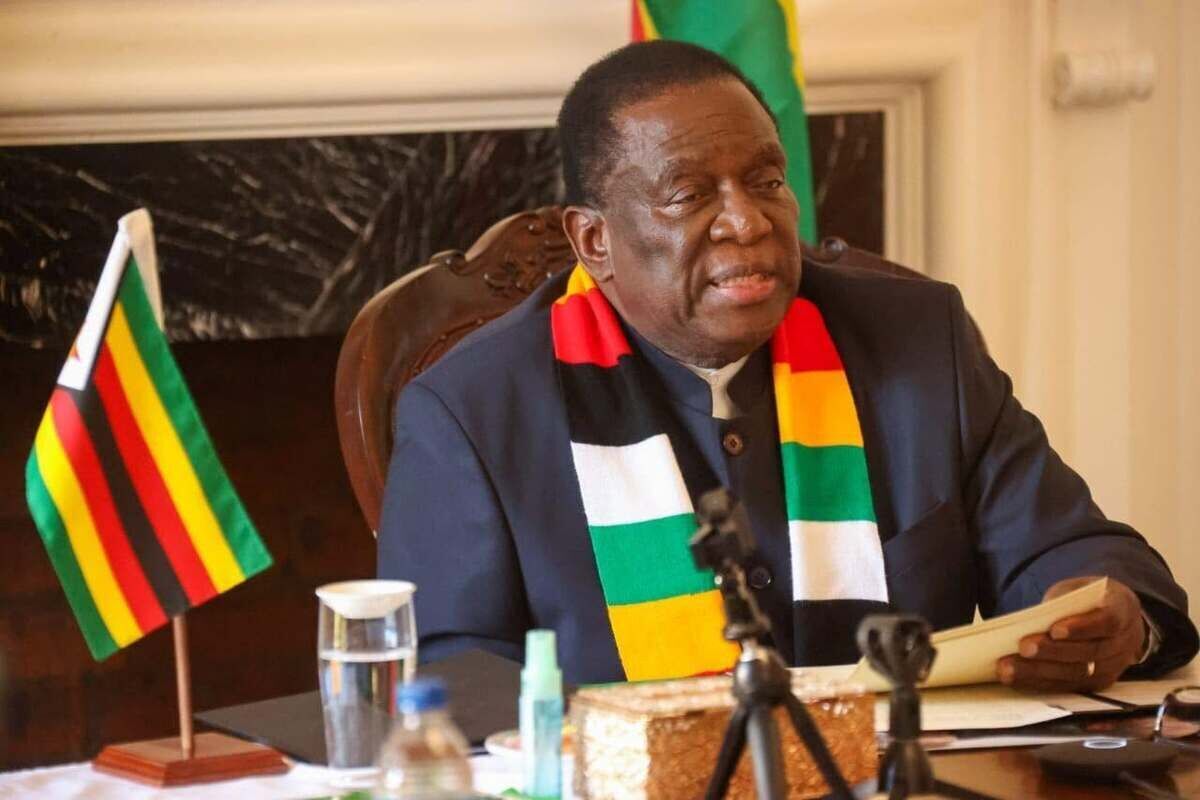
The Zimbabwean government has declared September 15, President Emmerson Mnangagwa’s birthday, an annual national public holiday. The new holiday, known as Munhumutapa Day, was created through Statutory Instrument 148 of 2026, according to local media reports. ZBC News reported that, a notice announcing the declaration was published on Wednesday. “His……
The Zimbabwean government has declared September 15, President Emmerson Mnangagwa’s birthday, an annual national public holiday.
The new holiday, known as Munhumutapa Day, was created through Statutory Instrument 148 of 2026, according to local media reports.
ZBC News reported that, a notice announcing the declaration was published on Wednesday.
“His Excellency the President, in terms of section 2(2) of the Public Holidays and Prohibition of Business Act [Chapter 10:21], hereby makes the following notice:
“1. This notice may be cited as the Public Holidays and Prohibition of Business (Declaration of Public Holiday) Notice, 2026.
READ ALSO: Tinubu Mourns Ex-Gongola Governor Bamanga Tukur On 90th Birthday
“2. It is hereby declared that the 15th of September every year henceforth shall be a public holiday to be known as Munhumutapa Day,” the notice read, according to ZBC News.
The declaration coincides with Mnangagwa’s 84th birthday and was presented by the government as a celebration of Zimbabwe’s “pre-colonial heritage.”
The Munhumutapa title was historically used by rulers of the Mutapa Empire, a powerful Shona kingdom that existed between the 14th and 17th centuries.
The government did not state why September 15 was selected for the annual observance.
Mnangagwa hints at staying beyond 2030
The holiday declaration came amid renewed controversy over Mnangagwa’s political future after the president hinted that he could remain in power beyond 2030.
Mnangagwa, who has ruled Zimbabwe since taking office in 2017, said he will “still be around” in nine years, despite his current term being expected to end in 2030.
“I will still be around; I do not know about you,” he was quoted as saying.
His remarks followed a constitutional change that extended the presidential term from five to seven years.
In July, Mnangagwa signed into law a bill extending his current term from 2028 to 2030, despite criticism from opponents and civil society groups.
The president had previously described himself as a constitutionalist and pledged to respect presidential term limits.
Mnangagwa came to power in 2017 after longtime ruler Robert Mugabe was removed from office with military backing. He subsequently won the disputed 2018 and 2023 presidential elections.
He also rejected calls for the constitutional amendment to be subjected to a public referendum, arguing that the changes would promote stability in the southern African country.
The constitutional reforms further altered the way Zimbabwe’s president will be elected.
Under the new system, voters will elect members of Parliament, who will then choose the country’s president, effectively scrapping the existing system of direct presidential elections.


Fatal Bayelsa clash: Monarch clears Nembe E&P, questions link to land acquisition – The Witness Nigeria

US elections: Same cabal ousted Jonathan, installed Buhari, unleashed Boko Haram in Nigeria – Ex-Mayor

They Want To Persecute Me – Karimi Reacts To Court Judgement Sacking Him As Kogi West Senatorial Candidate

Lafia Presidential Rally: RELAX DG Ahmed Bala leads members to campaign flag-off, highlights Tinubu’s North-Central projects

Namibia President hails Dangote’s $2.5bn investment as historic milestone for African industrialisation – The Witness Nigeria

Lower impairments, higher fees raise Access Holdings 9 months 2026 PBT to N667.4bn – The Witness Nigeria

PSC fires three senior officers, demotes 16, sanctions 23 others over misconduct – The Witness Nigeria

JUST IN: Court removes David Mark-led ADC leadership, nullifies Atiku’s presidential ticket – The Witness Nigeria

“I Drove A Taxi To Pay For My Education” — Tinubu Recalls U.S. Struggles, Highlights ₦372bn Student Loans

LAKURAWA TERRORISTS REPORTEDLY MOVING TOWARD MABURYA VILLAGE AS 21 COMMUNITIES FLEE ATTACKS IN NIGER STATE

Tinubu To Attend APC Rally In Rivers After Commissioning Projects In Akwa Ibom

Rivers NDC Guber Candidate Meets Jonathan Ahead of 2027 Election

Pope Leo lands in South America after tumor removal

Two injured as youths clash in Jalingo

Ogun Monarch Honours Adebutu, Iyabo Obasanjo With Chieftaincy Titles

PDP Gets New Chairman In Cross River, Endorses Wike Rainbow Coalition

FG digital reforms targeting 95% digital literacy by 2030 – NITDA DG – The Witness Nigeria

U-17 Women’s World Cup Final: Tinubu charges Flamingos to beat Japan, make history in Morocco

Ex-banker Obinna Nwaobi accused of diverting N515m from customer’s account

ADC Will Not Back Down, Nakudu Declares Amid Leadership Crisis

 Politics6 days ago
Over 200 Boko Haram Terrorists Are Moving To Attack Military Camp In Buni Yadi As Rockets Target Troops; IED Threat Raises Travel Concerns
- Metro5 days ago
“The Election Must Hold As Scheduled” — INEC Chairman Rules Out Postponement Of 2027 General Elections
- Metro5 days ago
“Publishing His Name Is Subject To The Final Outcome Of A Court Order” — INEC Leaves Gwarzo Off Updated Kano Governorship List
- Metro6 days ago
“Ebola Outbreak Is Not Yet Under Control” — Africa CDC Warns As Confirmed Cases Exceed 10,200, Death Toll Surpasses 5,000
- Metro6 days ago
“Death Benefits Will Be Fully Paid To Next Of Kin” — NAF Pledges Continued Salaries For Personnel Killed In October 5 Aircraft Crash
- Metro5 days ago
“Sowore’s Whereabouts Remain Unknown” — Armed Men Allegedly Abduct AAC Presidential Candidate In Ado-Ekiti, Damage Vehicles And Restaurant
- Metro5 days ago
“They Beat Me Like A Criminal” — Sowore Recounts Ekiti Attack As Govt Denies Involvement, Calls For Police Investigation
- Metro6 days ago
“We Know What They Did And How They Did It, But I Don’t Know Why” — INEC Reveals Findings On AI-Generated Photos In Voters’ Register